Mountain pine or Scots pine: how to tell them apart?
Mountain pine and Scots pine look alike and are often mixed up. Here is how to tell them apart, feature by feature, with their photos and the details to look for.
⚡ The quick answer
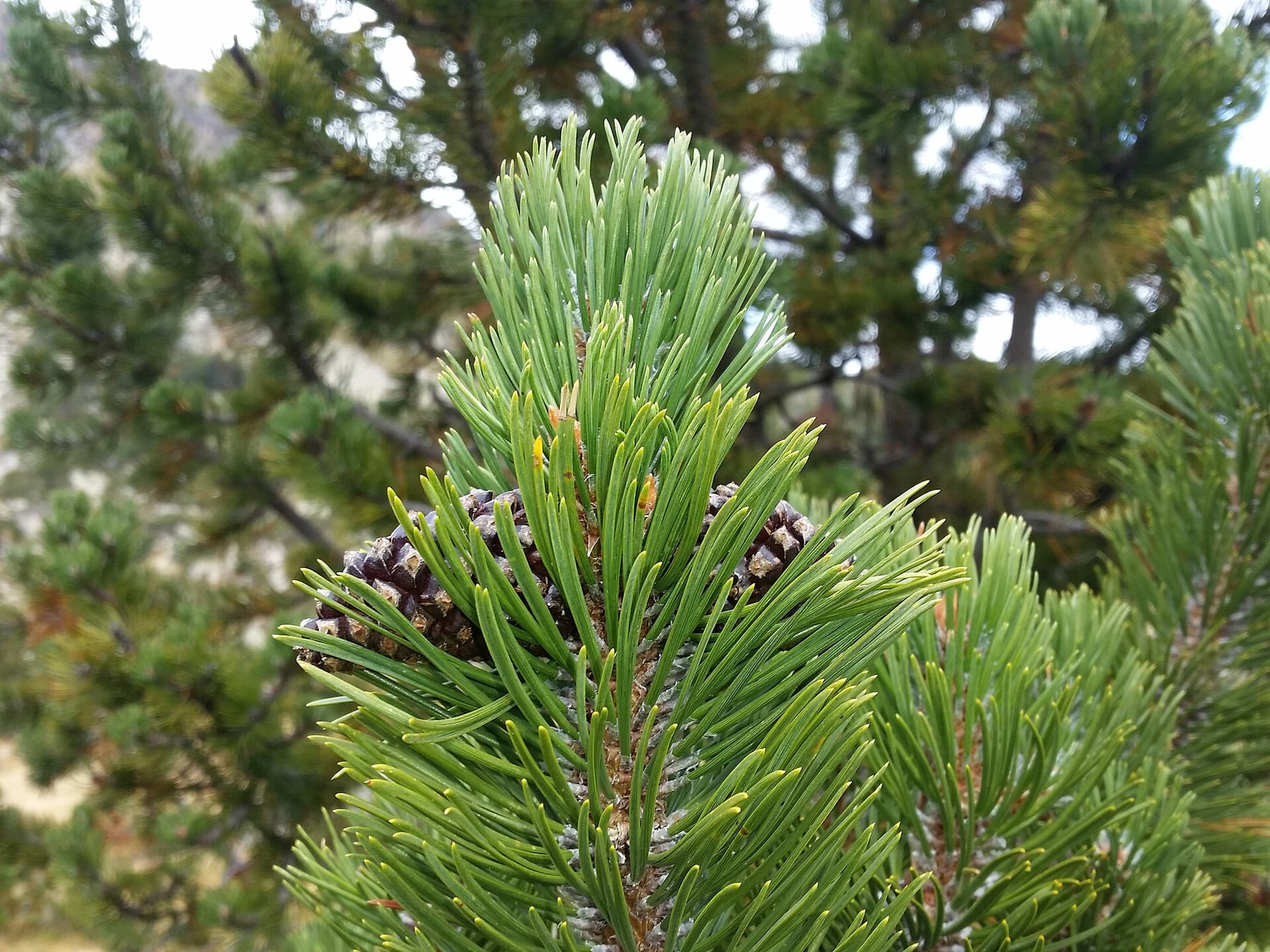
Mountain pine
Pinus uncinata
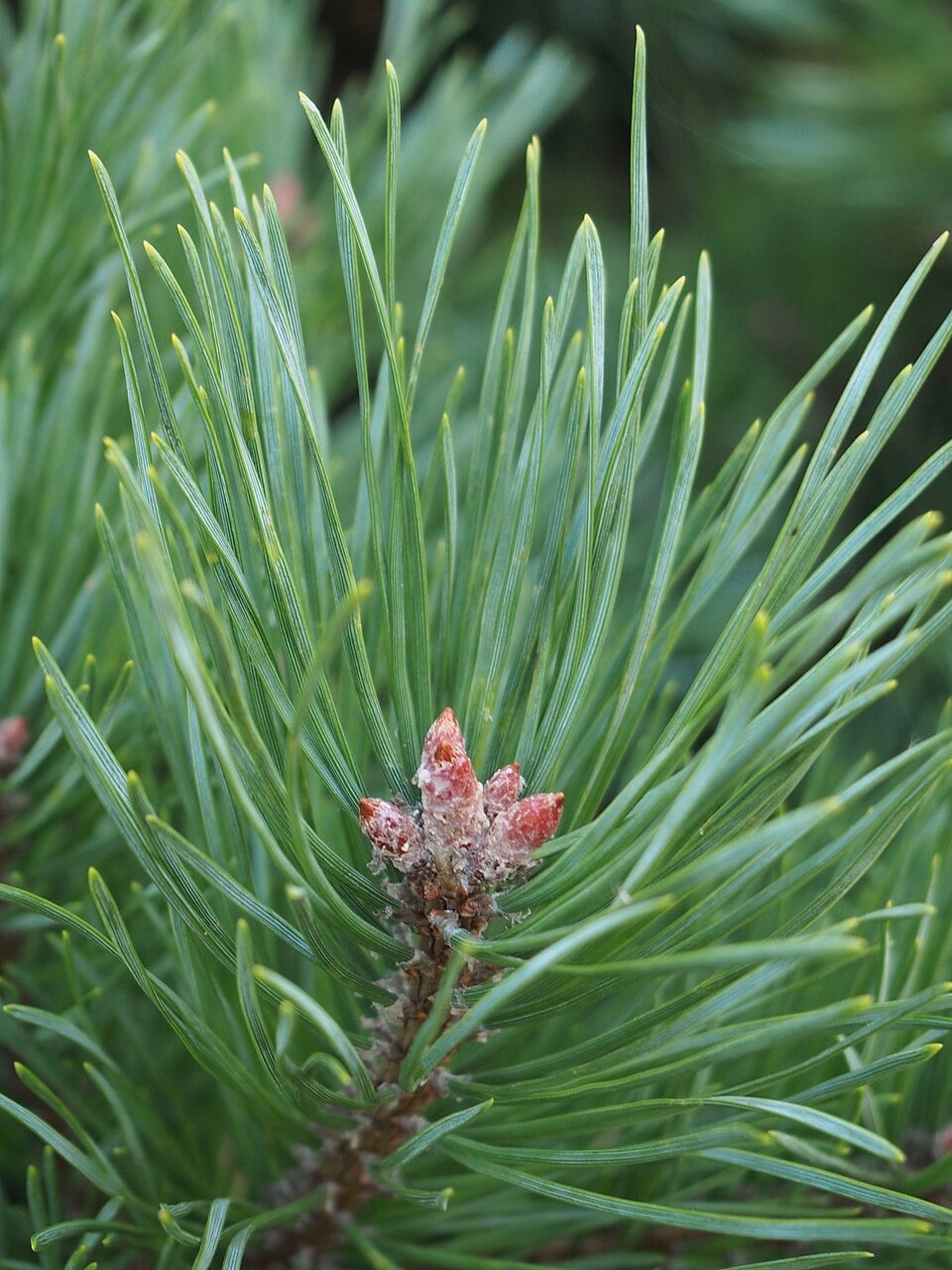
Scots pine
Pinus sylvestris
Scots pine has characteristic orange bark in the upper trunk and cones without hooks, whereas Spanish mountain pine, a mountain tree, keeps grey to brown bark over its whole height and has cones whose scales end in a small recurved hook.
🍃 Leaves
Evergreen needles, in pairs, short, thick, dark green
Blue-green needles in pairs, twisted, 4 to 7 cm
🌸 Flowers
Monoecious species: yellowish male cones and reddish female cones borne on the same tree
Yellow male cones in clusters, small reddish female cones
🍎 Fruits
Brown, woody, asymmetrical cones with distinctly hook-shaped recurved scales, the feature that gives the species its name
Brown woody cones, ovoid, hanging, 3 to 7 cm
🪵 Bark
Grey to reddish-brown, thick and fissured on old trees
Pinkish-orange and flaking in the upper trunk, grey and fissured at the base
📏 Size
Up to 20 m tall, often twisted and stunted near the upper treeline
20 to 35 m tall
🗺️ Habitat
Mountain forests and heaths (subalpine zone, 1200-2600 m) of the Pyrenees, the Alps, the Jura and the Massif Central
Heaths, open forests, poor and sandy soils
⚠️ Toxicity
—
No known toxicity
🔎 And from the Scots pine side
Spanish mountain pine, a mountain tree, has cones whose scales end in a small recurved hook and grey to brown bark over its whole height, whereas Scots pine is recognised by the orange bark of the upper trunk and by cones without hooks.
🌿 Go further
Want to practise spotting these details on real photos? Floraneo offers profiles and quizzes for dozens of look-alike species.
ℹ️ Educational profile — do not use it to judge whether a plant is edible or safe.