Midland hawthorn or Common hawthorn: how to tell them apart?
Midland hawthorn and Common hawthorn look alike and are often mixed up. Here is how to tell them apart, feature by feature, with their photos and the details to look for.
⚡ The quick answer
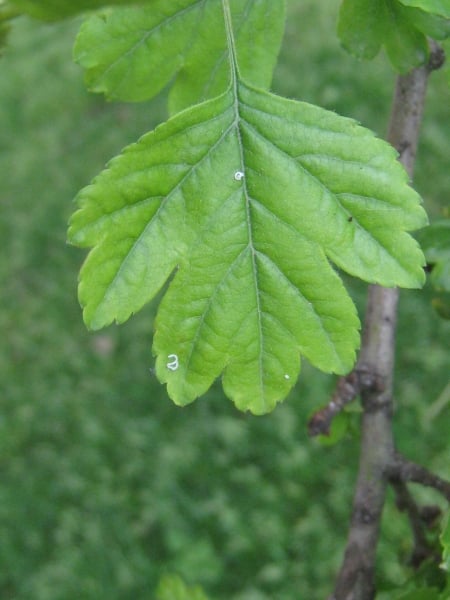
Midland hawthorn
Crataegus laevigata
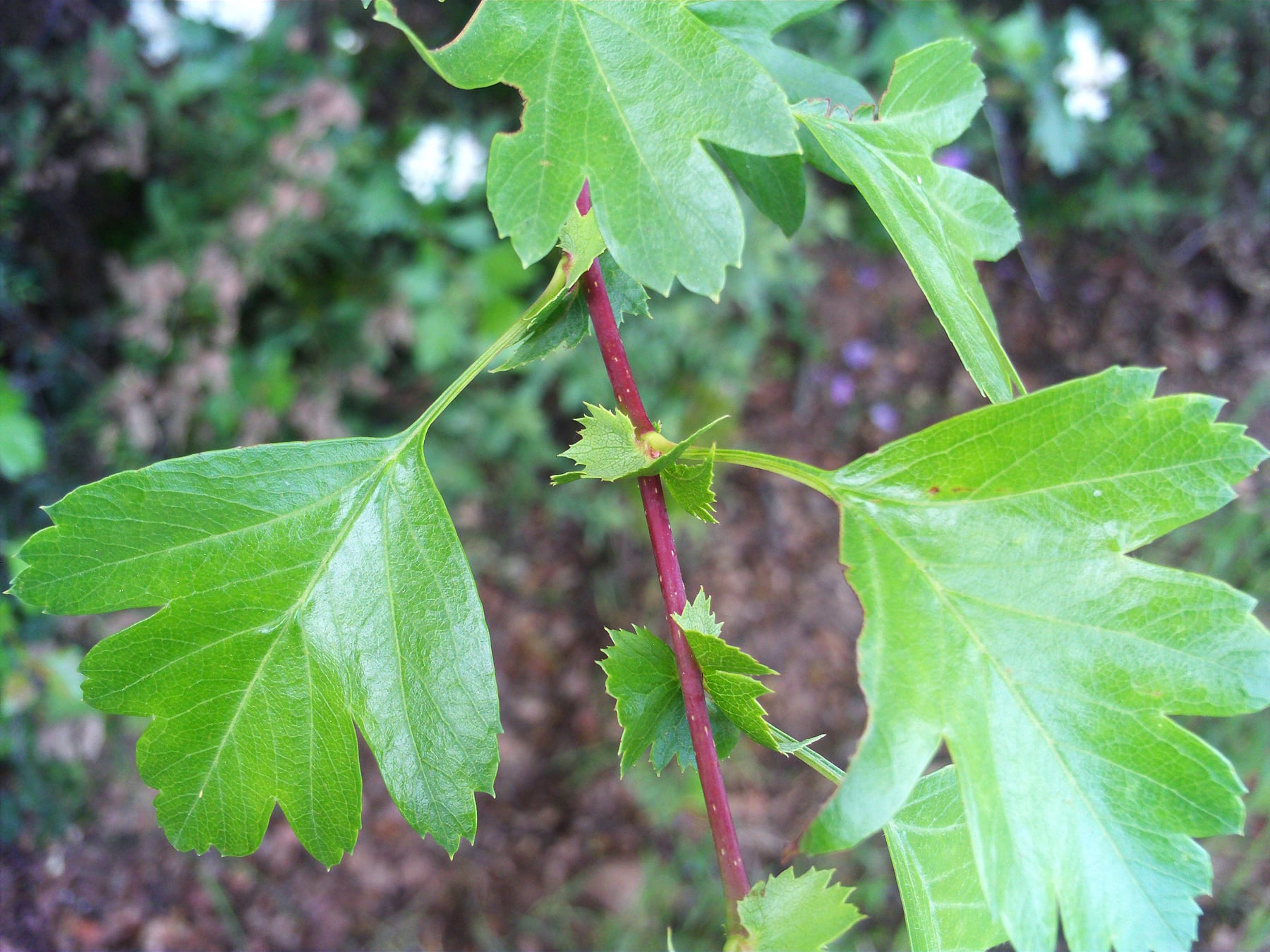
Common hawthorn
Crataegus monogyna
Compare above all the leaves and flowers: C. laevigata generally has less deeply lobed leaves and flowers with 2-3 styles, whereas C. monogyna generally has 1 style. Hybrids can show intermediate characters.
🍃 Leaves
Deciduous, shallowly lobed, glossy green
Small, deeply cut into 3 to 7 lobes
🌸 Flowers
Clusters of white or pink flowers, strong scent
White, grouped in corymbs, strong scent
🍎 Fruits
Small red fruits, generally with 2 stones, sometimes 3.
Small red fruits generally containing a single stone.
🪵 Bark
Cracked grey-brown bark, thorny shoots
Grey-brown, fissured, shoots bearing long thorns
📏 Size
3 to 6 m tall
3 to 6 m tall, often cut lower in a hedge
🗺️ Habitat
Hedgerows, woodland edges, gardens, ordinary soils
Country hedgerows, woodland edges, waste ground
⚠️ Toxicity
No known toxicity; fruits edible, used in herbal medicine for the heart.
No known toxicity; fruits edible, leaves and flowers used in herbal tea.
🔎 And from the Common hawthorn side
C. monogyna generally has more deeply lobed leaves and flowers with 1 style; its fruits generally have 1 stone. Hybrids with C. laevigata exist.
🌿 Go further
Want to practise spotting these details on real photos? Floraneo offers profiles and quizzes for dozens of look-alike species.
ℹ️ Educational profile — do not use it to judge whether a plant is edible or safe.