Mezereon or Flax-leaved daphne: how to tell them apart?
Mezereon and Flax-leaved daphne look alike and are often mixed up. Here is how to tell them apart, feature by feature, with their photos and the details to look for.
⚡ The quick answer
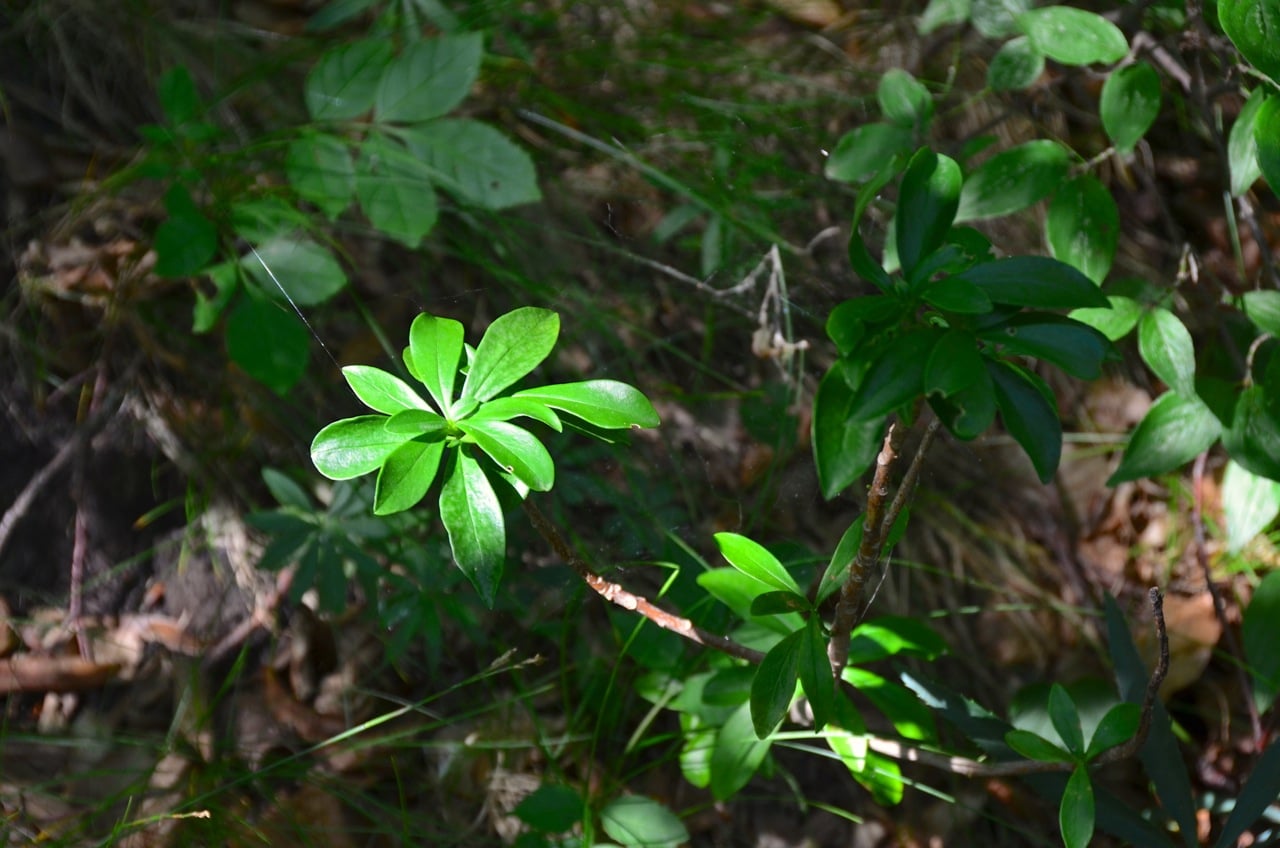
Mezereon
Daphne mezereum
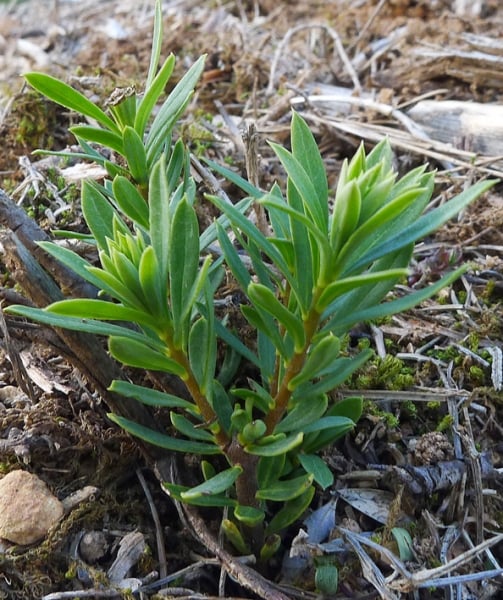
Flax-leaved daphne
Daphne gnidium
Flax-leaved daphne, a Mediterranean species, has narrow evergreen leaves and flowers on stems that already bear leaves, whereas mezereon loses its leaves in winter and flowers on completely bare wood before the leaves appear.
🍃 Leaves
Deciduous, appearing after the flowers, lanceolate, light green, grouped at the ends of the shoots
Evergreen, narrow, lanceolate, grey-green
🌸 Flowers
Small bright pink to purple flowers, very fragrant, borne directly on the bare branches before the leaves emerge
Small, fragrant white flowers in terminal clusters
🍎 Fruits
Small bright red glossy berries, very toxic, ripening in summer
Small toxic red berries
🪵 Bark
Grey-brown, upright, little-branched stems
Grey fibrous bark, very tough, supple stems
📏 Size
1 to 1.2 m tall
0.5 to 1.5 m tall
🗺️ Habitat
Open woodland and woodland edges on calcareous soil, especially in cool, mountainous regions, across much of France
Garrigue, dry banks, Mediterranean gardens, poor soils
⚠️ Toxicity
The whole plant is very toxic (daphnetoxin), especially the red berries; since 1 July 2021, sellers are required to inform buyers of its toxicity (order of 4 September 2020), but planting it is not prohibited.
The whole plant is very toxic (especially the berries and bark), causing severe skin and digestive irritation, with a risk to life if eaten.
🔎 And from the Flax-leaved daphne side
Mezereon loses its leaves in winter and flowers on completely bare wood before the leaves appear, whereas the Mediterranean flax-leaved daphne keeps narrow evergreen foliage and flowers on stems that are already in leaf.
🌿 Go further
Want to practise spotting these details on real photos? Floraneo offers profiles and quizzes for dozens of look-alike species.
ℹ️ Educational profile — do not use it to judge whether a plant is edible or safe.