Leaf
Radio Tonreg, Wikimedia · CC BY 2.0
Mezereon
Daphne mezereum L.
Also known as: February daphne
Family: Thymelaeaceae
1 to 1.2 m tall
Open woodland and woodland edges on calcareous soil, especially in cool, mountainous regions, across much of France
Flowering: February - April
Part shade
Shade
Hardy to -25°C
❓ How do you recognise this plant?
It flowers from the end of winter directly on its still-bare branches, long before its leaves appear. Flax-leaved daphne, a Mediterranean species, has narrow evergreen leaves and flowers on stems that already bear leaves, whereas mezereon loses its leaves in winter and flowers on completely bare wood before the leaves appear.
🍃 Leaves
Deciduous, appearing after the flowers, lanceolate, light green, grouped at the ends of the shoots
🌸 Flowers
Small bright pink to purple flowers, very fragrant, borne directly on the bare branches before the leaves emerge
🍎 Fruits
Small bright red glossy berries, very toxic, ripening in summer
🪵 Bark
Grey-brown, upright, little-branched stems
🗺️ Distribution
A large part of France, mainly in the mountains and on calcareous soil; rarer in the lowlands
🐝 Value for pollinators
Flowers very early at the end of winter, a valuable resource for the very first bumblebees and butterflies of the year
✂️ Horticultural uses
Planted in borders or woodland for its early, fragrant flowering, despite its toxicity
⚠️ Possible toxicity
The whole plant is very toxic (daphnetoxin), especially the red berries; since 1 July 2021, sellers are required to inform buyers of its toxicity (order of 4 September 2020), but planting it is not prohibited.
⚠️ Look-alike species
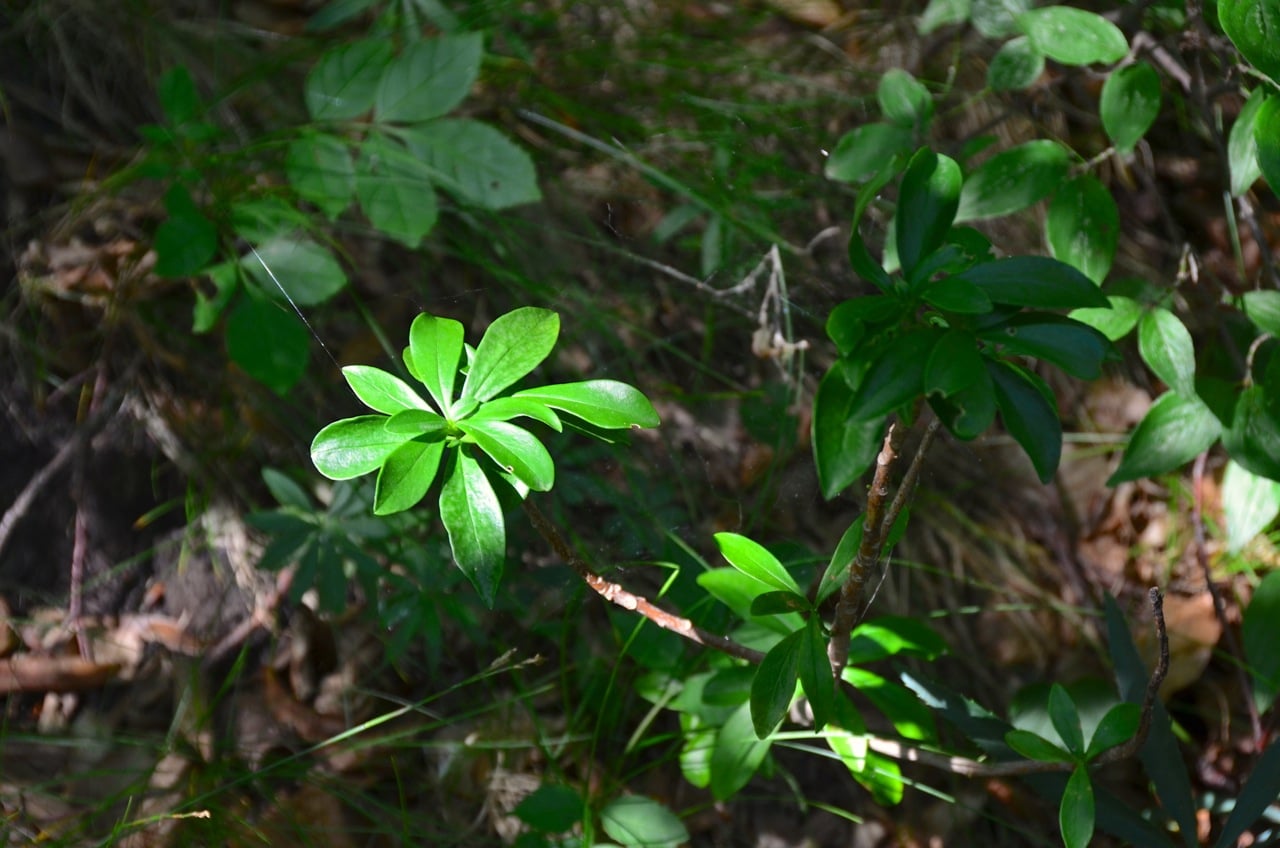
Mezereon
Daphne mezereum
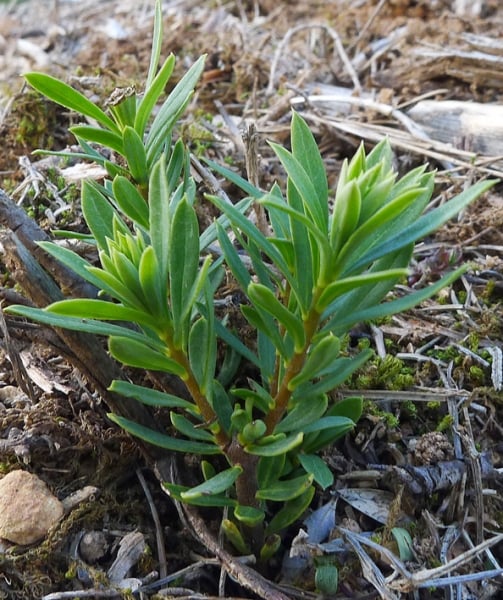
Flax-leaved daphne
Daphne gnidium
Flax-leaved daphne, a Mediterranean species, has narrow evergreen leaves and flowers on stems that already bear leaves, whereas mezereon loses its leaves in winter and flowers on completely bare wood before the leaves appear.
🌿 Other Thymelaeaceae to discover
ℹ️ Educational profile — do not use it to judge whether a plant is edible or safe.
🌱 This database is constantly evolving — species and information are added and corrected regularly. Spotted a mistake? Report it below.
© Floraneo — profile content is protected; reproduction without permission is prohibited. Photos remain under their own licence (see the credit shown on each photo).