Leaf
Bertrand Bui, Tela Botanica · CC BY-SA 2.0
Flax-leaved daphne
Daphne gnidium L.
Family: Thymelaeaceae
0.5 to 1.5 m tall
Garrigue, dry banks, Mediterranean gardens, poor soils
Flowering: July – November
Full sun
Part shade
Hardy to -8°C
❓ How do you recognise this plant?
The whole plant, particularly its red berries, is toxic — its very fibrous bark was formerly used to make rope. Mezereon loses its leaves in winter and flowers on completely bare wood before the leaves appear, whereas the Mediterranean flax-leaved daphne keeps narrow evergreen foliage and flowers on stems that are already in leaf.
🍃 Leaves
Evergreen, narrow, lanceolate, grey-green
🌸 Flowers
Small, fragrant white flowers in terminal clusters
🍎 Fruits
Small toxic red berries
🪵 Bark
Grey fibrous bark, very tough, supple stems
🗺️ Distribution
Mediterranean; found in the maquis and garrigue of southern France.
🐝 Value for pollinators
Fragrant white flowers in late summer, visited by moths and a few bees.
✂️ Horticultural uses
Rarely planted in gardens because of its toxicity, found mainly in natural Mediterranean habitats.
⚠️ Possible toxicity
The whole plant is very toxic (especially the berries and bark), causing severe skin and digestive irritation, with a risk to life if eaten.
⚠️ Look-alike species
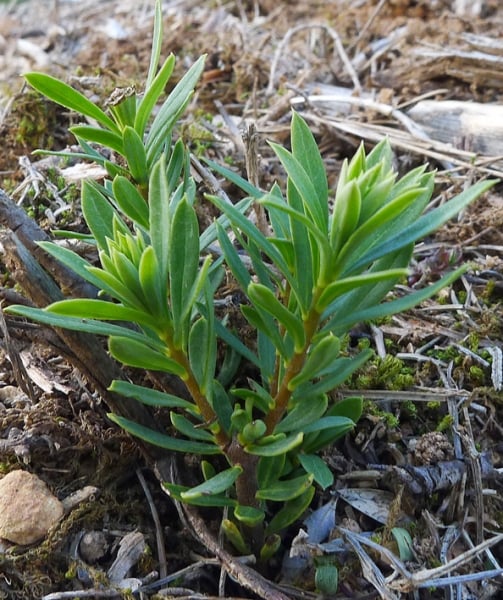
Flax-leaved daphne
Daphne gnidium
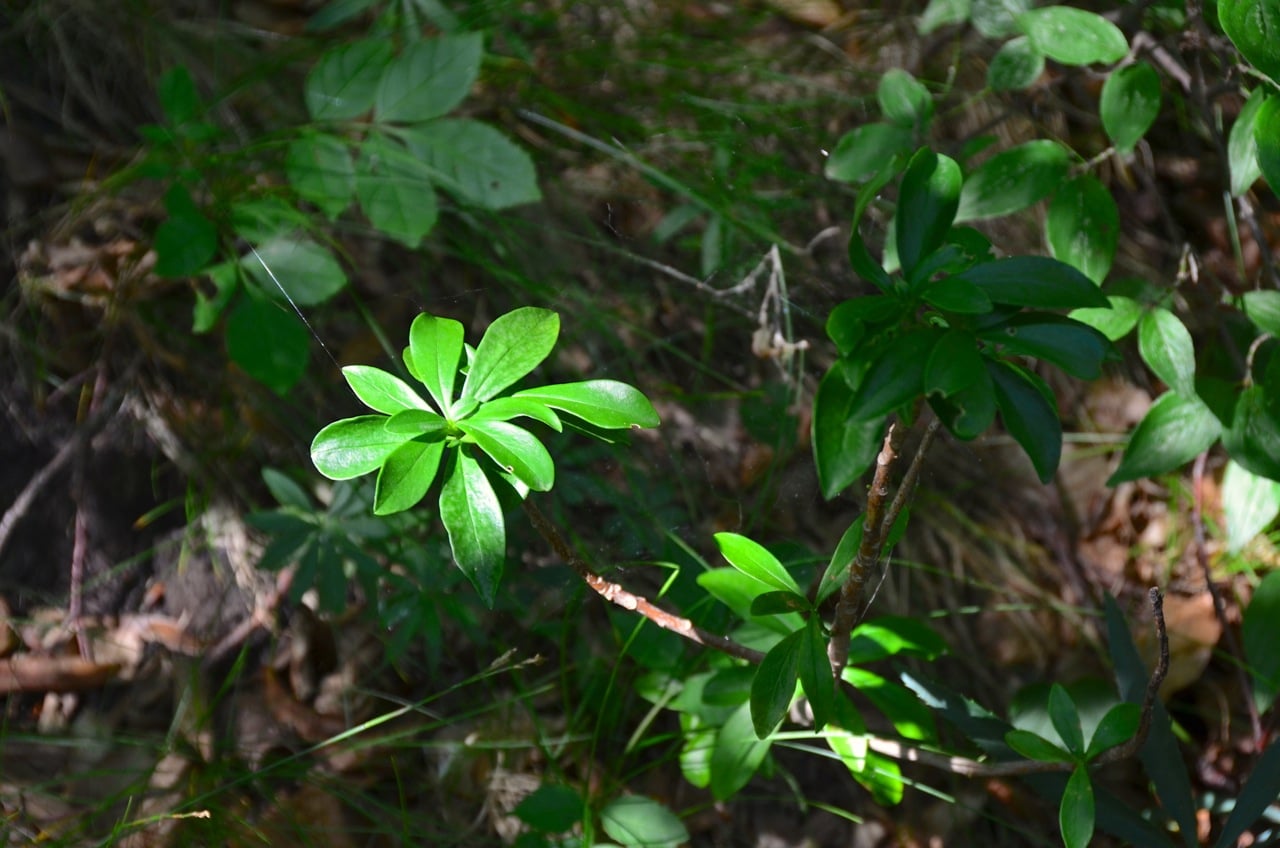
Mezereon
Daphne mezereum
Mezereon loses its leaves in winter and flowers on completely bare wood before the leaves appear, whereas the Mediterranean flax-leaved daphne keeps narrow evergreen foliage and flowers on stems that are already in leaf.
🌿 Other Thymelaeaceae to discover
ℹ️ Educational profile — do not use it to judge whether a plant is edible or safe.
🌱 This database is constantly evolving — species and information are added and corrected regularly. Spotted a mistake? Report it below.
© Floraneo — profile content is protected; reproduction without permission is prohibited. Photos remain under their own licence (see the credit shown on each photo).