Mahaleb cherry or Wild cherry: how to tell them apart?
Mahaleb cherry and Wild cherry look alike and are often mixed up. Here is how to tell them apart, feature by feature, with their photos and the details to look for.
⚡ The quick answer
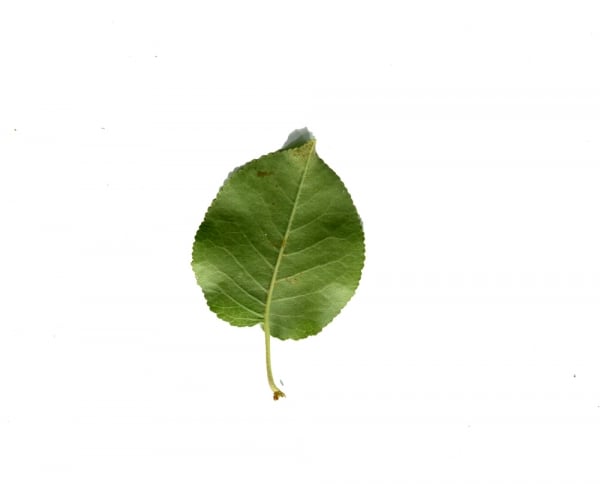
Mahaleb cherry
Prunus mahaleb
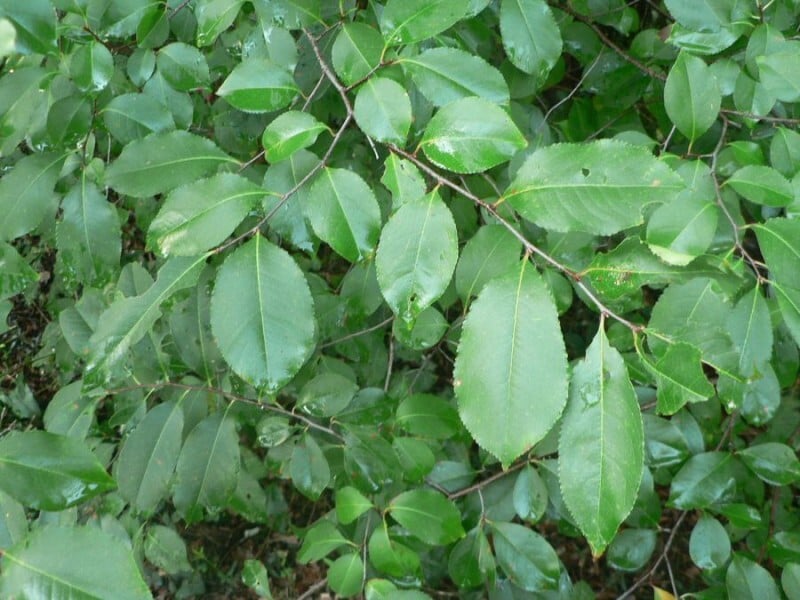
Wild cherry
Prunus avium
The St Lucie cherry has smaller, finely toothed leaves that are fragrant when crushed, and greyish bark that does not peel, unlike the large simple leaves and the red-brown bark of the wild cherry, which peels off in horizontal bands.
🍃 Leaves
Deciduous, rounded, toothed, glossy green, very fragrant when crushed
Ovate, toothed, tapering tip, two reddish glands at the base of the leaf blade
🌸 Flowers
Clusters of small, very fragrant white flowers
Large white flowers in small clusters, very abundant
🍎 Fruits
Small bitter black drupes
Small dark red to black cherries, bitter
🪵 Bark
Fragrant brown-grey bark, wood highly prized for fine woodwork
Glossy reddish-brown, peeling in horizontal bands
📏 Size
3 to 6 m tall, sometimes a small tree
15 to 25 m tall
🗺️ Habitat
Hedges, woodland edges, gardens, free-draining calcareous soils
Open woodland, woodland edges, rich soils
⚠️ Toxicity
Seeds (stones) and wilted leaves rich in cyanogenic compounds, toxic in large quantity as in other Prunus.
Leaves, bark and stones contain cyanogenic glycosides, toxic if swallowed in large quantity; the flesh of the fruit is harmless
🔎 And from the Wild cherry side
St Lucie cherry has smaller, finely toothed leaves that are fragrant when crushed, and greyish bark that does not peel, unlike the large simple leaves and reddish-brown bark of wild cherry, which peels in horizontal bands.
🌿 Go further
Want to practise spotting these details on real photos? Floraneo offers profiles and quizzes for dozens of look-alike species.
ℹ️ Educational profile — do not use it to judge whether a plant is edible or safe.