Holm oak or Common holly: how to tell them apart?
Holm oak and Common holly look alike and are often mixed up. Here is how to tell them apart, feature by feature, with their photos and the details to look for.
⚡ The quick answer
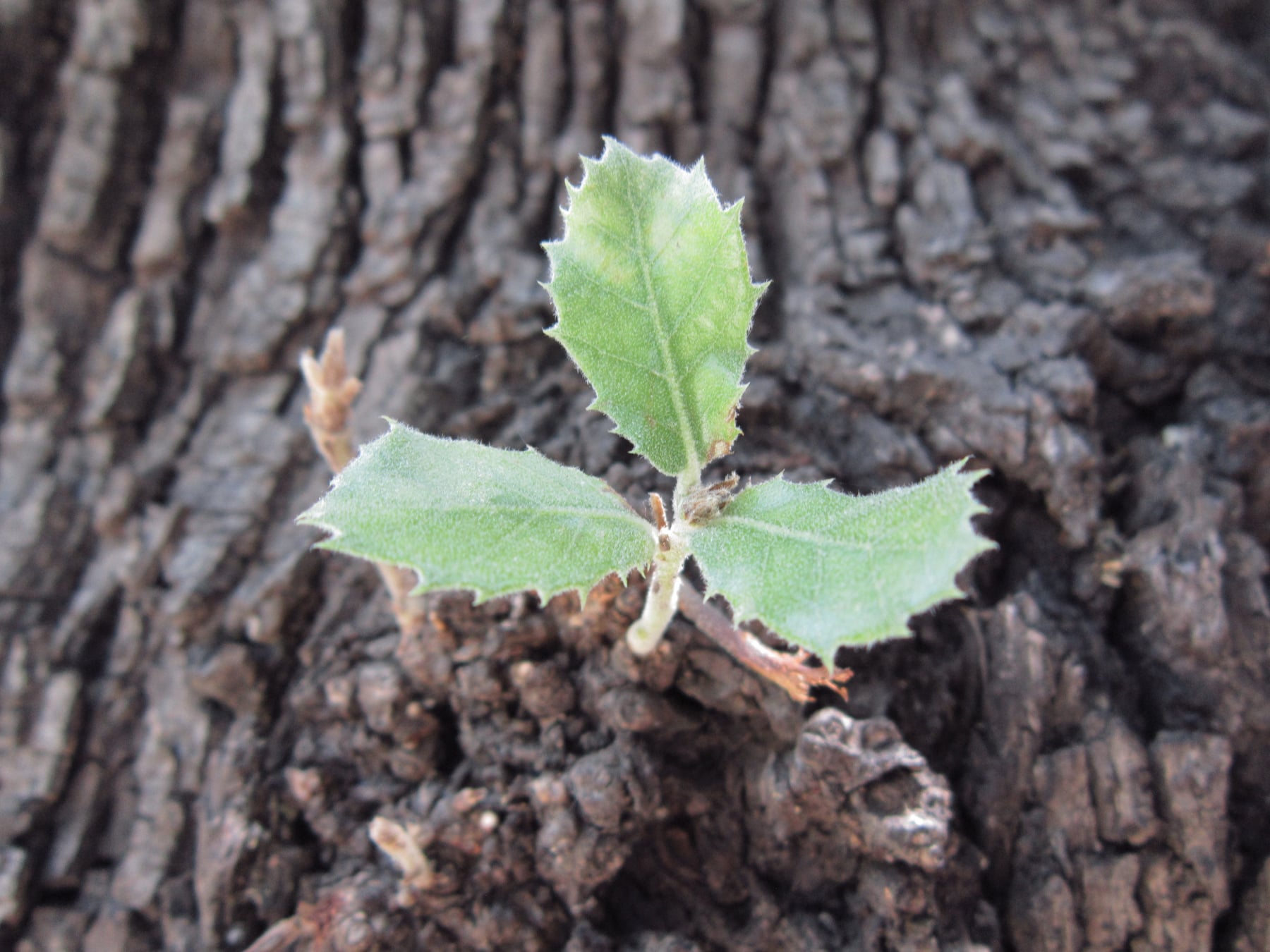
Holm oak
Quercus ilex
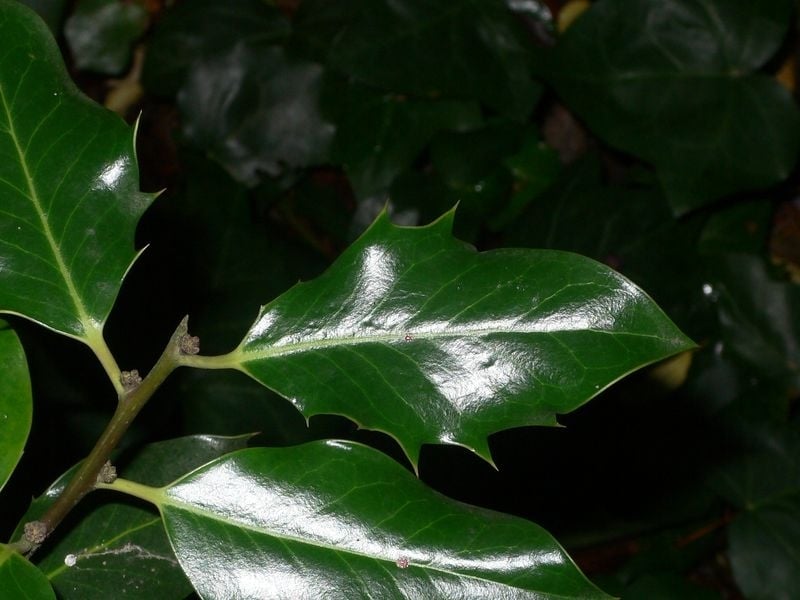
Common holly
Ilex aquifolium
Holly has alternate, wavy, bumpy leaves, spiny all round the margin, and bears bright red berries; the holm oak (nicknamed 'false holly oak' in French) has flatter leaves, felted white beneath, with more irregular teeth (sometimes absent on the adult), and bears acorns.
🍃 Leaves
Evergreen, leathery, very variable: entire on the adult leaves of some twigs, or toothed/spiny mainly on young trees and suckers; upper surface dark green, underside greyish and downy.
Leathery, glossy, wavy margin bristling with spines (smooth higher up on the same tree)
🌸 Flowers
Yellowish hanging catkins
Small, white, inconspicuous, sexes separate, on different plants
🍎 Fruits
Small elongated acorns with a felted cup
Bright red berries persisting all winter, only on female plants
🪵 Bark
Grey-black, finely fissured
Grey, smooth
📏 Size
10 to 20 m tall
5 to 10 m tall, sometimes up to 15 m
🗺️ Habitat
Mediterranean garrigue and forests
Woodland understorey, hedges, often planted as an ornamental
⚠️ Toxicity
Acorns rich in tannins, to be eaten in moderation by animals; harmless on contact
Berries toxic if ingested (digestive upset), spiny leaves irritating; dangerous mainly for young children
🔎 And from the Common holly side
Holly has alternate, very spiny leaves all round the margin and red fruits in winter, whereas holm oak has barely toothed leaves, typical acorns and fissured dark grey bark.
🌿 Go further
Want to practise spotting these details on real photos? Floraneo offers profiles and quizzes for dozens of look-alike species.
ℹ️ Educational profile — do not use it to judge whether a plant is edible or safe.