Common juniper or Pfitzer juniper: how to tell them apart?
Common juniper and Pfitzer juniper look alike and are often mixed up. Here is how to tell them apart, feature by feature, with their photos and the details to look for.
⚡ The quick answer
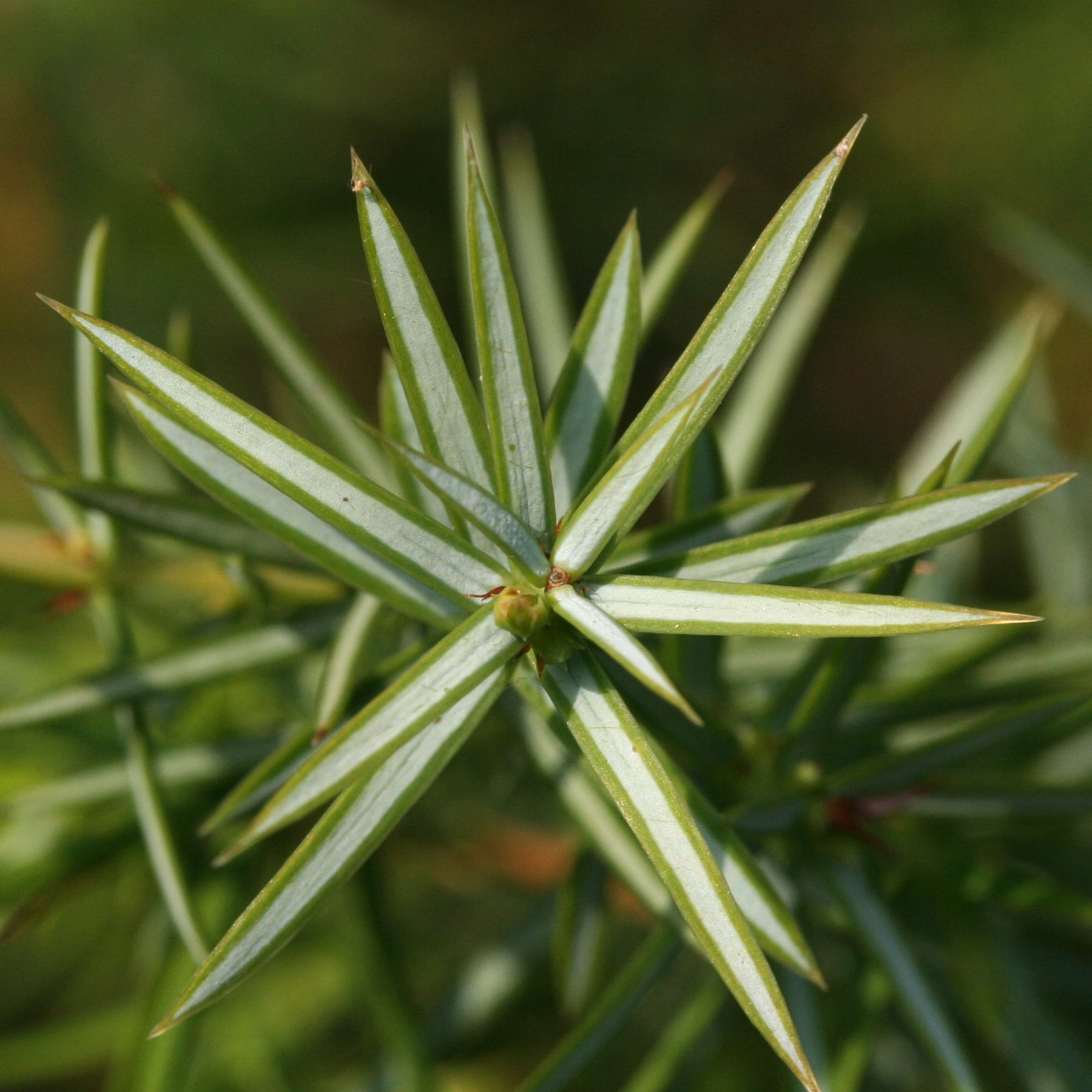
Common juniper
Juniperus communis
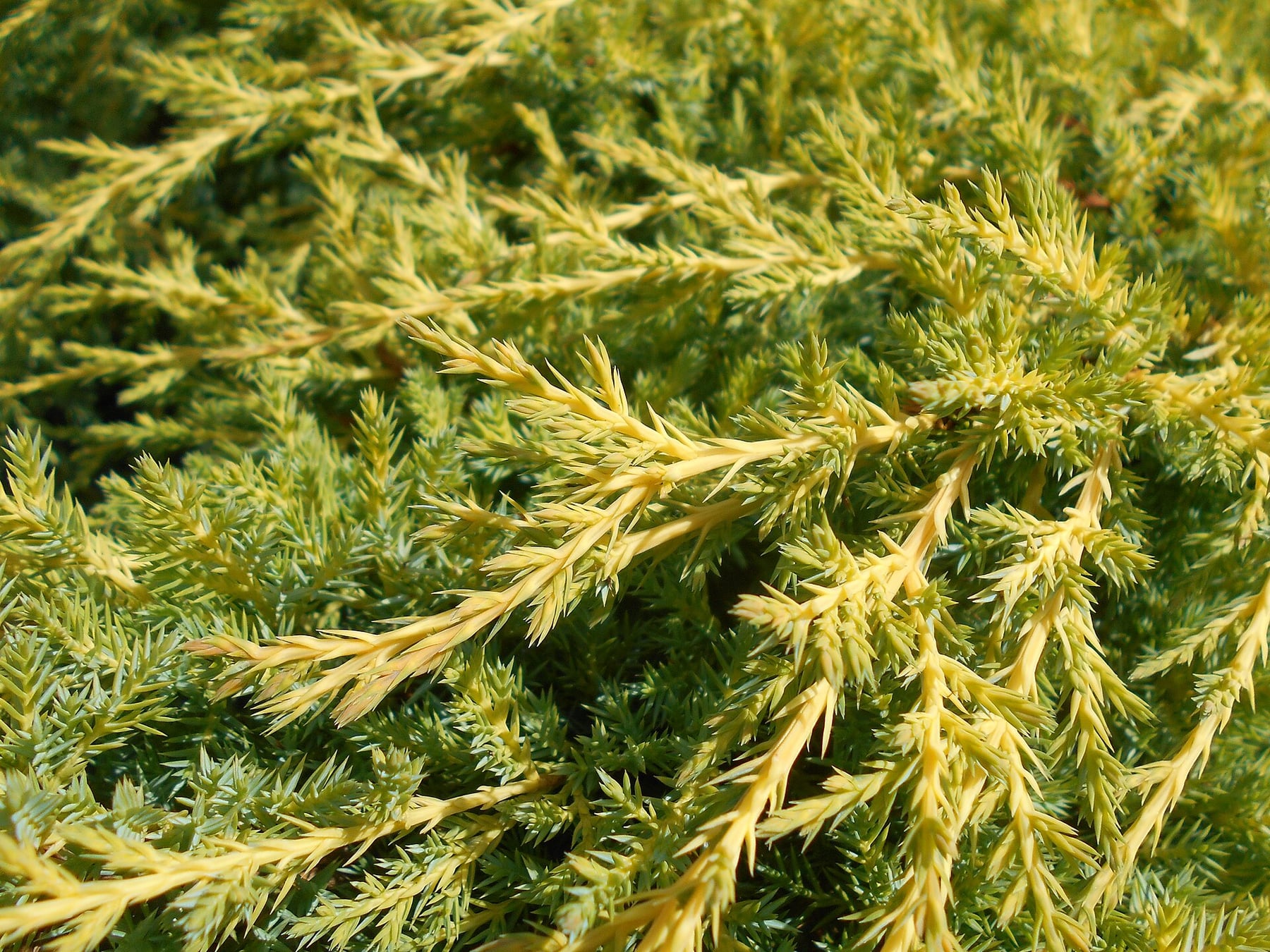
Pfitzer juniper
Juniperus × pfitzeriana
Pfitzer juniper is a spreading, drooping cultivar, widely planted as a low hedge or on roundabouts, whereas wild common juniper grows as an upright or prostrate bush on dry grassland and heathland.
🍃 Leaves
Prickly needles in whorls of 3, white line on the upper surface
Evergreen, scale-like, grey-green to bluish depending on the cultivar, arranged in a fan on spreading stems in drooping sheaves
🌸 Flowers
Inconspicuous, sexes separate on different plants
Inconspicuous; small round cones on female plants
🍎 Fruits
Small blue-black berries covered with bloom, taking two years to ripen
Fleshy blue-black cones when ripe, resembling small berries
🪵 Bark
Reddish-brown, peeling in thin strips
Greyish-brown, peeling in thin strips with age
📏 Size
1 to 5 m tall, very variable, sometimes prostrate in the mountains
1 to 1.5 m tall with a spread of 3 to 5 m
🗺️ Habitat
Heathland, dry grassland, garrigue
Roundabouts, car parks, commercial areas, banks and low hedges in gardens and public green spaces throughout France
⚠️ Toxicity
No known toxicity for the berries, used in cooking and to flavour gin.
Foliage and cones toxic if eaten, as in Juniperus sabina, one of its parents
🔎 And from the Pfitzer juniper side
Common juniper, wild on heathland and dry grassland, grows as an upright or prostrate bush, whereas Pfitzer juniper is a spreading, drooping cultivar widely planted as a low hedge or on roundabouts.
🌿 Go further
Want to practise spotting these details on real photos? Floraneo offers profiles and quizzes for dozens of look-alike species.
ℹ️ Educational profile — do not use it to judge whether a plant is edible or safe.