Common honeysuckle or Japanese honeysuckle: how to tell them apart?
Common honeysuckle and Japanese honeysuckle look alike and are often mixed up. Here is how to tell them apart, feature by feature, with their photos and the details to look for.
⚡ The quick answer
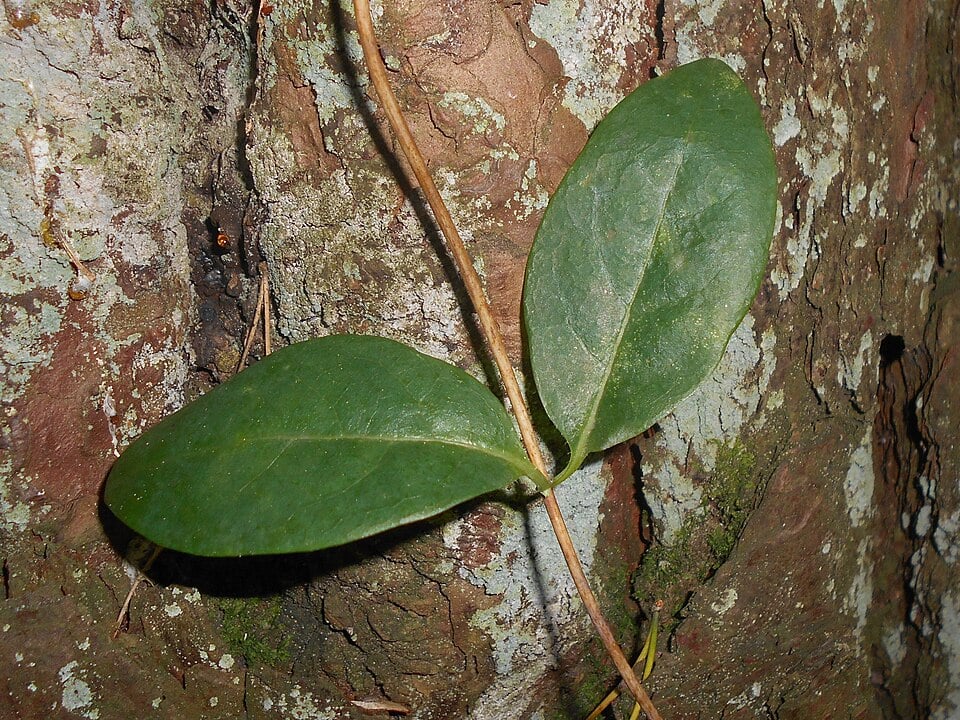
Common honeysuckle
Lonicera periclymenum
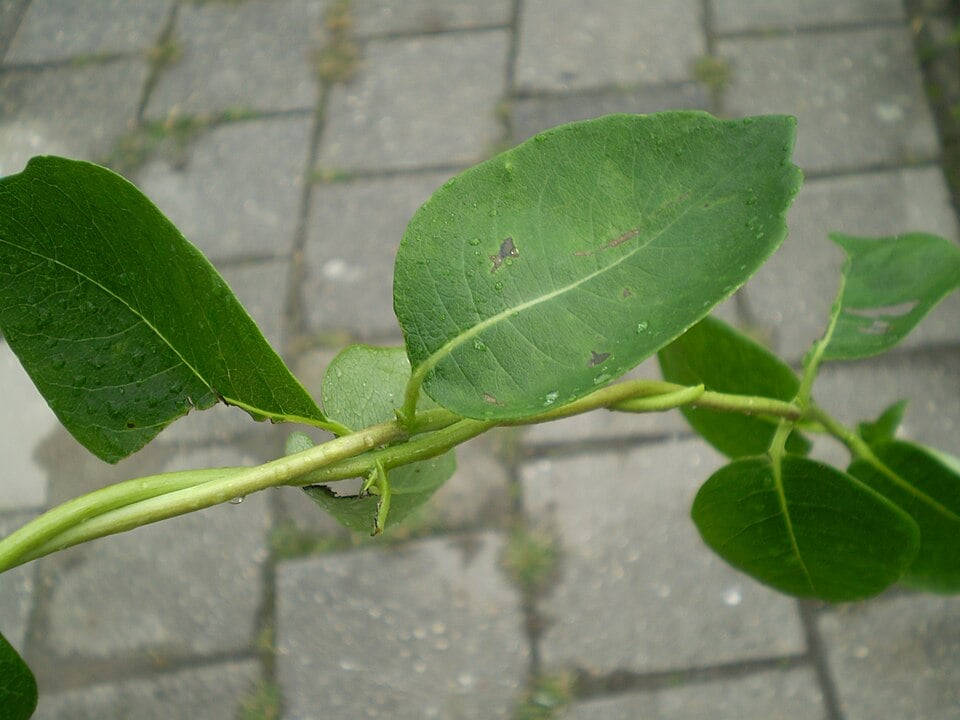
Japanese honeysuckle
Lonicera japonica
Common honeysuckle is deciduous, with flowers tinged red-purple from the moment they open, whereas Japanese honeysuckle keeps semi-evergreen foliage in winter and its white flowers turn yellow after flowering.
🍃 Leaves
Opposite, ovate, entire, slightly bluish beneath
Evergreen or semi-evergreen, ovate, bright green, opposite
🌸 Flowers
Long cream-yellow tubes tinged with pink, very fragrant in the evening
Tubular, cream-white turning yellow, very fragrant
🍎 Fruits
Glossy red berries, generally in close pairs in the leaf axils.
Small black berries
🪵 Bark
Twining stems winding around supports
Reddish brown twining stems winding around supports
📏 Size
twining climber 2 to 5 m long
twining climber, up to 6 m long
🗺️ Habitat
Hedges, woodland edges and understorey, climbing over bushes
Fences, pergolas, walls, all soils
⚠️ Toxicity
Red berries toxic if eaten, causing digestive upset (vomiting, diarrhoea).
The berries must not be eaten; they can cause digestive upset. The plant is also liable to be invasive in some regions.
🔎 And from the Japanese honeysuckle side
Common honeysuckle is deciduous, with flowers tinged red-purple from the moment they open, whereas Japanese honeysuckle keeps semi-evergreen foliage in winter and its white flowers turn yellow after flowering.
🌿 Go further
Want to practise spotting these details on real photos? Floraneo offers profiles and quizzes for dozens of look-alike species.
ℹ️ Educational profile — do not use it to judge whether a plant is edible or safe.