Box elder or Common ash: how to tell them apart?
Box elder and Common ash look alike and are often mixed up. Here is how to tell them apart, feature by feature, with their photos and the details to look for.
⚡ The quick answer
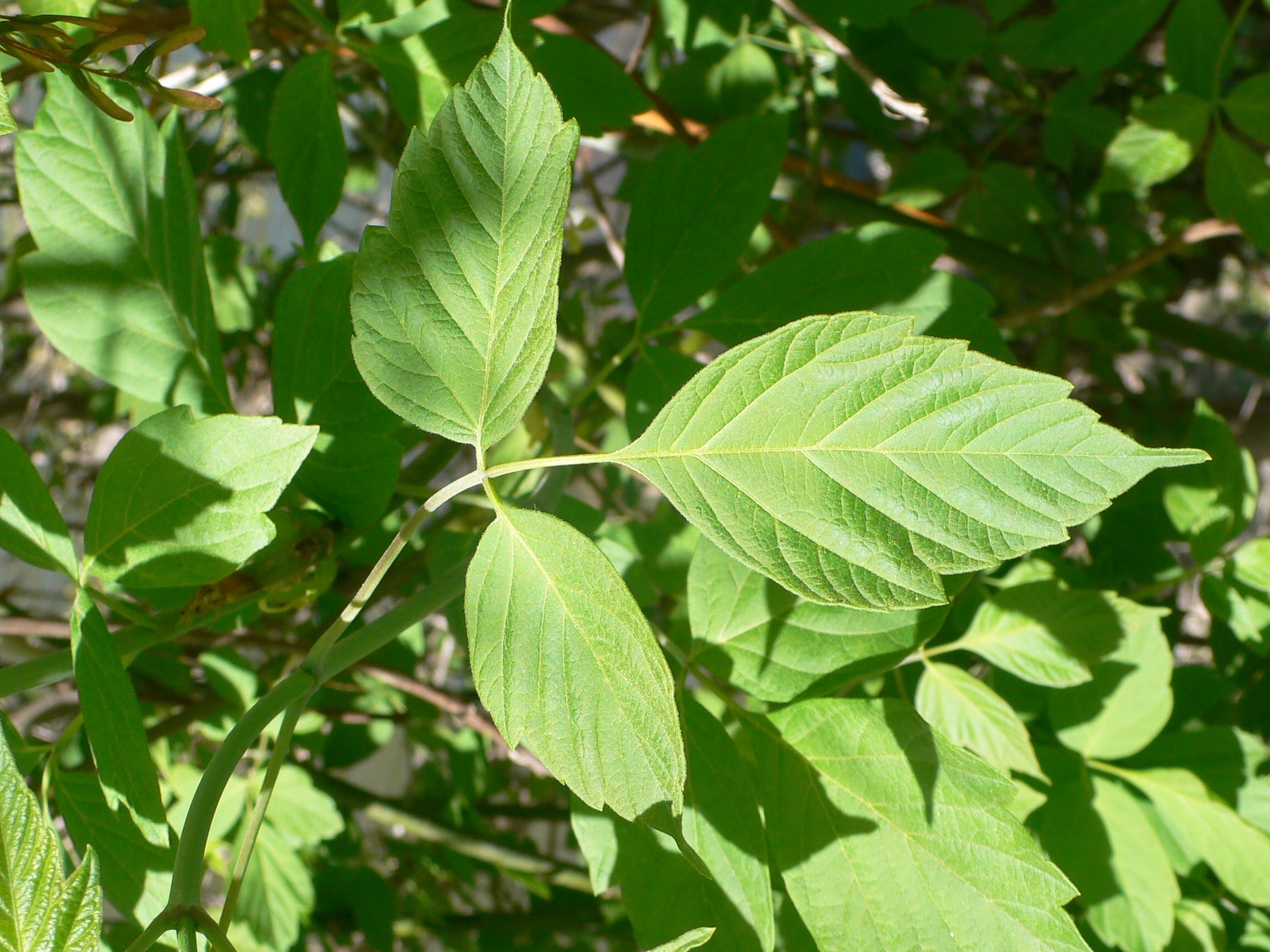
Box elder
Acer negundo
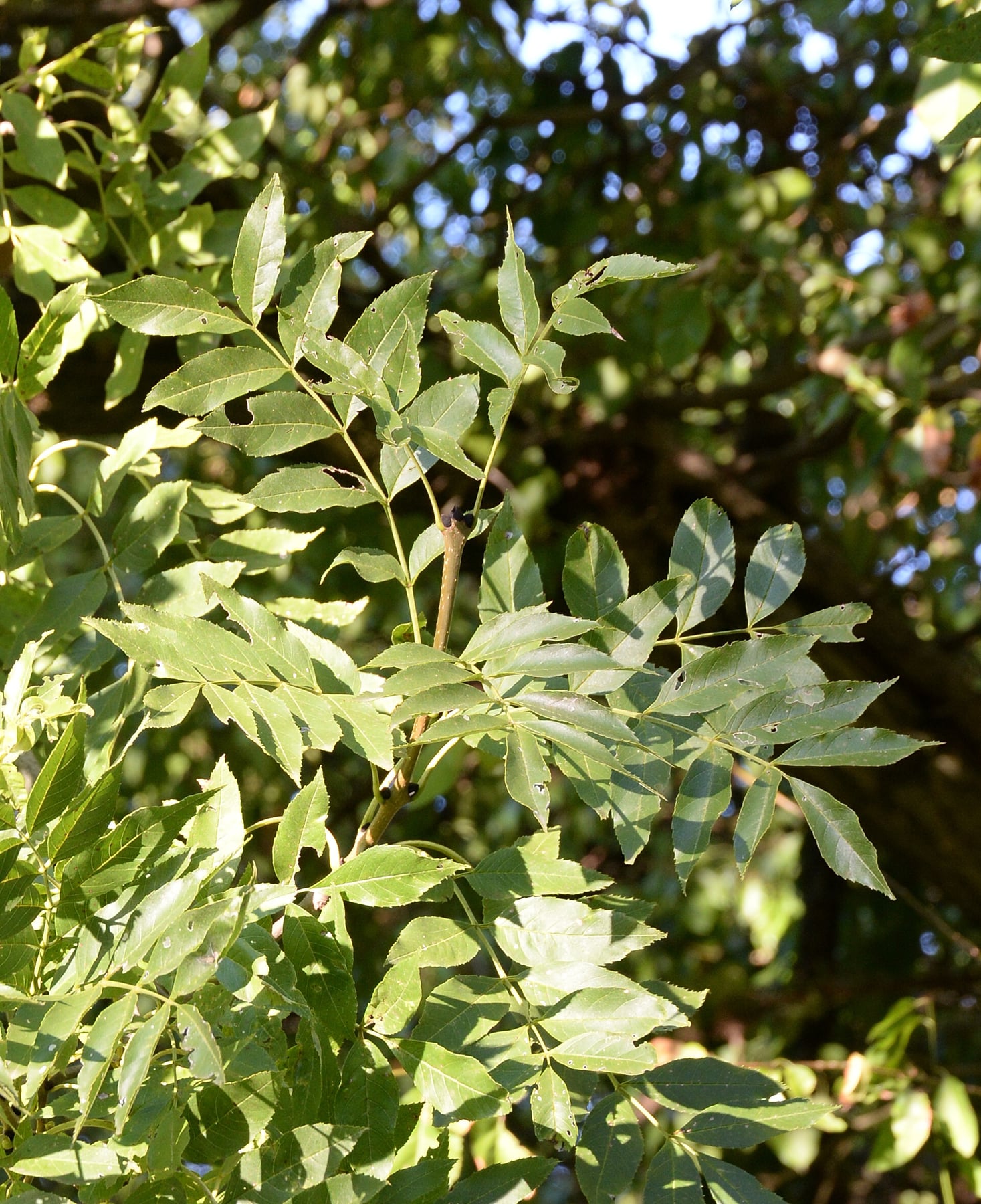
Common ash
Fraxinus excelsior
Common ash has opposite, lanceolate, toothed leaflets, without the typical double-winged fruits of maples; box elder, despite its almost identical compound leaves, is recognised by its opposite green buds and its samaras winged in pairs.
🍃 Leaves
Compound, 3 to 7 toothed leaflets — unique among maples in not having a simple leaf
Compound, 9 to 13 toothed leaflets
🌸 Flowers
Pendent flowers on fine threads before the leaves appear
Small, petal-less, in dense clusters
🍎 Fruits
Samaras with narrowly spread wings
Elongated samaras in bunches persisting through winter
🪵 Bark
Pale grey, characteristic green shoots
Grey, smooth then finely fissured
📏 Size
10 to 20 m tall
25 to 35 m tall
🗺️ Habitat
Riverbanks, widely naturalised
Cool, fertile soils, often along watercourses
⚠️ Toxicity
Seeds (samaras) and young seedlings rich in hypoglycin A, toxic to horses (atypical myopathy / seasonal pasture myopathy), as in sycamore; risk of fatal poisoning if horses graze near seedlings or seeds fallen on the ground. No known risk to humans from mere contact.
No known toxicity
🔎 And from the Common ash side
The common ash has opposite, lanceolate, toothed leaflets, without the double-winged fruits typical of maples; the box elder, despite its almost identical compound leaves, is recognised by its opposite green buds and its samaras winged in pairs.
🌿 Go further
Want to practise spotting these details on real photos? Floraneo offers profiles and quizzes for dozens of look-alike species.
ℹ️ Educational profile — do not use it to judge whether a plant is edible or safe.