Black nightshade or Potato: how to tell them apart?
Black nightshade and Potato look alike and are often mixed up. Here is how to tell them apart, feature by feature, with their photos and the details to look for.
⚡ The quick answer
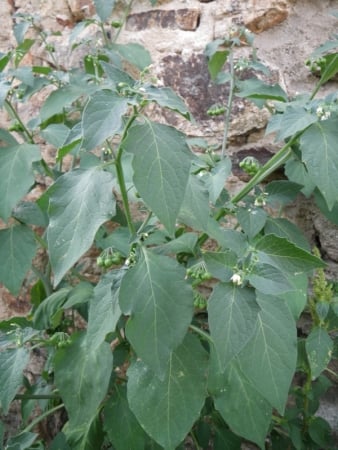
Black nightshade
Solanum nigrum
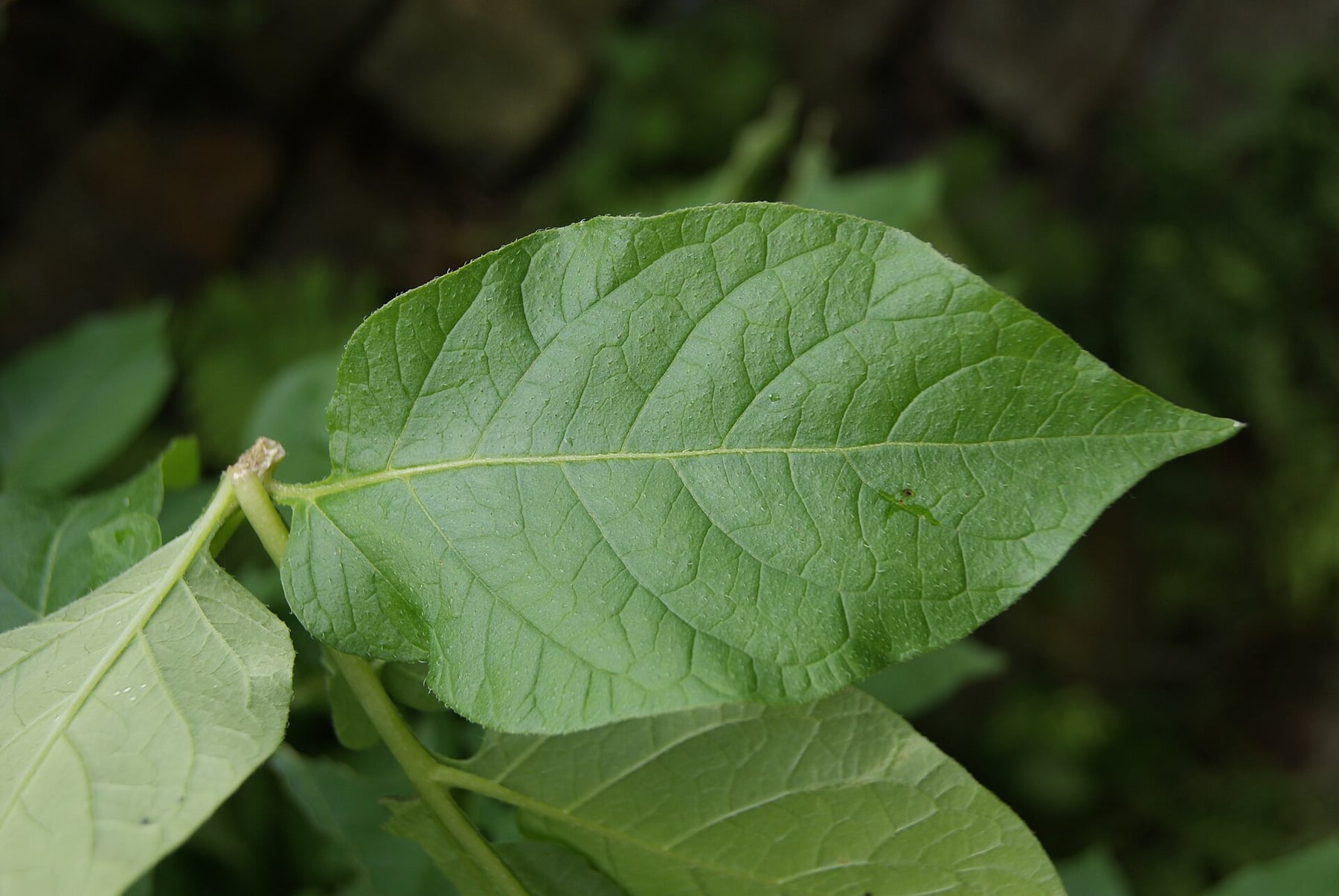
Potato
Solanum tuberosum
The small black berries of black nightshade look like unripe cherry tomatoes, but the whole plant is toxic — unlike the tomato or the potato, its cultivated cousins. A simple check: if the "mini tomatoes" are the size of a small pea, grow in small loose clusters and stay black even when ripe, it is not a tomato.
🍃 Leaves
Ovate, slightly wavy margin, alternate
Compound, pinnate, dark green, characteristic smell when crushed
🌸 Flowers
Small, white, five star-shaped petals, yellow stamens grouped in a cone
White, pink or purple depending on variety, with 5 petals fused into a star
🍎 Fruits
Small glossy black berries in clusters, toxic when unripe
Small green berry, toxic, rarely formed in cultivation
🪵 Bark
Branched herbaceous stem, green to purplish
Angular herbaceous stem; the tubers eaten form on underground stems
📏 Size
20 to 70 cm
50 to 80 cm tall
🗺️ Habitat
Gardens, crops, rubble, wasteland
Grown in vegetable gardens and as a field crop
⚠️ Toxicity
Plant and green berries toxic (solanine), notably before ripening; ripe black berries traditionally eaten but with caution
Tuber edible once cooked; the green parts (leaves, stems, berries, greened or sprouted tubers) contain solanine, which is toxic
🔎 And from the Potato side
The small black berries of black nightshade look like unripe cherry tomatoes, but the whole plant is toxic — unlike the tomato or the potato, its cultivated cousins. A simple check: if the 'mini-tomatoes' are the size of a small pea, grow in small loose clusters and stay black even when ripe, it is not a tomato.
🌿 Go further
Want to practise spotting these details on real photos? Floraneo offers profiles and quizzes for dozens of look-alike species.
ℹ️ Educational profile — do not use it to judge whether a plant is edible or safe.