Aaron's beard or Common St John's wort: how to tell them apart?
Aaron's beard and Common St John's wort look alike and are often mixed up. Here is how to tell them apart, feature by feature, with their photos and the details to look for.
⚡ The quick answer
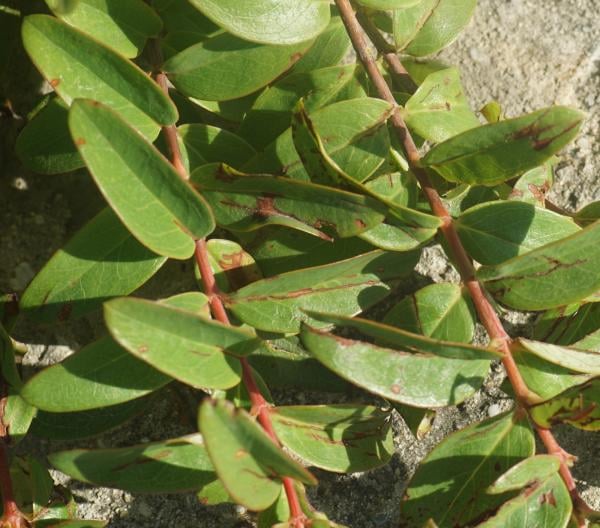
Aaron's beard
Hypericum calycinum
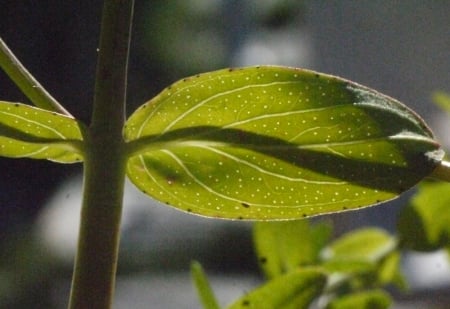
Common St John's wort
Hypericum perforatum
Aaron's beard is a low subshrub forming a carpet, with large bright yellow flowers and very numerous stamens, whereas perforate St John's wort is a perennial with leaves dotted with tiny translucent spots visible against the light.
🍃 Leaves
Evergreen or semi-evergreen, ovate, bright green
Opposite, ovate, dotted with tiny translucent spots visible against the light
🌸 Flowers
Large golden-yellow flowers with numerous stamens in a tuft
Bright yellow, five petals edged with black dots
🍎 Fruits
Small brown capsules
Small 3-celled capsule
🪵 Bark
Low suckering stems, carpeting habit
Upright herbaceous stem with two raised lines
📏 Size
0.3 to 0.6 m tall
30 to 80 cm tall
🗺️ Habitat
Ground cover, banks, light woodland, all soils
Dry grassland, banks, track verges
⚠️ Toxicity
No notable known toxicity in humans; may cause photosensitisation in animals that eat large quantities.
Causes photosensitisation in livestock grazing it in large quantity; known drug interactions in humans when used as a herbal remedy (contraceptives, anticoagulants).
🔎 And from the Common St John's wort side
Aaron's beard is a low subshrub forming a carpet, with large bright yellow flowers and very numerous stamens, whereas perforate St John's wort is a perennial with leaves dotted with tiny translucent spots visible against the light.
🌿 Go further
Want to practise spotting these details on real photos? Floraneo offers profiles and quizzes for dozens of look-alike species.
ℹ️ Educational profile — do not use it to judge whether a plant is edible or safe.