Leaf
Liliane Roubaudi, Tela Botanica · CC BY-SA 2.0
Common St John's wort
Hypericum perforatum L.
Also known as: St John's wort, Perforate St John's wort
Family: Hypericaceae
30 to 80 cm tall
Dry grassland, banks, track verges
Flowering: June – September
Full sun
Part shade
Shade
Hardy to -15°C
❓ How do you recognise this plant?
Leaves dotted with tiny translucent spots visible against the light — hence the name "perforate". Aaron's beard is a low subshrub forming a carpet, with large bright yellow flowers and very numerous stamens, whereas perforate St John's wort is a perennial with leaves dotted with tiny translucent spots visible against the light.
🍃 Leaves
Opposite, ovate, dotted with tiny translucent spots visible against the light
🌸 Flowers
Bright yellow, five petals edged with black dots
🍎 Fruits
Small 3-celled capsule
🪵 Bark
Upright herbaceous stem with two raised lines
🗺️ Distribution
Europe, temperate Asia; very common in dry grassland, on banks and at woodland edges in France.
🐝 Value for pollinators
Yellow flowers rich in pollen, much visited by bees, notably bumblebees.
✂️ Horticultural uses
Dry borders, flower meadows; traditionally used in herbal medicine (St John's wort oil).
⚠️ Possible toxicity
Causes photosensitisation in livestock grazing it in large quantity; known drug interactions in humans when used as a herbal remedy (contraceptives, anticoagulants).
⚠️ Look-alike species
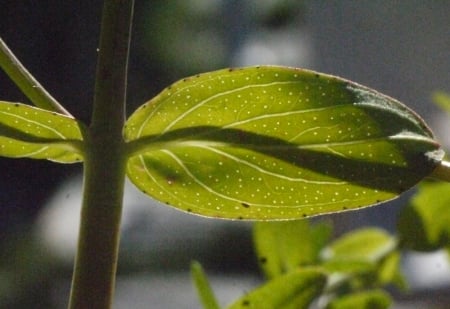
Common St John's wort
Hypericum perforatum
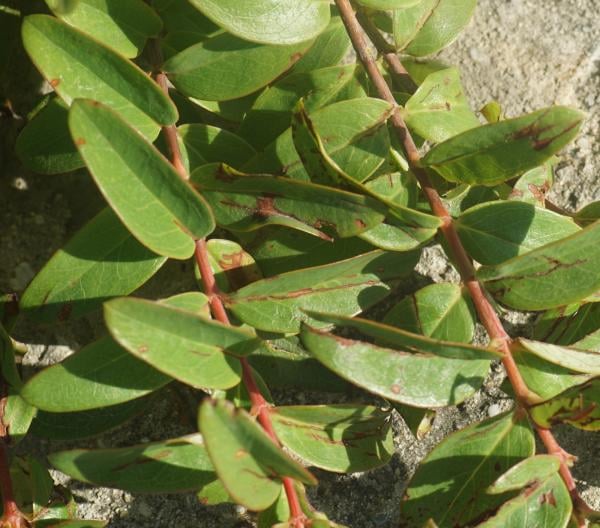
Aaron's beard
Hypericum calycinum
Aaron's beard is a low subshrub forming a carpet, with large bright yellow flowers and very numerous stamens, whereas perforate St John's wort is a perennial with leaves dotted with tiny translucent spots visible against the light.
🌿 Other Hypericaceae to discover
ℹ️ Educational profile — do not use it to judge whether a plant is edible or safe.
🌱 This database is constantly evolving — species and information are added and corrected regularly. Spotted a mistake? Report it below.
© Floraneo — profile content is protected; reproduction without permission is prohibited. Photos remain under their own licence (see the credit shown on each photo).