Wild privet or Garden privet: how to tell them apart?
Wild privet and Garden privet look alike and are often mixed up. Here is how to tell them apart, feature by feature, with their photos and the details to look for.
⚡ The quick answer
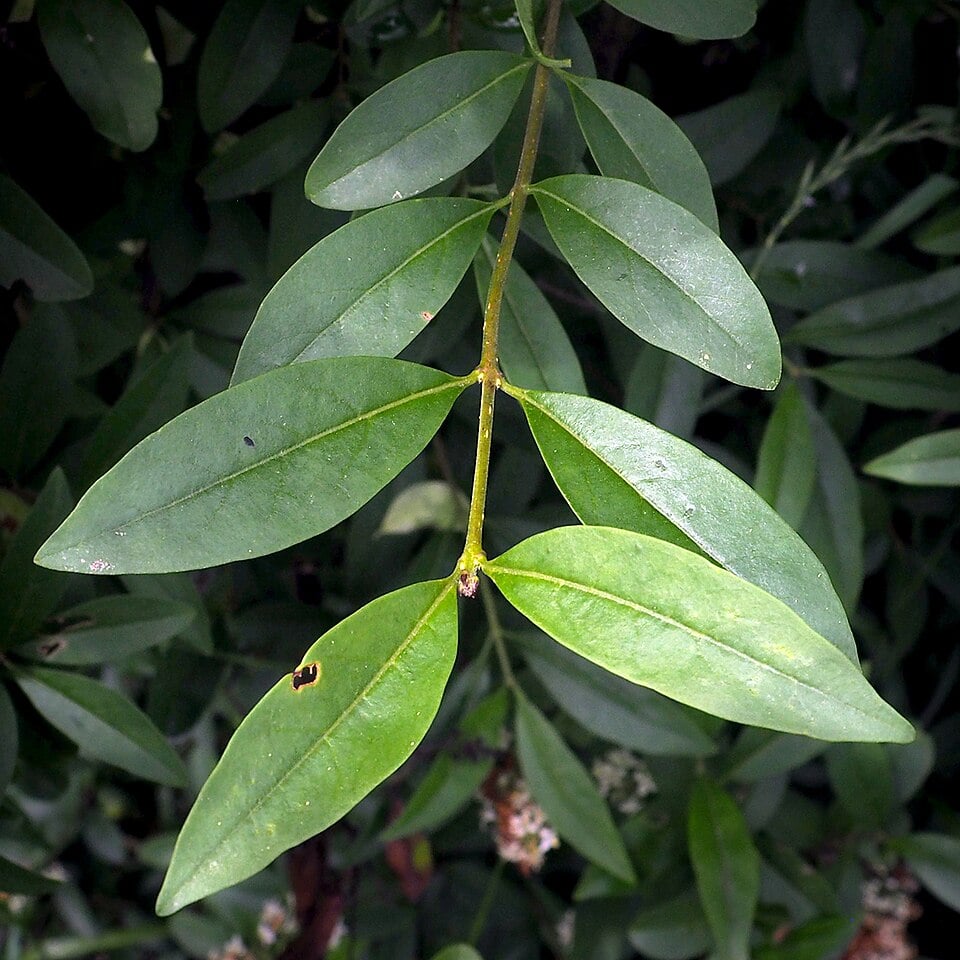
Wild privet
Ligustrum vulgare
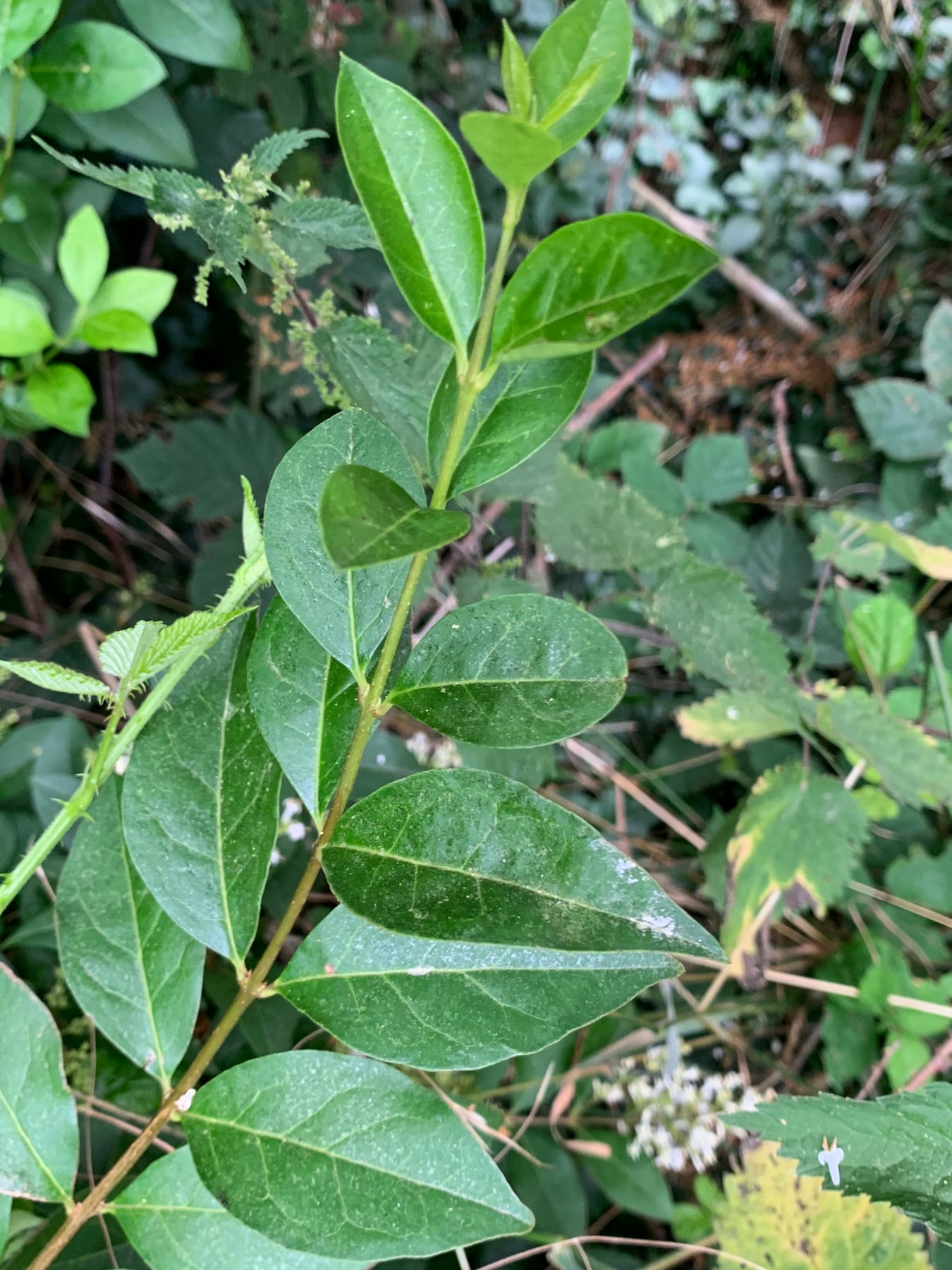
Garden privet
Ligustrum ovalifolium
Garden privet keeps glossy, well-green foliage almost all year (or golden in 'Aureum'), and rarely loses all its leaves in winter, whereas wild privet, a native, has duller, thinner leaves that fall almost entirely in winter in cold regions.
🍃 Leaves
Opposite, ovate-lanceolate, almost evergreen, glossy
Almost evergreen, ovate, glossy green (or golden in the very widespread cultivar 'Aureum'), falling only in harsh winters
🌸 Flowers
Small upright white clusters, strong smell
Small, white, in dense panicles, with a strong smell
🍎 Fruits
Small glossy black berries in clusters, toxic
Small toxic black berries, in autumn
🪵 Bark
Grey, smooth
Slender grey-brown twigs
📏 Size
2 to 4 m tall
2 to 4 m tall (generally clipped to 1-2 m as a hedge)
🗺️ Habitat
Hedges, woodland edges, often planted as a clipped hedge
Clipped hedges in towns and gardens; one of the most widely planted hedges in France
⚠️ Toxicity
Black berries toxic if eaten (digestive upset), leaves also slightly toxic.
Berries toxic if eaten (digestive upset)
🔎 And from the Garden privet side
Wild privet, native to French hedges, has thinner, duller leaves that almost all fall in winter, whereas garden privet keeps dense, glossy foliage almost all year.
🌿 Go further
Want to practise spotting these details on real photos? Floraneo offers profiles and quizzes for dozens of look-alike species.
ℹ️ Educational profile — do not use it to judge whether a plant is edible or safe.