Laurustinus or David's viburnum: how to tell them apart?
Laurustinus and David's viburnum look alike and are often mixed up. Here is how to tell them apart, feature by feature, with their photos and the details to look for.
⚡ The quick answer
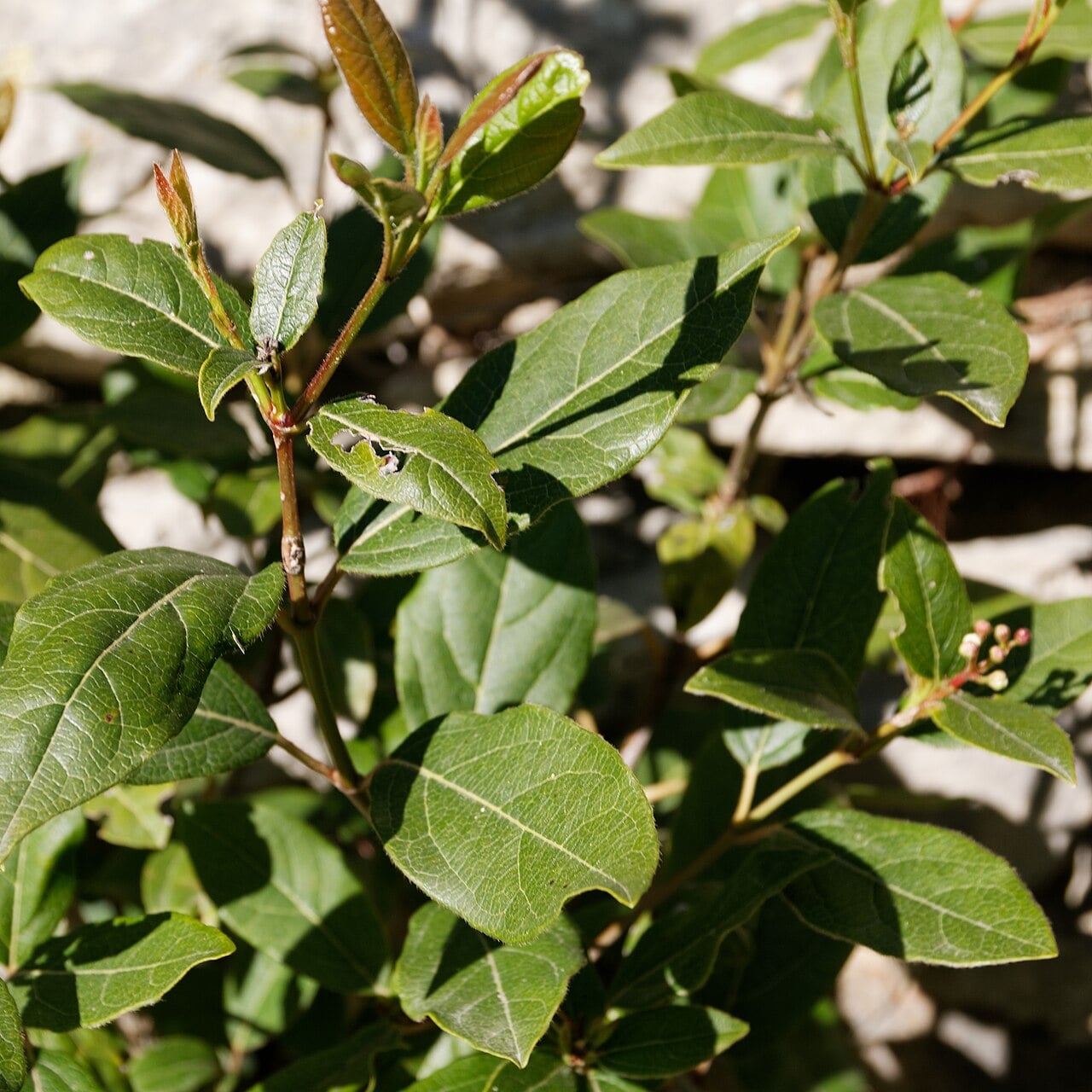
Laurustinus
Viburnum tinus
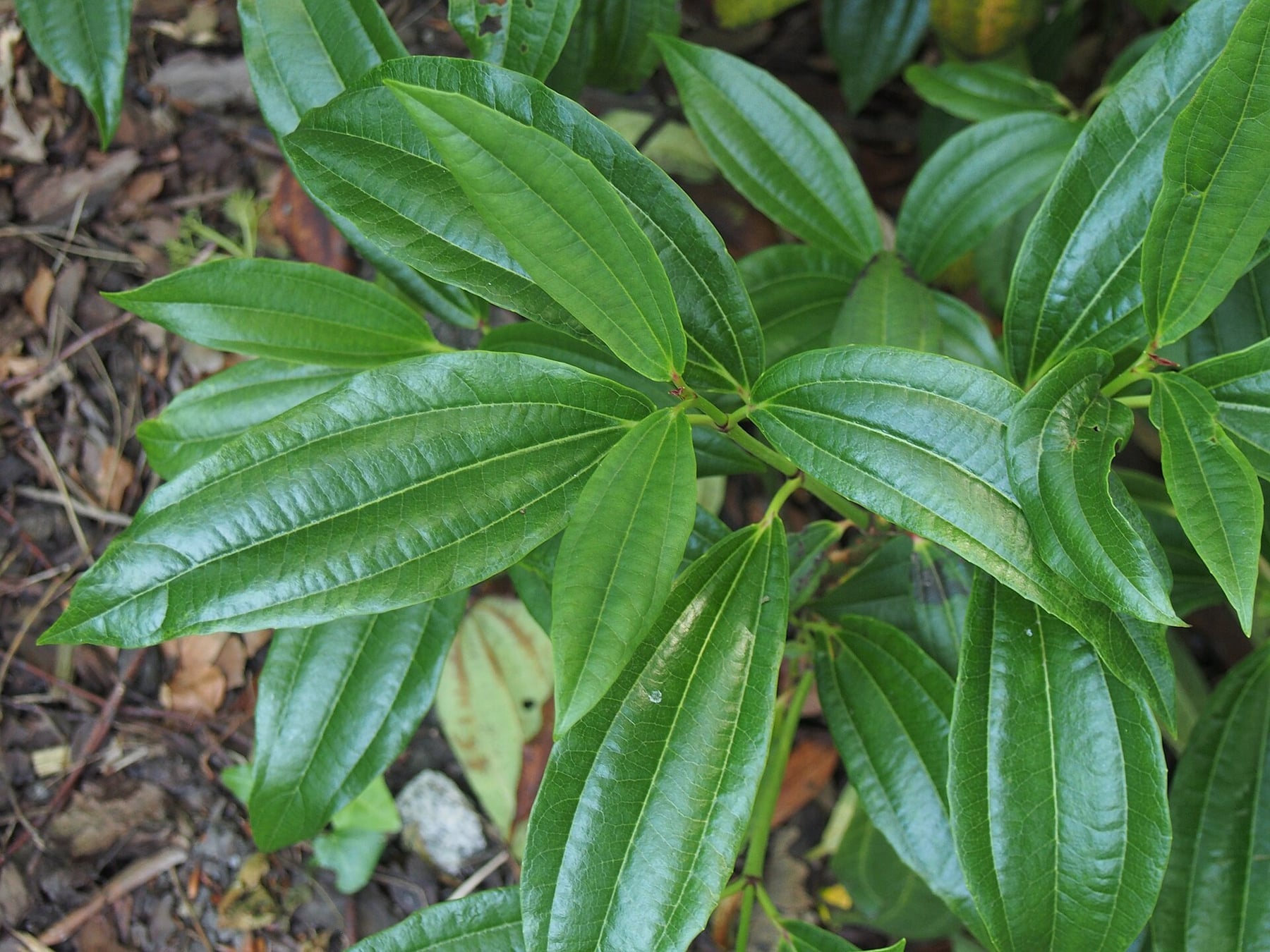
David's viburnum
Viburnum davidii
David's viburnum stays low and spreading as a ground cover, with leaves marked by 3 clearly visible parallel veins and metallic blue fruits, whereas laurustinus grows as a taller, upright shrub, with leaves without marked veins and blue-black fruits.
🍃 Leaves
Evergreen, ovate, glossy dark green
Evergreen, broad, elliptic, strongly veined (three clearly marked main veins), matt dark green
🌸 Flowers
Clusters of small pinkish-white flowers, bright pink buds, lightly scented
Small, white, in flat corymbs
🍎 Fruits
Small metallic blue-black drupes
Oval metallic blue berries, requiring several plants for good fruiting
🪵 Bark
Reddish-brown twigs, dense habit
Slender branches, brown-green
📏 Size
2 to 3 m tall
0.6 to 1 m tall, low spreading habit
🗺️ Habitat
Evergreen hedges, gardens, ordinary soils
Low borders and under cover, cool free-draining soil; planted in groups to ensure fruiting
⚠️ Toxicity
Fruits (blue-black berries) slightly toxic if ingested, causing digestive upset.
Not documented as significantly toxic
🔎 And from the David's viburnum side
Laurustinus grows as a taller, upright shrub, with pinkish-white flowers in large flat clusters from winter, whereas David's viburnum stays low as a ground cover, with leaves showing 3 clearly marked parallel veins and metallic blue fruits.
🌿 Go further
Want to practise spotting these details on real photos? Floraneo offers profiles and quizzes for dozens of look-alike species.
ℹ️ Educational profile — do not use it to judge whether a plant is edible or safe.