Japanese cherry or Wild cherry: how to tell them apart?
Japanese cherry and Wild cherry look alike and are often mixed up. Here is how to tell them apart, feature by feature, with their photos and the details to look for.
⚡ The quick answer
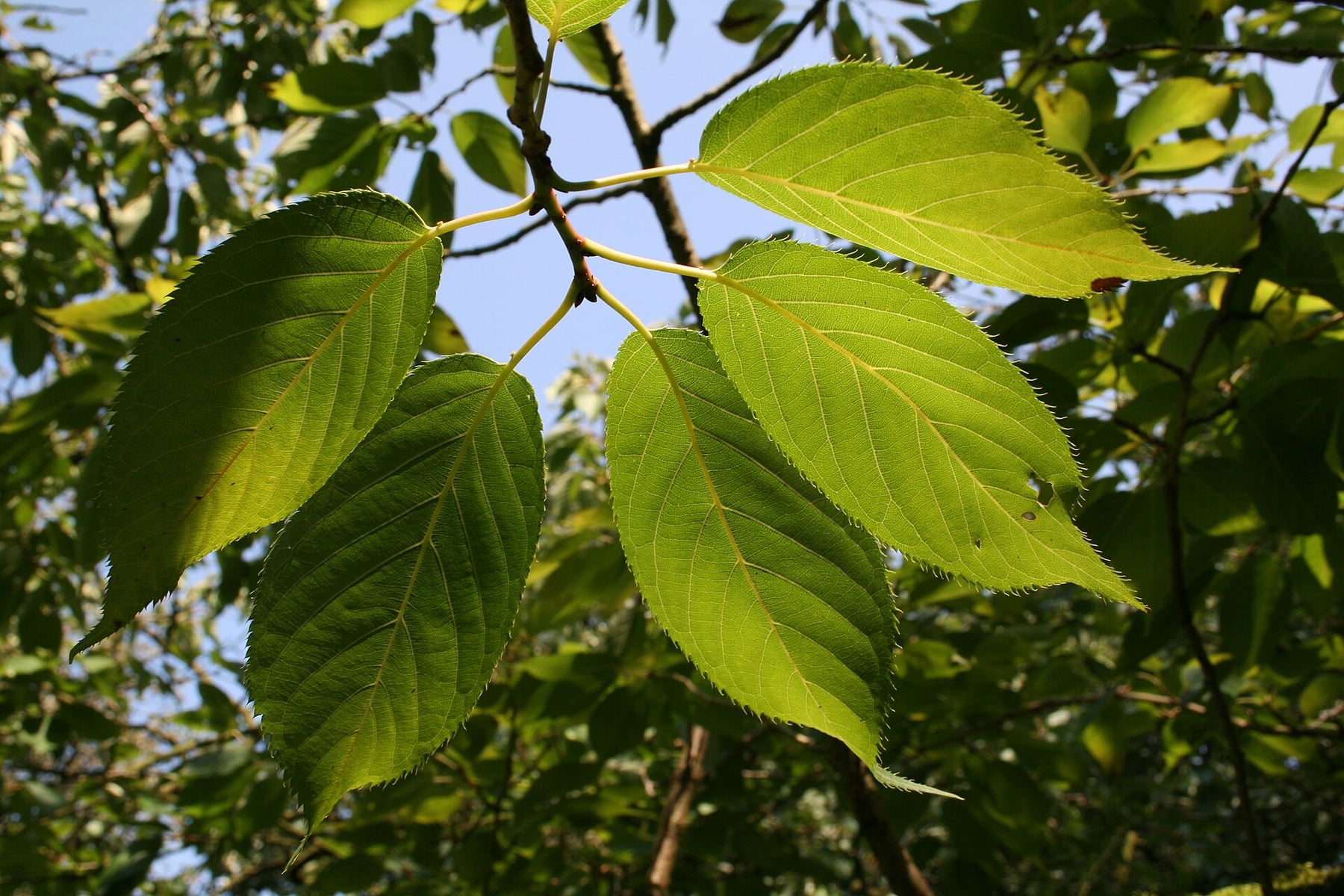
Japanese cherry
Prunus serrulata
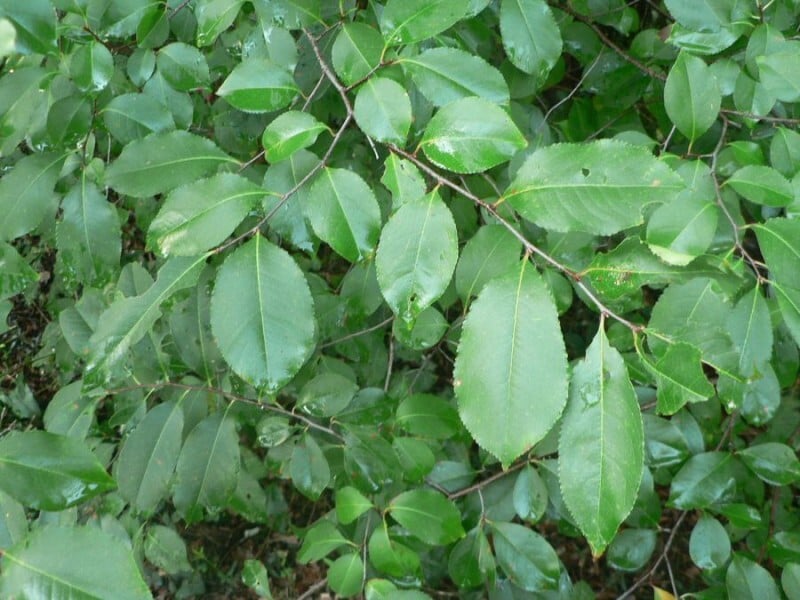
Wild cherry
Prunus avium
The wild cherry (Prunus avium) typically has single white flowers and black fruits when ripe. Japanese cherries comprise many cultivars, some single-flowered, others double: the flower alone is therefore not always enough for identification.
🍃 Leaves
Ovate, finely toothed, bronze when unfolding then bright green, fine autumn colour
Ovate, toothed, tapering tip, two reddish glands at the base of the leaf blade
🌸 Flowers
White to pink flowers, single to very double depending on the cultivar, generally in clusters. Double-flowered cultivars are often sterile or produce few fruits.
Large white flowers in small clusters, very abundant
🍎 Fruits
Small dark drupe, rarely abundant on ornamental cultivars; fruiting varies greatly with the cultivar.
Small dark red to black cherries, bitter
🪵 Bark
Reddish brown, smooth, marked with horizontal lenticels
Glossy reddish-brown, peeling in horizontal bands
📏 Size
4 to 8 m tall
15 to 25 m tall
🗺️ Habitat
Planted as a specimen or in avenues in gardens and parks
Open woodland, woodland edges, rich soils
⚠️ Toxicity
No notable toxicity known for the floral parts; like other Prunus, the stone of the rare fruits contains amygdalin
Leaves, bark and stones contain cyanogenic glycosides, toxic if swallowed in large quantity; the flesh of the fruit is harmless
🔎 And from the Wild cherry side
Wild cherry has single white flowers with five petals, whereas cultivated Japanese cherries most often have double, pink, very full flowers.
🌿 Go further
Want to practise spotting these details on real photos? Floraneo offers profiles and quizzes for dozens of look-alike species.
ℹ️ Educational profile — do not use it to judge whether a plant is edible or safe.