Broad bean or Tufted vetch: how to tell them apart?
Broad bean and Tufted vetch look alike and are often mixed up. Here is how to tell them apart, feature by feature, with their photos and the details to look for.
⚡ The quick answer
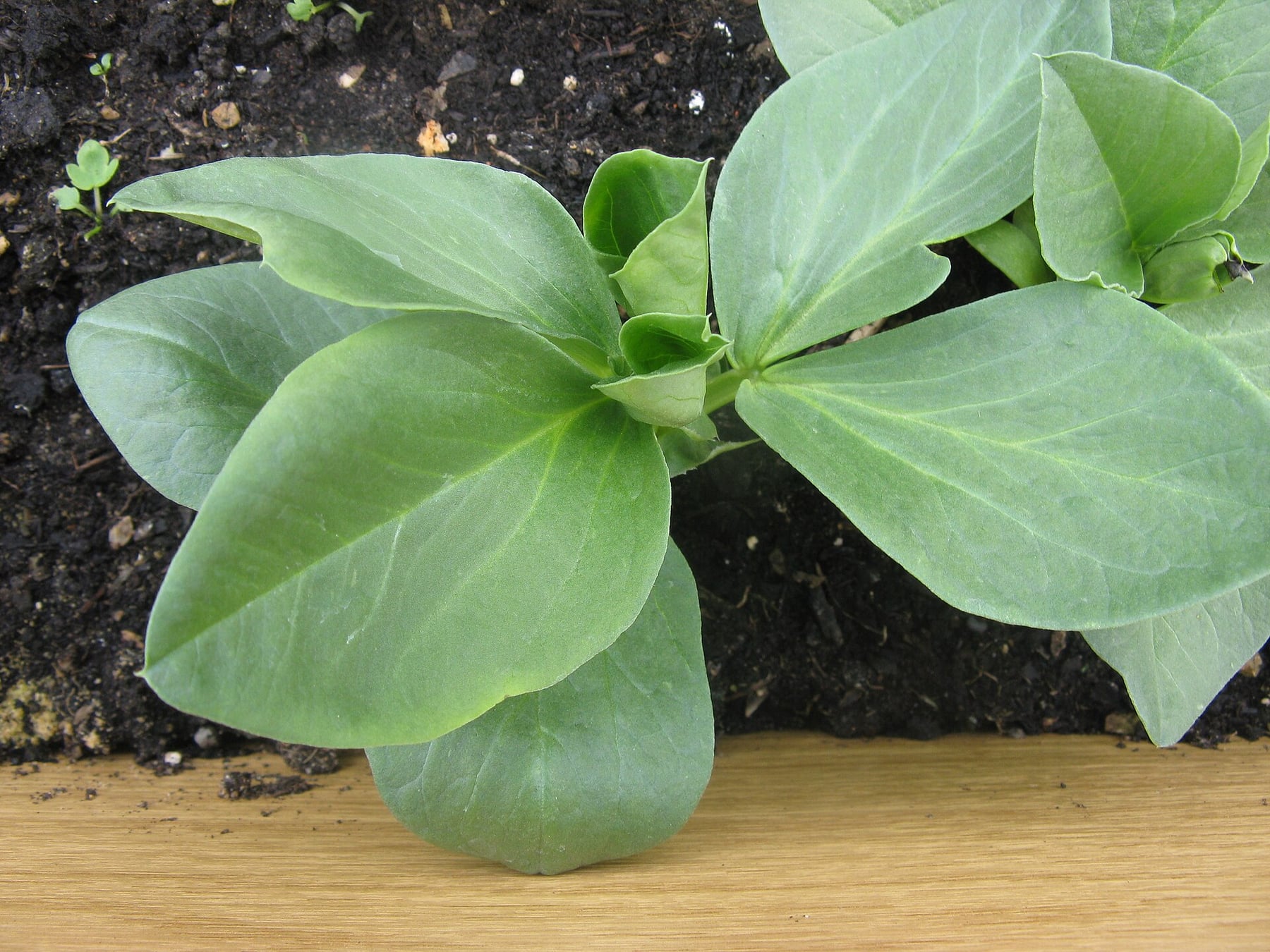
Broad bean
Vicia faba
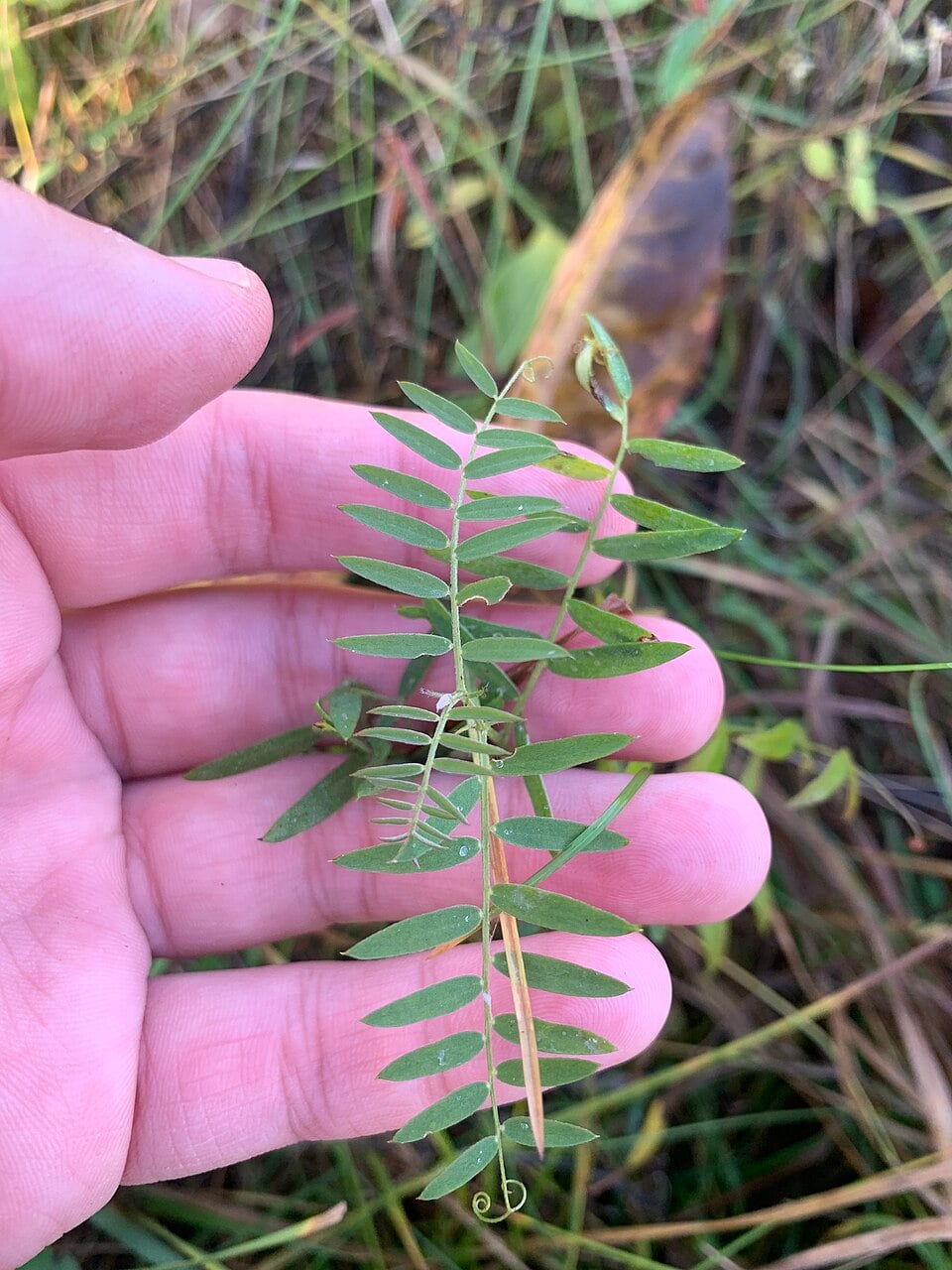
Tufted vetch
Vicia cracca
Both are legumes with large compound leaves, but wild tufted vetch climbs by tendrils and bears small violet flowers in a raceme, whereas the cultivated broad bean is upright with large white flowers blotched with black.
🍃 Leaves
Compound, pinnate, with broad rounded leaflets, without tendrils
Many small narrow leaflets, ending in a branched tendril
🌸 Flowers
White with a characteristic black blotch on the wings, grouped in small numbers in the leaf axils
Blue-violet, numerous, in a dense one-sided raceme
🍎 Fruits
Large fleshy then leathery pod, containing large flattened seeds
Small brown pods
🪵 Bark
Erect, sturdy, square-sectioned herbaceous stem, non-climbing
Climbing herbaceous stem, slightly hairy
📏 Size
50 cm to 1.20 m tall
60 cm to 1.5 m, in climbing stems
🗺️ Habitat
Grown in vegetable gardens and as a field crop (field bean)
Meadows, hedges, banks, woodland edges
⚠️ Toxicity
Seeds edible when cooked; may trigger favism, a severe haemolytic reaction in people with G6PD deficiency
Seeds slightly toxic in large quantities (like other wild legumes).
🔎 And from the Tufted vetch side
Both are legumes with large compound leaves, but wild tufted vetch climbs by tendrils and bears small violet flowers in a raceme, whereas the cultivated broad bean is upright with large white flowers blotched with black.
🌿 Go further
Want to practise spotting these details on real photos? Floraneo offers profiles and quizzes for dozens of look-alike species.
ℹ️ Educational profile — do not use it to judge whether a plant is edible or safe.