Balkan clary or Meadow clary: how to tell them apart?
Balkan clary and Meadow clary look alike and are often mixed up. Here is how to tell them apart, feature by feature, with their photos and the details to look for.
⚡ The quick answer
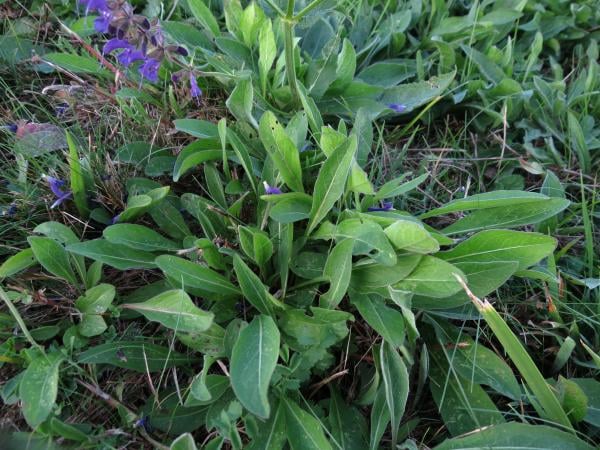
Balkan clary
Salvia nemorosa
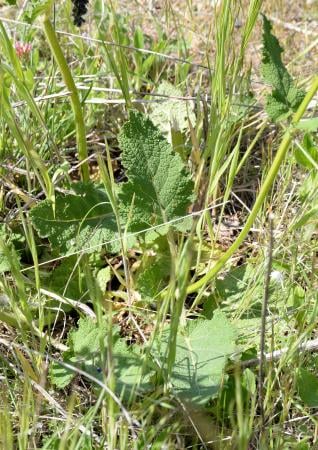
Meadow clary
Salvia pratensis
Woodland sage has small violet-blue flowers packed in a dense, continuous spike, with coloured bracts that persist even after the petals have fallen, and leaves borne all along the stem, whereas meadow clary has larger bright blue-violet flowers, more widely spaced in loose whorls, and its leaves are mostly grouped in a basal rosette.
🍃 Leaves
Opposite, ovate, crinkled, aromatic when crushed
In a basal rosette, crinkled, toothed
🌸 Flowers
Small, violet-blue, grouped in dense erect spikes
Bright blue-violet, in widely spaced whorls along an erect spike, square stem
🍎 Fruits
Small achene
Small brown achenes
🪵 Bark
Square, erect herbaceous stem, perennial from its rootstock
Square herbaceous stem, typical of the Lamiaceae
📏 Size
40 to 60 cm tall
40 to 80 cm tall
🗺️ Habitat
Grown in sunny borders and beds, also found in dry meadows
Dry meadows, banks, often on chalky soil
⚠️ Toxicity
No known toxicity
No known toxicity.
🔎 And from the Meadow clary side
Meadow clary has larger bright blue-violet flowers, more widely spaced in loose whorls along the spike, and its leaves are mostly grouped in a basal rosette, whereas woodland sage has small violet-blue flowers packed in a dense, continuous spike, with coloured bracts that persist even after the petals have fallen, and leaves borne all along the stem.
🌿 Go further
Want to practise spotting these details on real photos? Floraneo offers profiles and quizzes for dozens of look-alike species.
ℹ️ Educational profile — do not use it to judge whether a plant is edible or safe.