Leaf
Jean-Jacques Houdré, Tela Botanica · CC BY-SA 2.0
Yarrow
Achillea millefolium L.
Also known as: Common yarrow, Milfoil
Family: Asteraceae
20 to 80 cm tall
Meadows, banks, track verges
Flowering: June – September
Full sun
Part shade
-30°C
❓ How do you recognise this plant?
Finely cut, feather-like foliage — hence the name "millefolium" (thousand leaves). The simplest criterion is the foliage: A. millefolium has leaves deeply divided into very fine, almost feathery segments, whereas A. ptarmica has simple, narrow, toothed leaves.
🍃 Leaves
Very finely divided, almost feathery, aromatic
🌸 Flowers
Small white to pink flower heads in broad flat corymbs
🍎 Fruits
Small flattened achenes without a pappus
🪵 Bark
Upright herbaceous stem, usually branched in the upper part, slightly hairy.
🗺️ Distribution
Europe, temperate Asia, North America; very common in meadows, banks and track verges in France.
🐝 Value for pollinators
Flat flower clusters much visited by a wide variety of insects: bees, hoverflies, butterflies and beetles.
✂️ Horticultural uses
Perennial borders, flower meadows, dry borders; the aromatic, finely cut foliage is valued as a dried cut flower.
⚠️ Possible toxicity
May cause a skin reaction in sensitive people, especially on contact with the plant.
⚠️ Look-alike species
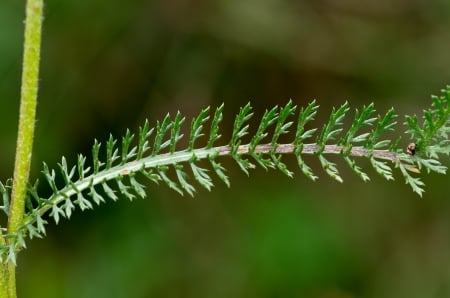
Yarrow
Achillea millefolium
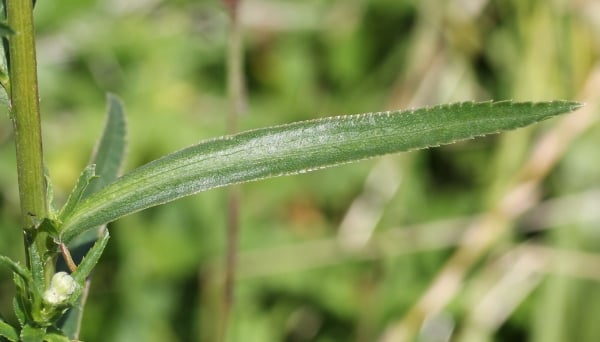
Sneezewort
Achillea ptarmica
The simplest criterion is the foliage: A. millefolium has leaves deeply divided into very fine, almost feathery segments, whereas A. ptarmica has simple, narrow, toothed leaves.
🌿 Other Asteraceae to discover


ℹ️ Educational profile — do not use it to judge whether a plant is edible or safe.
🌱 This database is constantly evolving — species and information are added and corrected regularly. Spotted a mistake? Report it below.
© Floraneo — profile content is protected; reproduction without permission is prohibited. Photos remain under their own licence (see the credit shown on each photo).