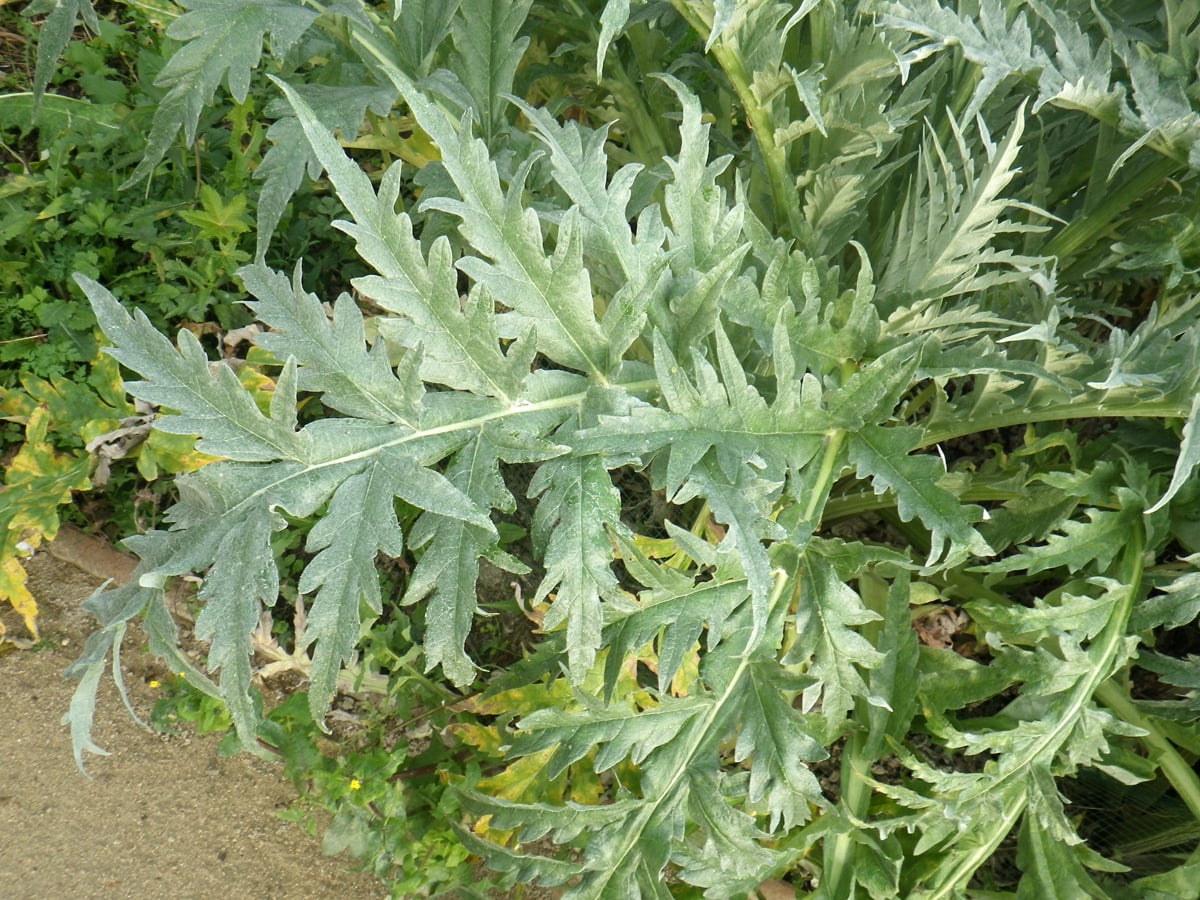
Leaf
Alain Bigou, Tela Botanica · CC BY-SA 2.0
- 60 to 120 cm tall
- Waste ground, track edges and dry rubble of Europe and Asia; grown in dry borders or in a medicinal herb garden in full sun
- Full sun
- Very hardy, to -30°C
In flower from July to September
3 months❓ How do you recognise this plant?
Vermouth owes its name to wormwood: "Wermut" is the German word for this plant, and it is wormwood's bitterness that gave this flavoured wine its taste. Wormwood has finely divided leaves, silvery and silky on both faces, very bitter, and round nodding yellowish-green flowerheads; mugwort has leaves dark green above and white-felted beneath, less finely cut, and small reddish-brown flowerheads in upright spikes.
🍃 Leaves
Alternate, divided two or three times into narrow segments, 5 to 15 cm long, silvery-grey and silky on both faces, very aromatic and intensely bitter
🌸 Flowers
Small, round, nodding flowerheads 3 to 4 mm across, yellowish-green, in long leafy panicles
🍎 Fruits
Tiny achenes without a pappus
🌿 Stem and habit
Upright stems, woody at the base, whitish and silky
Distribution, pollinators, uses
🗺️ Distribution
Europe, temperate Asia, North Africa; naturalised in North America
🐝 Value for pollinators
Wind-pollinated; foliage serves as a host plant for some moths
✂️ Horticultural uses
Silvery plant for dry borders and medicinal gardens; it has also been used as a vermifuge, an insect repellent and to make absinthe liqueur
⚠️ Possible toxicity
Contains thujone, neurotoxic in large doses; avoid eating, forbidden during pregnancy
⚠️ Look-alike species

Wormwood
Artemisia absinthium
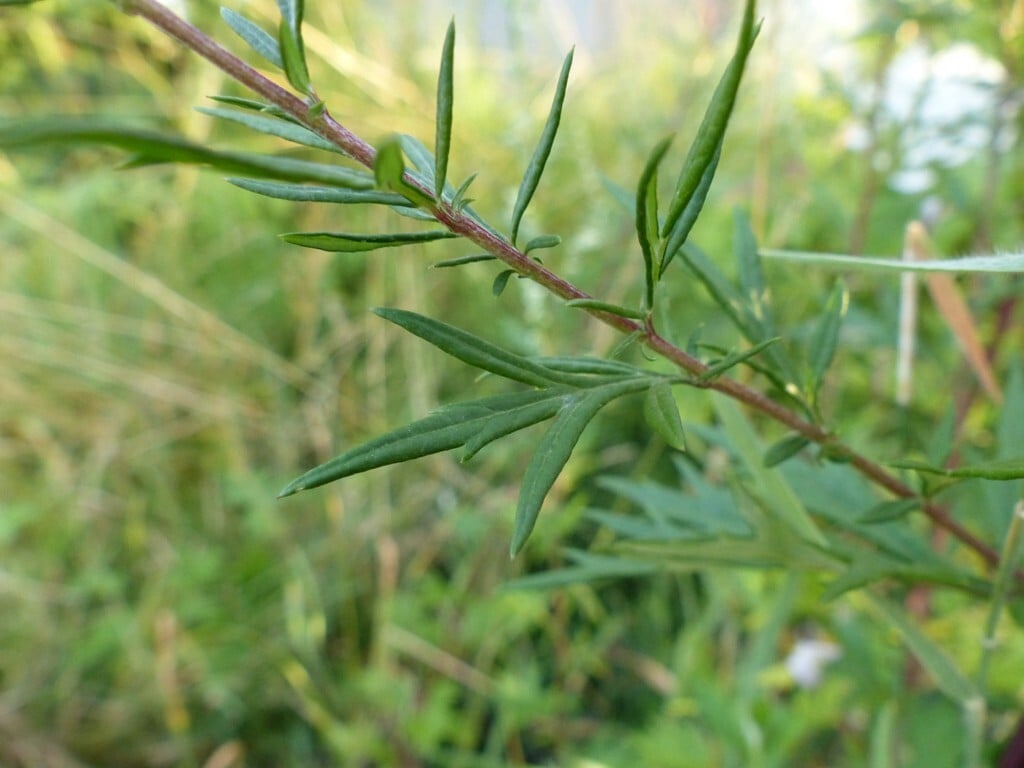
Mugwort
Artemisia vulgaris
Wormwood has finely divided leaves, silvery and silky on both faces, very bitter, and round nodding yellowish-green flowerheads; mugwort has leaves dark green above and white-felted beneath, less finely cut, and small reddish-brown flowerheads in upright spikes.
🌿 Other Asteraceae to discover
ℹ️ Educational profile — do not use it to judge whether a plant is edible or safe.
🌱 This database is constantly evolving — species and information are added and corrected regularly. Spotted a mistake? Report it below.
© Floraneo — profile content is protected; reproduction without permission is prohibited. Photos remain under their own licence (see the credit shown on each photo).