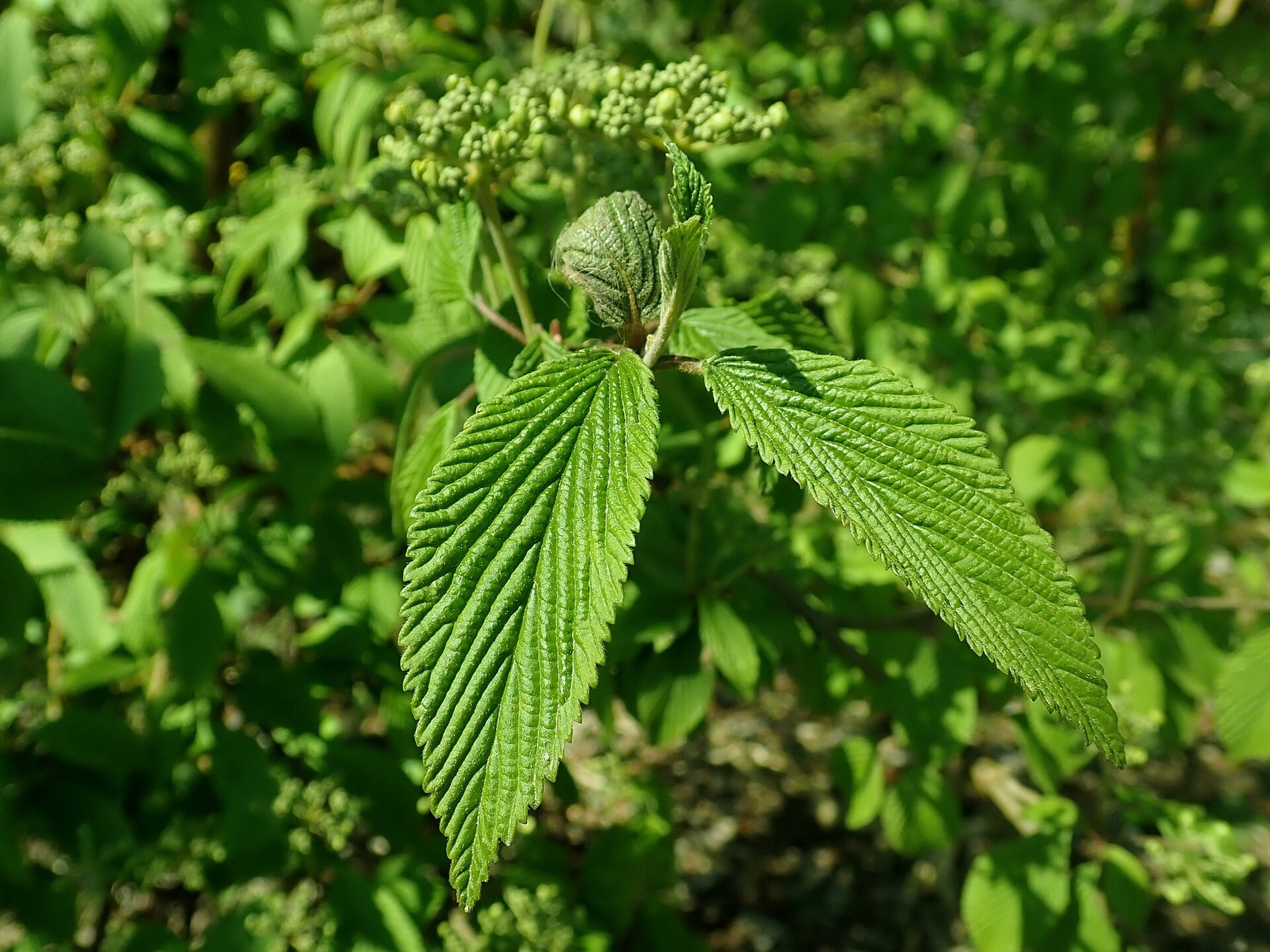
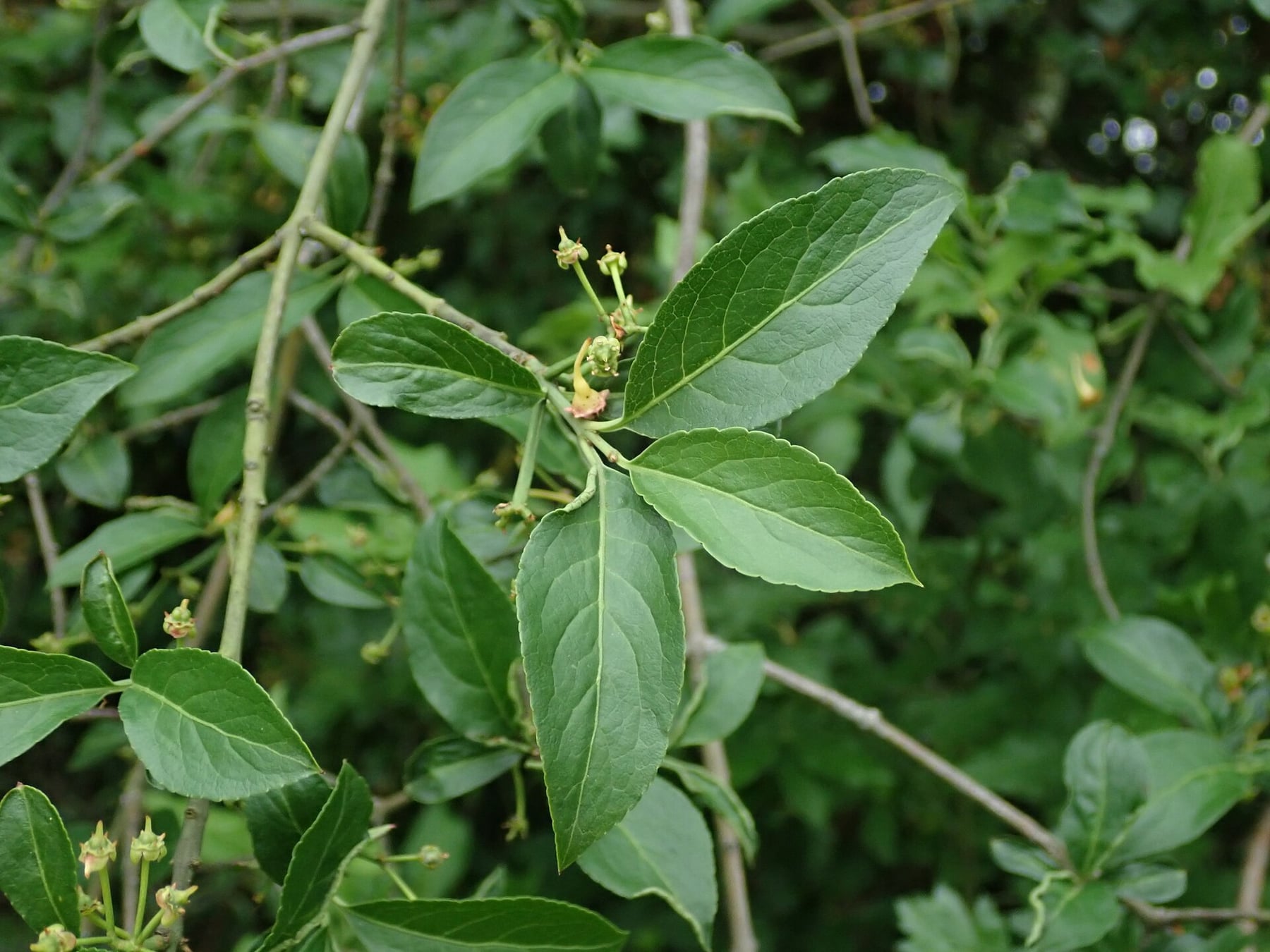
Leaf
Kjoonlee, Wikimedia · CC BY 4.0
Winged spindle
Euonymus alatus (Thunb.) Siebold
Also known as: Burning bush, Winged euonymus
Family: Celastraceae
- 2 to 3 m tall
- Borders, free-draining soil; planted almost exclusively for its blazing autumn colour
- Full sun, Part shade
- Hardy to about -25°C
In flower in May
1 monthMay (inconspicuous flowering)
See what flowers in:May ›
❓ How do you recognise this plant?
Its stems bear wing-shaped corky ridges, visible even in winter without leaves — an identification feature as reliable as its blazing autumn colour, hence its common name 'burning bush'.
Learn to recognise it
Viburnums, dogwoods and berry shrubs. This plant is in the lesson “Viburnums, dogwoods and berry shrubs”, with 10 others.

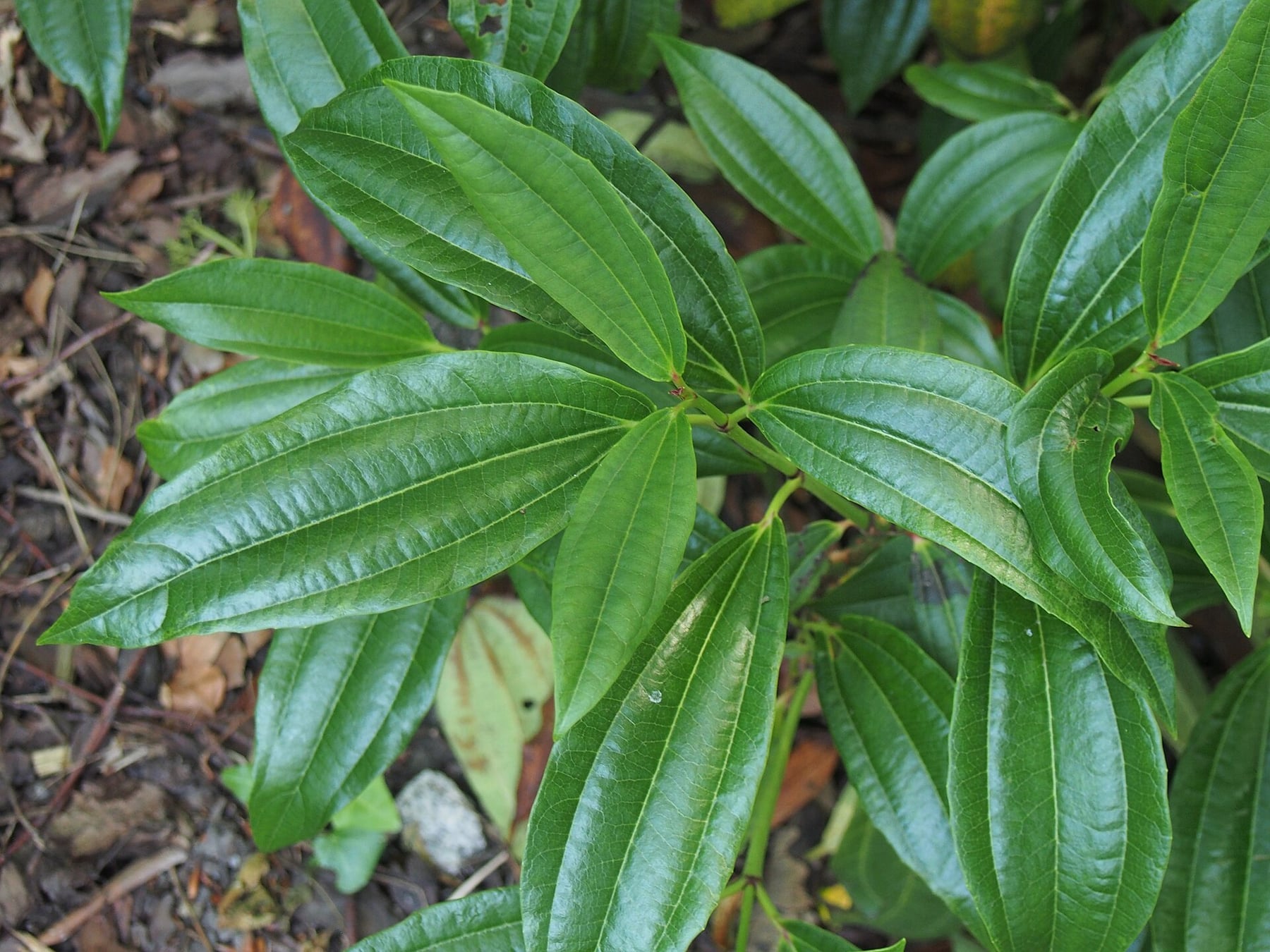
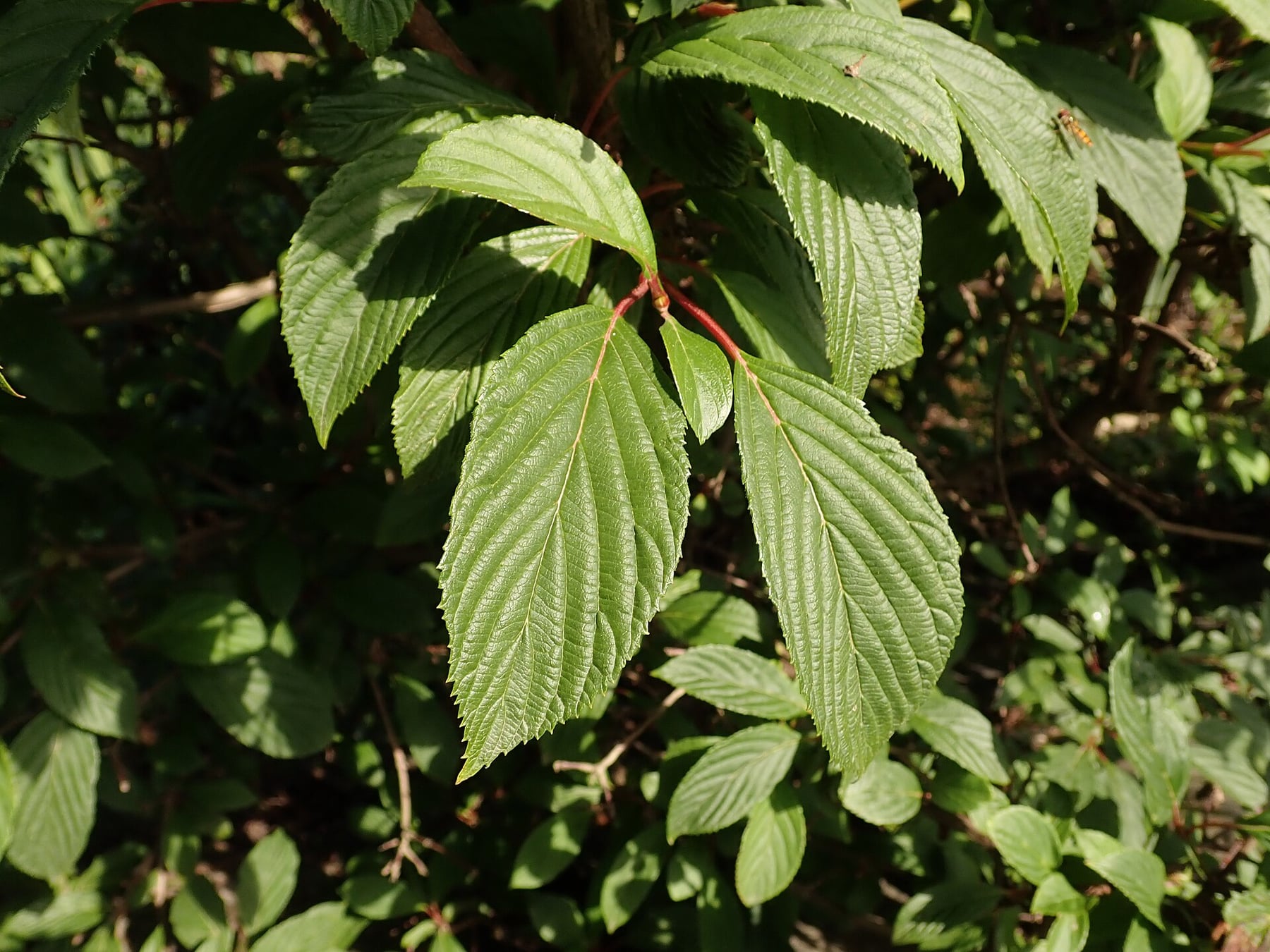
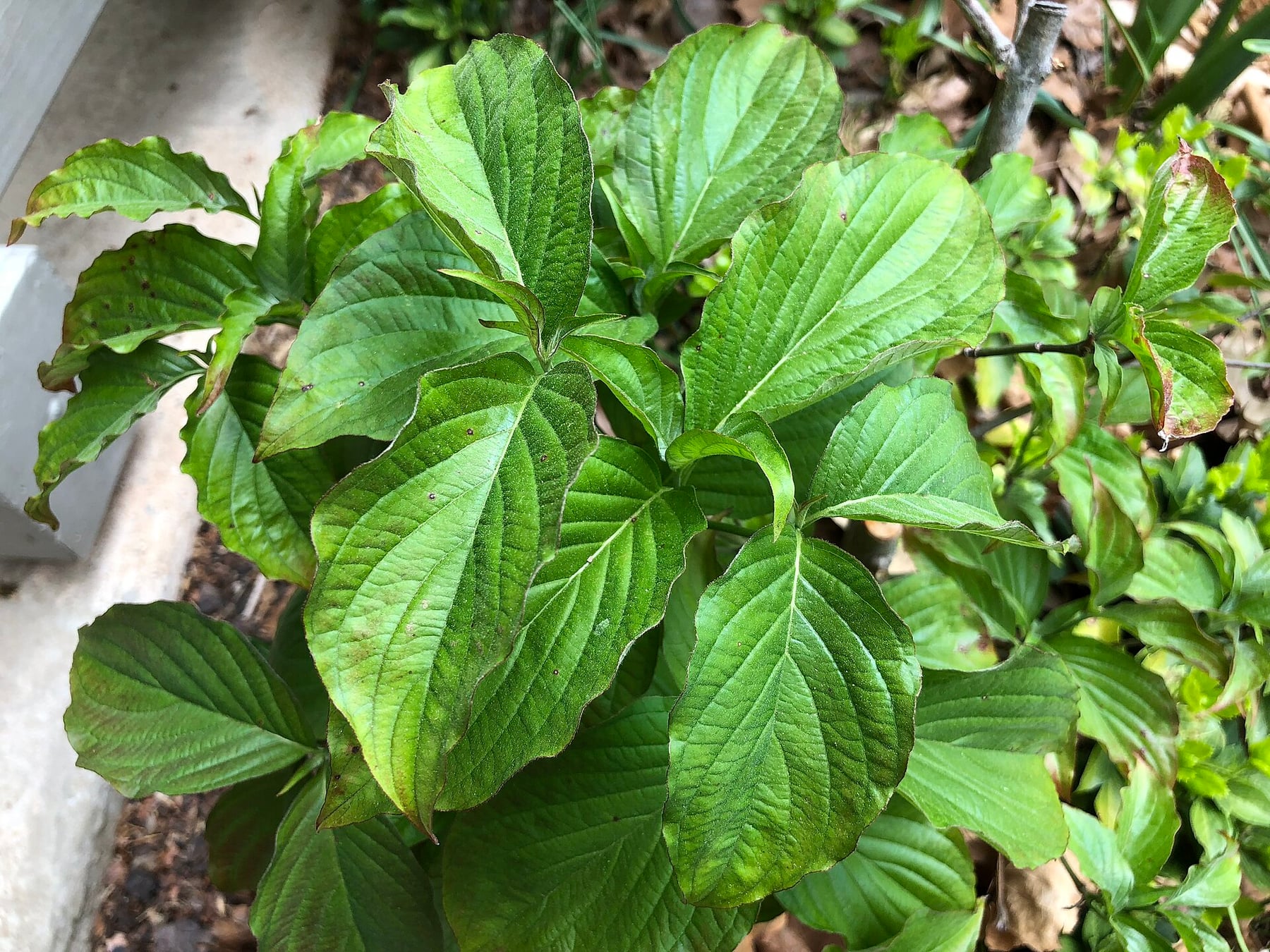
🍃 Leaves
Deciduous, elliptical, toothed, mid-green turning a spectacular scarlet red in autumn
🌸 Flowers
Small, greenish, inconspicuous
🍎 Fruits
Small red capsules opening to reveal orange seeds, in autumn
🪵 Bark
Stems bearing wing-shaped corky ridges, visible even in winter
Distribution, pollinators, uses
🗺️ Distribution
Native to East Asia (China, Japan, Korea)
🐝 Value for pollinators
Inconspicuous flowering, limited interest
✂️ Horticultural uses
Planted for its spectacular bright red autumn colour and its decorative winged stems in winter
⚠️ Possible toxicity
All parts (leaves, fruits and seeds) contain toxic cardiac glycosides; eating a few leaves or seeds generally causes digestive upset, while eating a large amount may cause heart problems.
🌿 Other Celastraceae to discover

ℹ️ Educational profile — do not use it to judge whether a plant is edible or safe.
🌱 This database is constantly evolving — species and information are added and corrected regularly. Spotted a mistake? Report it below.
© Floraneo — profile content is protected; reproduction without permission is prohibited. Photos remain under their own licence (see the credit shown on each photo).