Leaf
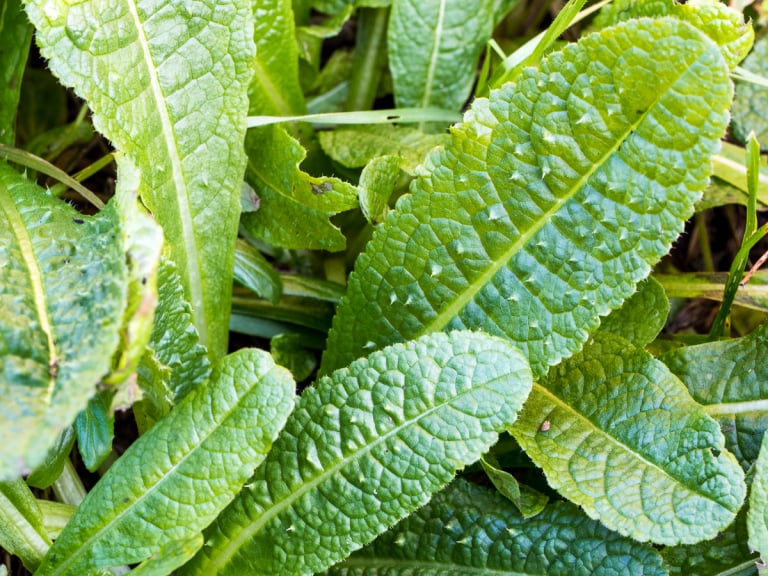
stephane.bello@orange.fr, Tela Botanica · CC BY-SA 2.0
- 1 to 2 m tall in the second year
- Waste ground, banks, paths, clearings and woodland edges, cool clay soils; pioneer of disturbed ground
- Full sun, Part shade
- Very hardy, to -25°C
In flower from July to August
2 months❓ How do you recognise this plant?
Its opposite leaves fused at the base form cups where rainwater collects, hence its French name "cabaret des oiseaux" (birds' tavern); in winter, its dry seed heads feed goldfinches.
🍃 Leaves
Opposite and fused in pairs at the base, forming a cup that holds rainwater, lanceolate, bright green, with spines on the midrib beneath; a rosette in the first year
🌸 Flowers
Ovoid flower head 5 to 8 cm, bristling with long, spiny, curved bracts; the small lilac flowers open in a belt in the middle of the head, then towards the top and bottom
🍎 Fruits
Achenes in a dry brown head that stays upright all winter
🌿 Stem and habit
Robust, ridged, spiny stem, often hollow
Distribution, pollinators, uses
🗺️ Distribution
Europe, western Asia and North Africa; introduced to North America
🐝 Value for pollinators
Flowers much visited by bees, bumblebees and butterflies; in winter, its seeds feed goldfinches
✂️ Horticultural uses
Architectural wild plant appreciated in informal gardens and dried bouquets; dry seed heads are very decorative in winter
⚠️ Possible toxicity
No notable toxicity known; the spines prick
🌿 Other Caprifoliaceae to discover
ℹ️ Educational profile — do not use it to judge whether a plant is edible or safe.
🌱 This database is constantly evolving — species and information are added and corrected regularly. Spotted a mistake? Report it below.
© Floraneo — profile content is protected; reproduction without permission is prohibited. Photos remain under their own licence (see the credit shown on each photo).