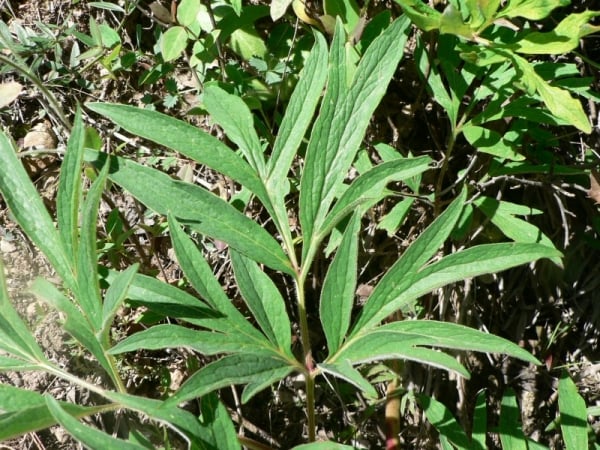
Leaf
Syrio, Wikimedia · CC BY-SA 4.0
Tree peony
Paeonia suffruticosa Andrews
Also known as: Moutan peony, Moutan
Family: Paeoniaceae
1 to 1.5 m tall
Sheltered beds and rich, free-draining soils; cultivated in China for over a thousand years, now in Europe as a collector's shrub
Flowering: April – May
Full sun
Part shade
Hardy to about -25°C
❓ How do you recognise this plant?
Unlike the herbaceous peonies of our gardens, the tree peony keeps a woody framework all year round — in China, it is traditionally nicknamed the "queen of flowers" and has been cultivated for centuries for its huge flowers.
🍃 Leaves
Deciduous, large, deeply cut, glaucous green, decorative even outside the flowering season
🌸 Flowers
Very large, single to fully double, in a range of colours (white, pink, red, yellow, purple), often strongly scented
🍎 Fruits
Leathery follicles splitting open to release glossy black seeds
🪵 Bark
Woody branches persisting through winter, unlike herbaceous peonies
🗺️ Distribution
Native to China, cultivated and selected since Chinese Antiquity, introduced to Europe in the 18th century
🐝 Value for pollinators
Flowers pollinated by insects, notably cockchafers and bees for the abundant pollen
✂️ Horticultural uses
Prestige shrub planted as a specimen or in borders for its exceptional flowering; unlike herbaceous peonies, it is not cut back to the ground each year
⚠️ Possible toxicity
Bark, roots and, to a lesser extent, flowers and stems contain paeonol, mildly toxic if ingested by dogs, cats and horses (digestive upset).
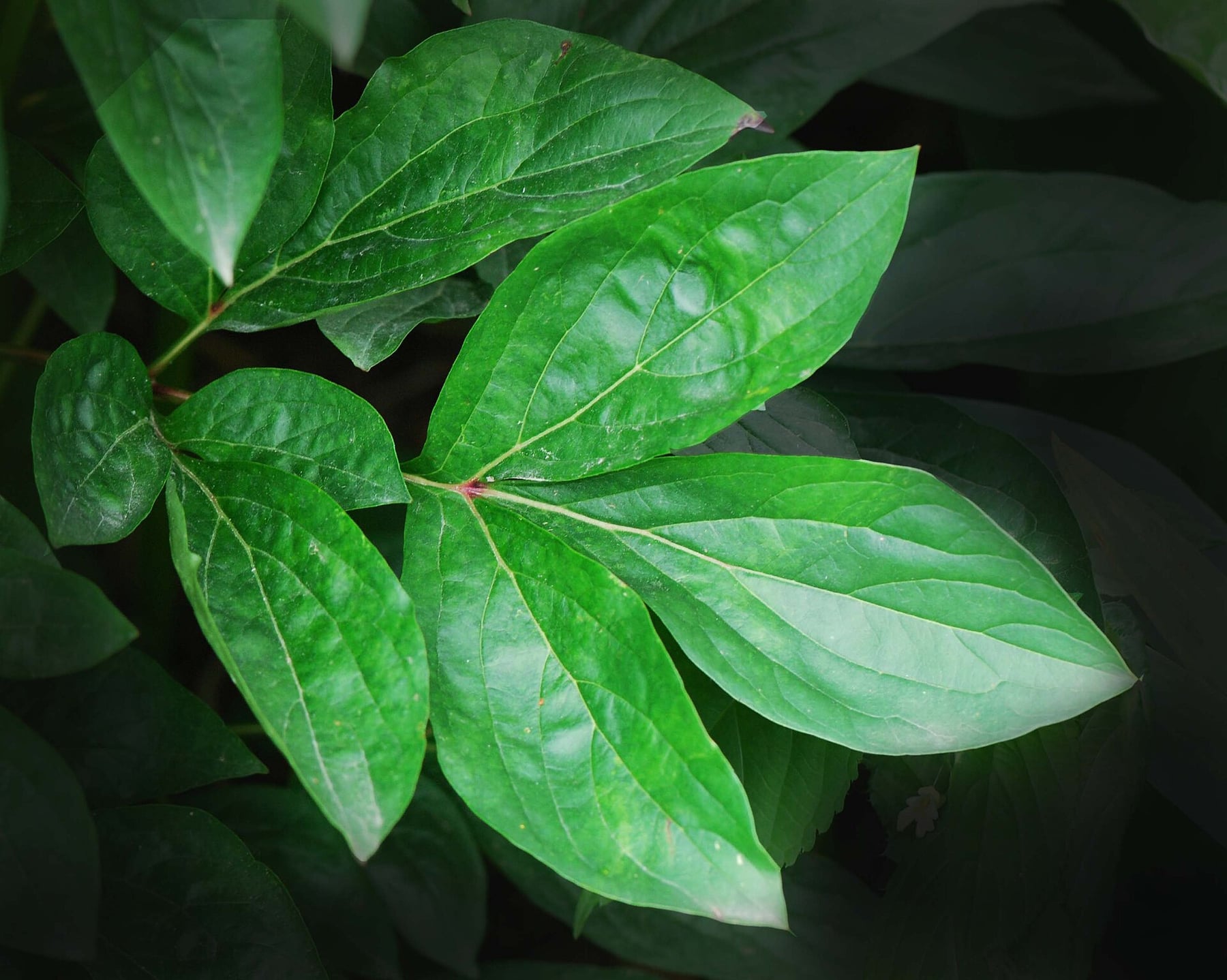
🌿 Other Paeoniaceae to discover
ℹ️ Educational profile — do not use it to judge whether a plant is edible or safe.
🌱 This database is constantly evolving — species and information are added and corrected regularly. Spotted a mistake? Report it below.
© Floraneo — profile content is protected; reproduction without permission is prohibited. Photos remain under their own licence (see the credit shown on each photo).