Leaf
Maksym Kozlenko, Wikimedia · CC BY-SA 4.0
Stinging nettle
Urtica dioica L.
Also known as: Common nettle, Nettle
Family: Urticaceae
60 cm to 1.5 m
Waste ground, rubble, nitrogen-rich soils
Flowering: June – September
Full sun
Part shade
Very hardy, to -20°C
❓ How do you recognise this plant?
The stinging hairs inject formic acid at the slightest touch — recognisable without even seeing it. Red dead-nettle mimics the silhouette of the nettle (hence its French name of "false nettle") but its leaves are soft to the touch, without stinging hairs, and its pink gaping flowers easily distinguish it.
🍃 Leaves
Opposite, heart-shaped, saw-toothed, covered in stinging hairs
🌸 Flowers
Tiny, greenish, in long pendent clusters
🍎 Fruits
Numerous tiny achenes
🪵 Bark
Square herbaceous stem, covered in stinging hairs
🗺️ Distribution
Europe, Asia, North Africa; very common in France near dwellings and on nitrogen-rich soils
🐝 Value for pollinators
Wind-pollinated, but foliage is an essential host for the caterpillars of many butterflies (peacock, red admiral)
✂️ Horticultural uses
Tolerated in a wild corner of the garden for biodiversity, used to make a fertilising liquid feed
⚠️ Possible toxicity
Stinging hairs causing itching and redness of the skin on contact; harmless once cooked
⚠️ Look-alike species
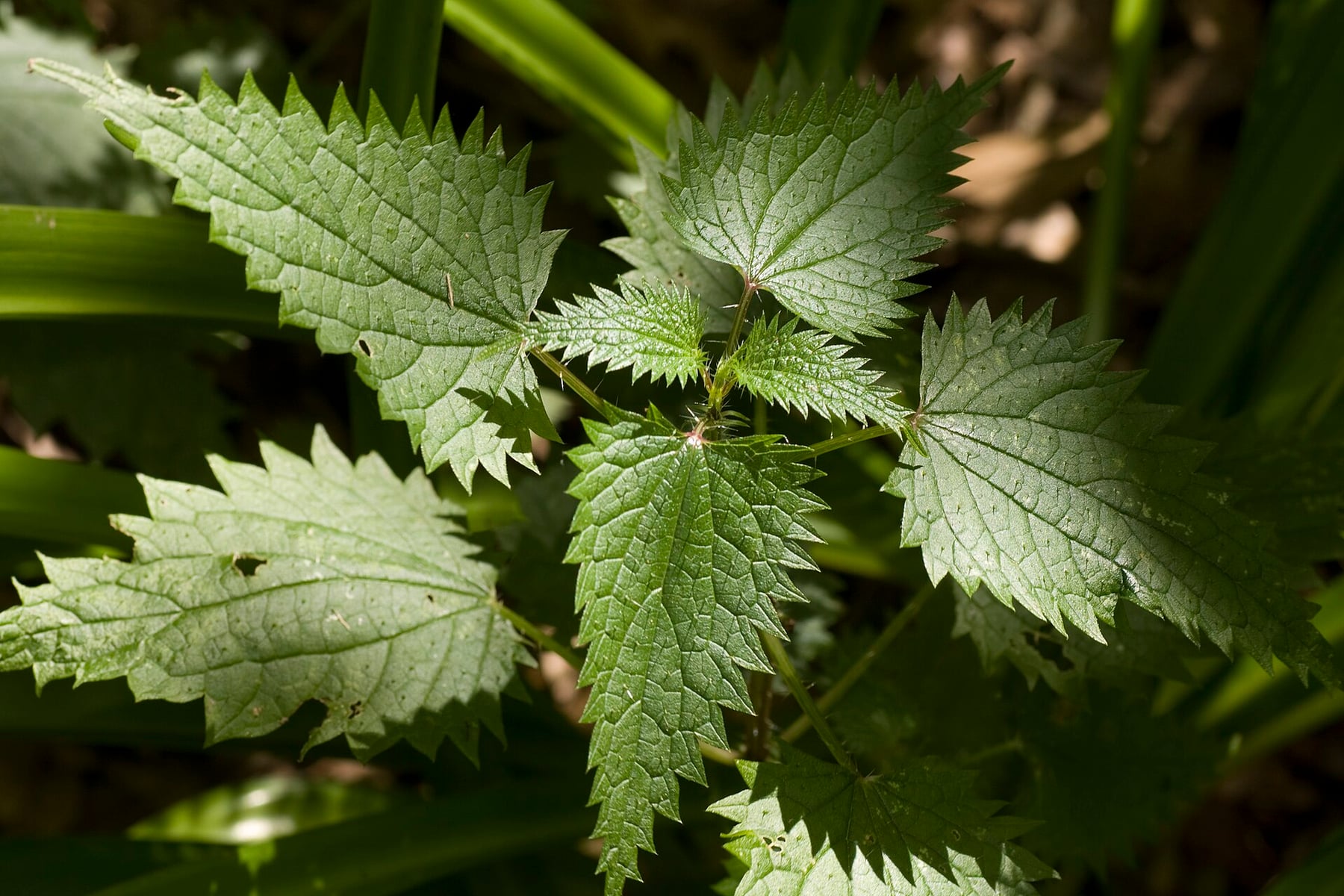
Stinging nettle
Urtica dioica
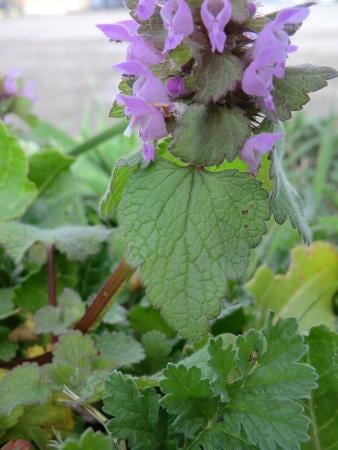
Red dead-nettle
Lamium purpureum
Red dead-nettle mimics the silhouette of the nettle (hence its French name of "false nettle") but its leaves are soft to the touch, without stinging hairs, and its pink gaping flowers easily distinguish it.
ℹ️ Educational profile — do not use it to judge whether a plant is edible or safe.
🌱 This database is constantly evolving — species and information are added and corrected regularly. Spotted a mistake? Report it below.
© Floraneo — profile content is protected; reproduction without permission is prohibited. Photos remain under their own licence (see the credit shown on each photo).