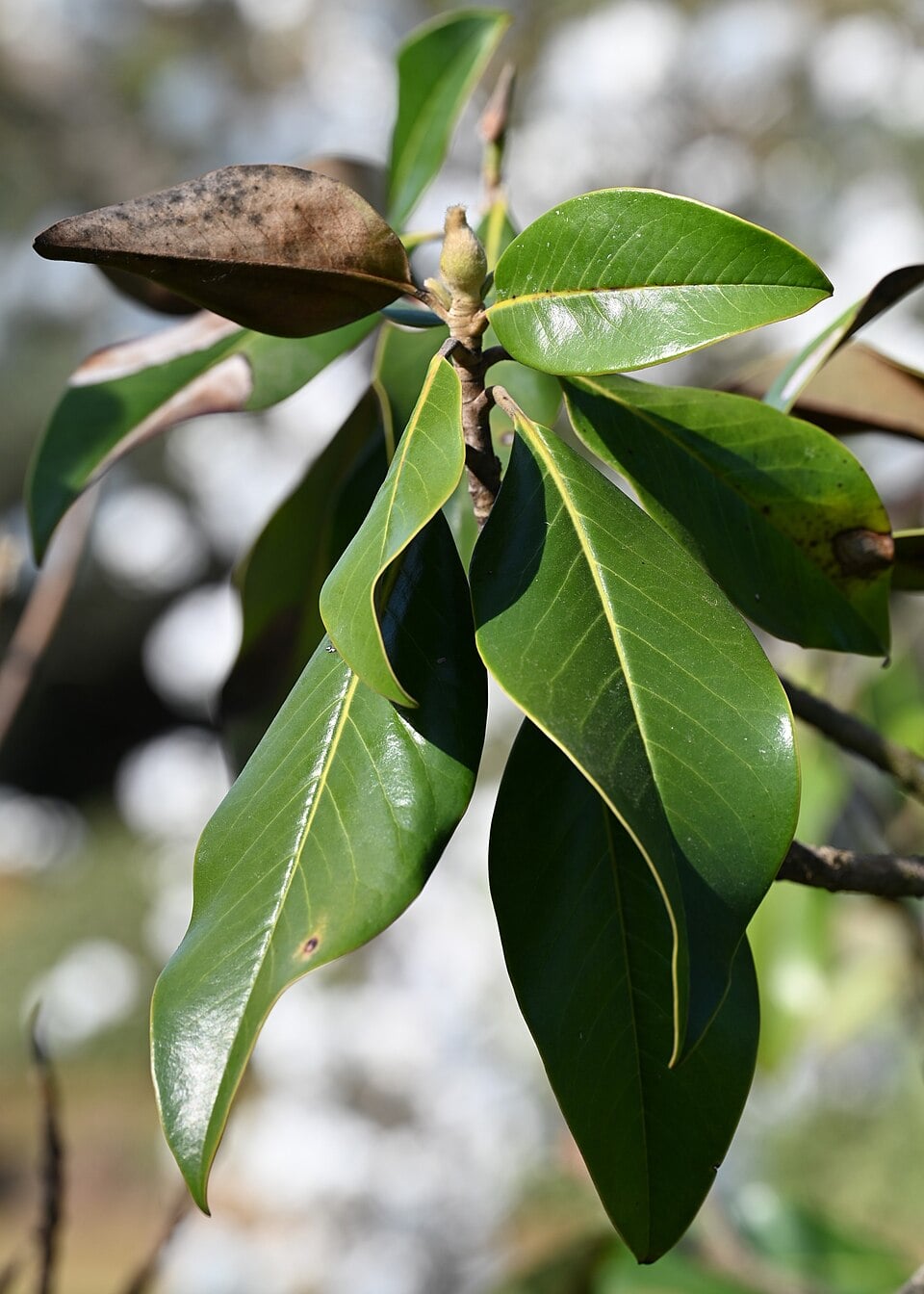
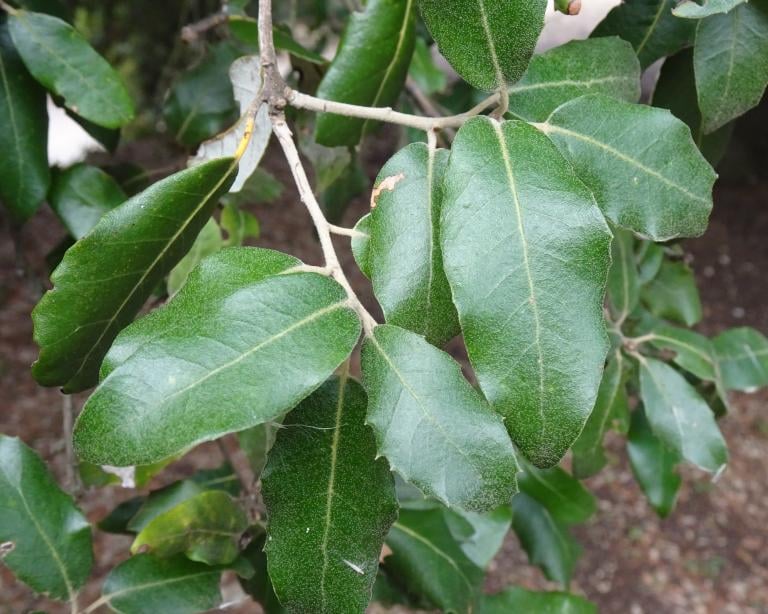
Leaf
Krzysztof Ziarnek, Wikimedia · CC BY-SA 4.0
Southern magnolia
Magnolia grandiflora L.
Also known as: Bull bay, Evergreen magnolia
Family: Magnoliaceae
- 10 to 20 m tall
- Planted as a specimen in parks and large gardens
- Full sun, Part shade
- Fairly hardy, to about -15°C once established, sensitive to cold in the first few years
In flower from June to September
4 months❓ How do you recognise this plant?
Magnolia is one of the oldest genera of flowering plants still in existence — its flowers, which appeared before bees evolved, were originally pollinated by beetles, which explains their thick, tough petals.
Learn to recognise it
Conifers and park trees. This plant is in the lesson “Conifers and park trees”, with 11 others.
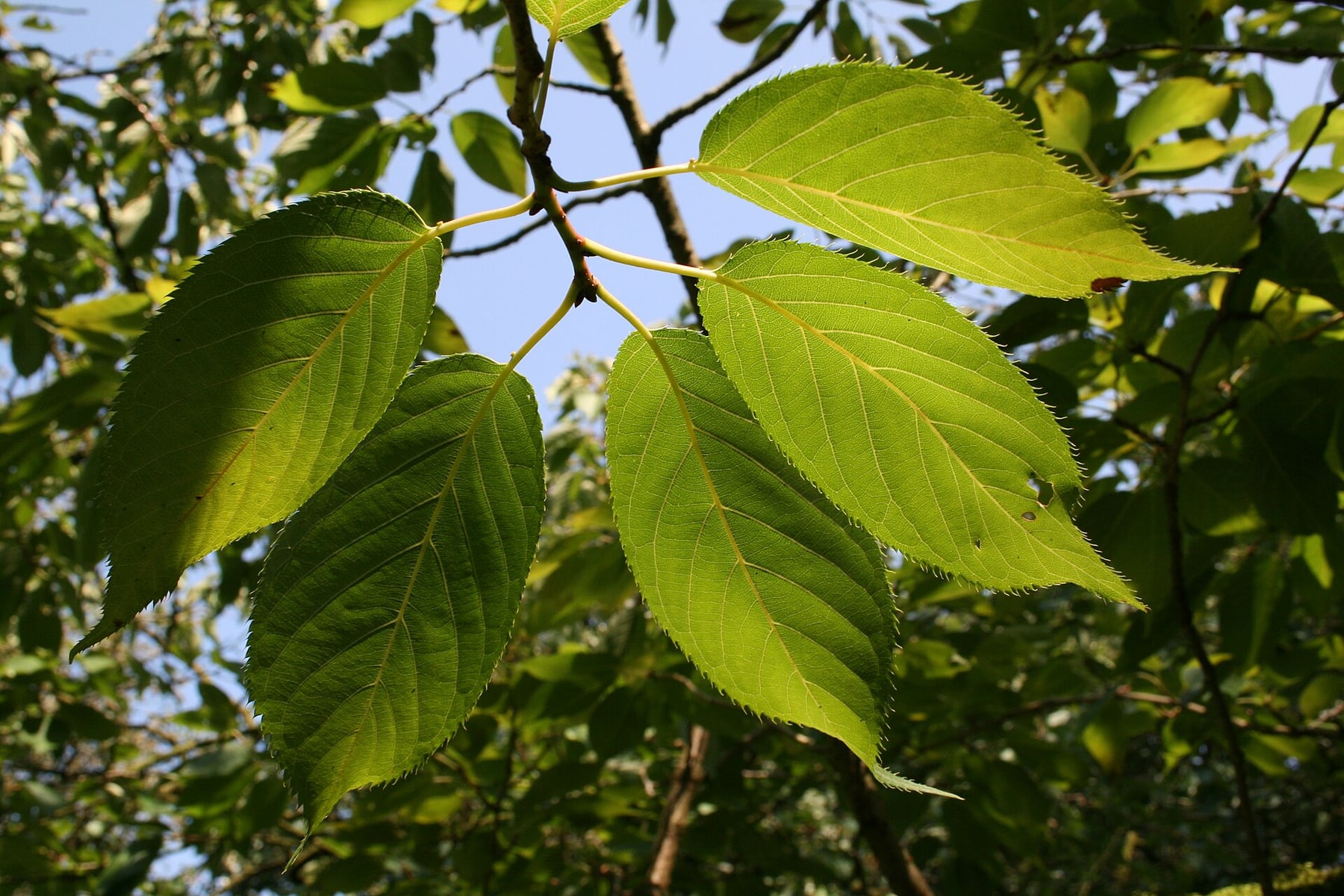
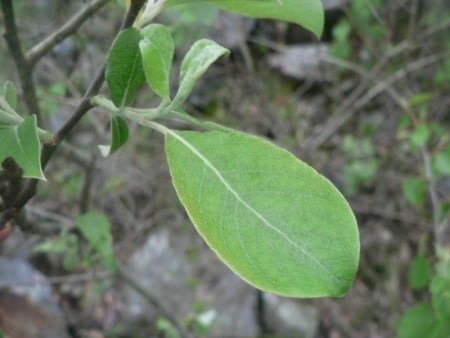
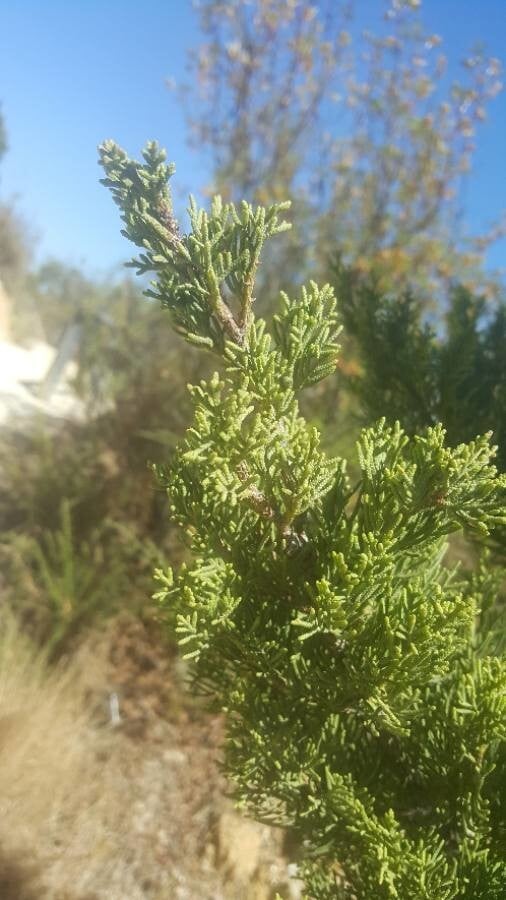
Free, no account needed.
🍃 Leaves
Evergreen, large, leathery, glossy above, rusty-felted beneath
🌸 Flowers
Very large (up to 25 cm), creamy white, highly scented, broadly cup-shaped
🍎 Fruits
Follicles clustered in an upright cone, opening to reveal red seeds
🪵 Bark
Grey, smooth, becoming slightly rough with age
Distribution, pollinators, uses
🗺️ Distribution
Native to the south-eastern United States; widely planted in France as an ornamental tree, especially south of the Loire
🐝 Value for pollinators
Primitive flowers historically pollinated by beetles rather than bees, an ancient strategy among flowering plants
✂️ Horticultural uses
Major ornamental tree planted for its glossy evergreen foliage and huge scented summer flowers
⚠️ Possible toxicity
No notable toxicity known
🌱 Known cultivars
Little Gem
Dwarf version of the southern magnolia (3-4 m against 15-20 m for the typical species), with a compact, columnar habit, ideal for a small garden or as a specimen; flowers from a young age.
Bracken's Brown Beauty
Very hardy, compact cultivar (8-10 m), recognisable by the underside of the leaves covered in a thick rusty-brown down ('indumentum'), one of the best sellers in nurseries.
🌿 Other Magnoliaceae to discover


ℹ️ Educational profile — do not use it to judge whether a plant is edible or safe.
🌱 This database is constantly evolving — species and information are added and corrected regularly. Spotted a mistake? Report it below.
© Floraneo — profile content is protected; reproduction without permission is prohibited. Photos remain under their own licence (see the credit shown on each photo).