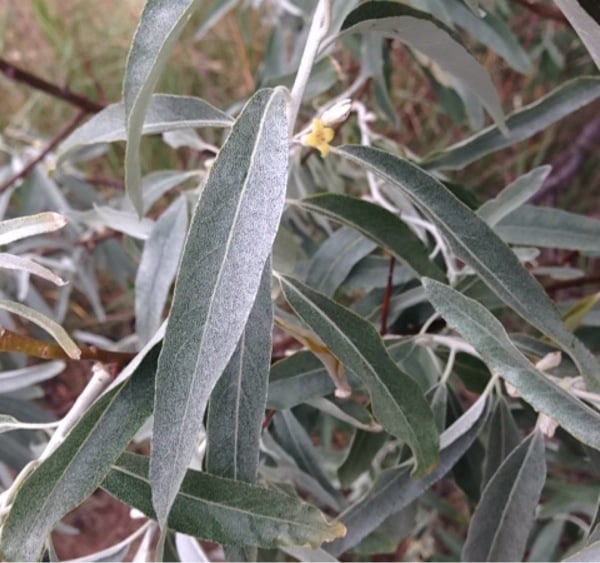
Leaf
Liliane Roubaudi, Tela Botanica · CC BY-SA 2.0
Sea buckthorn
Hippophae rhamnoides L.
Also known as: Seaberry
Family: Elaeagnaceae
2 to 6 m tall
Coastal dunes, stony mountain-torrent banks, poor sandy soils
Flowering: March – April, before the leaves
Full sun
Very hardy, to about -30°C, tolerates salt and wind
❓ How do you recognise this plant?
Sea buckthorn is dioecious: a male plant AND a female plant must grow close together for fruits to form — a single isolated plant will never produce any.
🍃 Leaves
Narrow, lanceolate, silvery grey beneath
🌸 Flowers
Small, yellowish, inconspicuous, appearing before the leaves; dioecious plant (separate male and female plants)
🍎 Fruits
Small bright orange fruits, ovoid to rounded, packed tightly along the branches of female plants.
🪵 Bark
Much-branched shrub, often thorny; young shoots silvery.
🗺️ Distribution
Atlantic and Channel coasts, Alpine valleys; pioneer plant of poor soils
🐝 Value for pollinators
Early flowers produce little nectar (wind-pollinated); fruits much sought after by birds in winter
✂️ Horticultural uses
Planted to stabilise dunes and banks; fruits used for juice and jam
⚠️ Possible toxicity
Berries edible, very rich in vitamin C, but very acidic; no known toxicity
🌿 Other Elaeagnaceae to discover
ℹ️ Educational profile — do not use it to judge whether a plant is edible or safe.
🌱 This database is constantly evolving — species and information are added and corrected regularly. Spotted a mistake? Report it below.
© Floraneo — profile content is protected; reproduction without permission is prohibited. Photos remain under their own licence (see the credit shown on each photo).