Leaf
Pierre Bonnet, Tela Botanica · CC BY-SA 2.0
Russian olive
Elaeagnus angustifolia L.
Also known as: Oleaster
Family: Elaeagnaceae
3 to 6 m tall
Windbreak hedges, gardens, poor dry soils
Flowering: May – June
Full sun
Hardy to -25°C
❓ How do you recognise this plant?
Its silvery foliage and inconspicuous but very fragrant flowers perfume the garden in late spring. Two silvery-leaved Elaeagnus, often used for hedging. Russian olive loses its leaves in winter and has narrower, greyer foliage; Ebbinge's silverberry stays evergreen all year.
🍃 Leaves
Deciduous, narrow, lanceolate, silvery grey above and below
🌸 Flowers
Tiny pale yellow bells, very fragrant, hidden beneath the foliage
🍎 Fruits
Oval drupes, yellowish to yellow-orange when ripe, about 1 to 2 cm, with mealy or dry flesh depending on ripeness.
🪵 Bark
Fissured brown-grey bark, twigs sometimes spiny
🗺️ Distribution
Western and central Asia, south-eastern Europe; introduced and cultivated in France, notably in the Mediterranean region, sometimes naturalised.
🐝 Value for pollinators
Very fragrant, nectar-rich spring flowering, appreciated by bees.
✂️ Horticultural uses
Planted as a windbreak hedge, notably by the sea as it tolerates salt spray and drought.
⚠️ Possible toxicity
The ripe fruits are eaten in some regions. As this is a wild plant, do not eat it without certain identification.
⚠️ Look-alike species
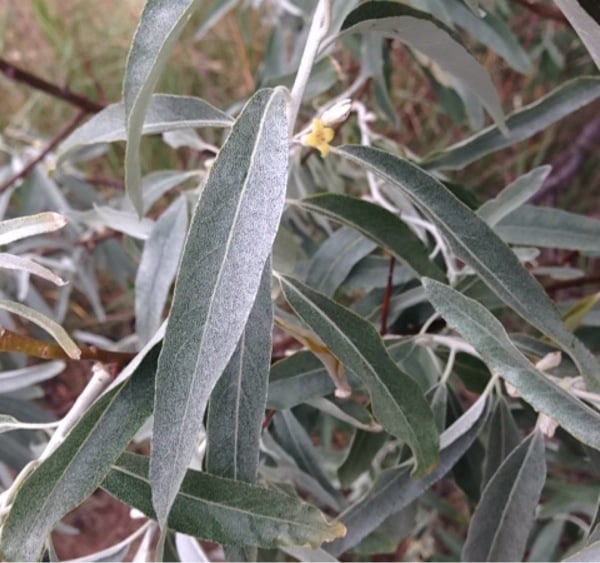
Russian olive
Elaeagnus angustifolia
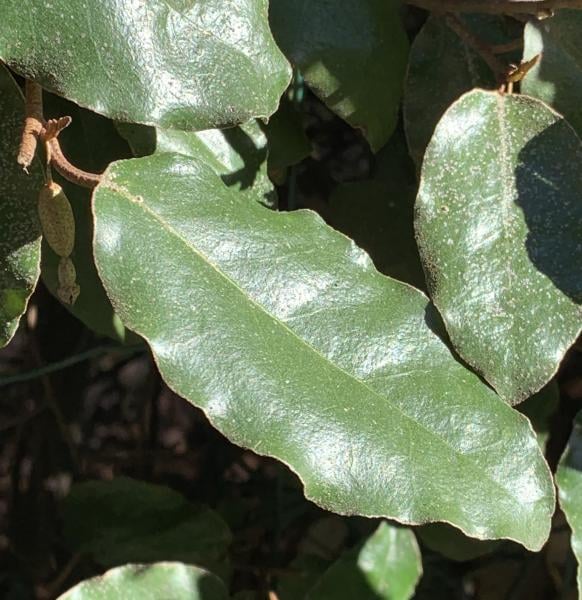
Ebbinge's silverberry
Elaeagnus x ebbingei
Two silvery-leaved Elaeagnus, often used for hedging. Russian olive loses its leaves in winter and has narrower, greyer foliage; Ebbinge's silverberry stays evergreen all year.
🌿 Other Elaeagnaceae to discover

ℹ️ Educational profile — do not use it to judge whether a plant is edible or safe.
🌱 This database is constantly evolving — species and information are added and corrected regularly. Spotted a mistake? Report it below.
© Floraneo — profile content is protected; reproduction without permission is prohibited. Photos remain under their own licence (see the credit shown on each photo).