Leaf
Krzysztof Ziarnek, Kenraiz, Wikimedia · CC BY-SA 4.0
Kohuhu
Pittosporum tenuifolium Sol. ex Gaertn.
Also known as: Tawhiwhi, Black matipo
Family: Pittosporaceae
3 to 5 m tall (often clipped lower as a hedge)
Windbreak hedges in mild oceanic climates, borders; sensitive to severe, prolonged frosts
Flowering: April – May
Full sun
Part shade
Hardy to about -10°C
❓ How do you recognise this plant?
Its almost black stems contrasting with the wavy foliage make it one of florists' favourite cut foliages, long before it is planted as a hedging shrub. Japanese mock orange has broader, thicker, glossy leaves grouped in rosettes at the ends of the twigs, with very fragrant white flowers (orange blossom scent), whereas kohuhu has smaller, thinner leaves with wavy margins, borne on blackish twigs.
🍃 Leaves
Evergreen, wavy at the margins, light green to grey-green, sometimes variegated or purplish depending on the cultivar
🌸 Flowers
Small, dark purple to brownish-black, inconspicuous but very fragrant in the evening
🍎 Fruits
Small brown capsules containing resinous seeds
🪵 Bark
Characteristic blackish twigs, contrasting with the pale foliage
🗺️ Distribution
Native to New Zealand; introduced to Europe as an ornamental and florist's shrub
🐝 Value for pollinators
Inconspicuous but fragrant flowers, visited by a few insects in the evening
✂️ Horticultural uses
Windbreak hedges in mild climates; foliage widely used in floristry for bouquets
⚠️ Possible toxicity
Leaves and fruits contain saponins that may cause digestive irritation if ingested, particularly in domestic animals.
⚠️ Look-alike species
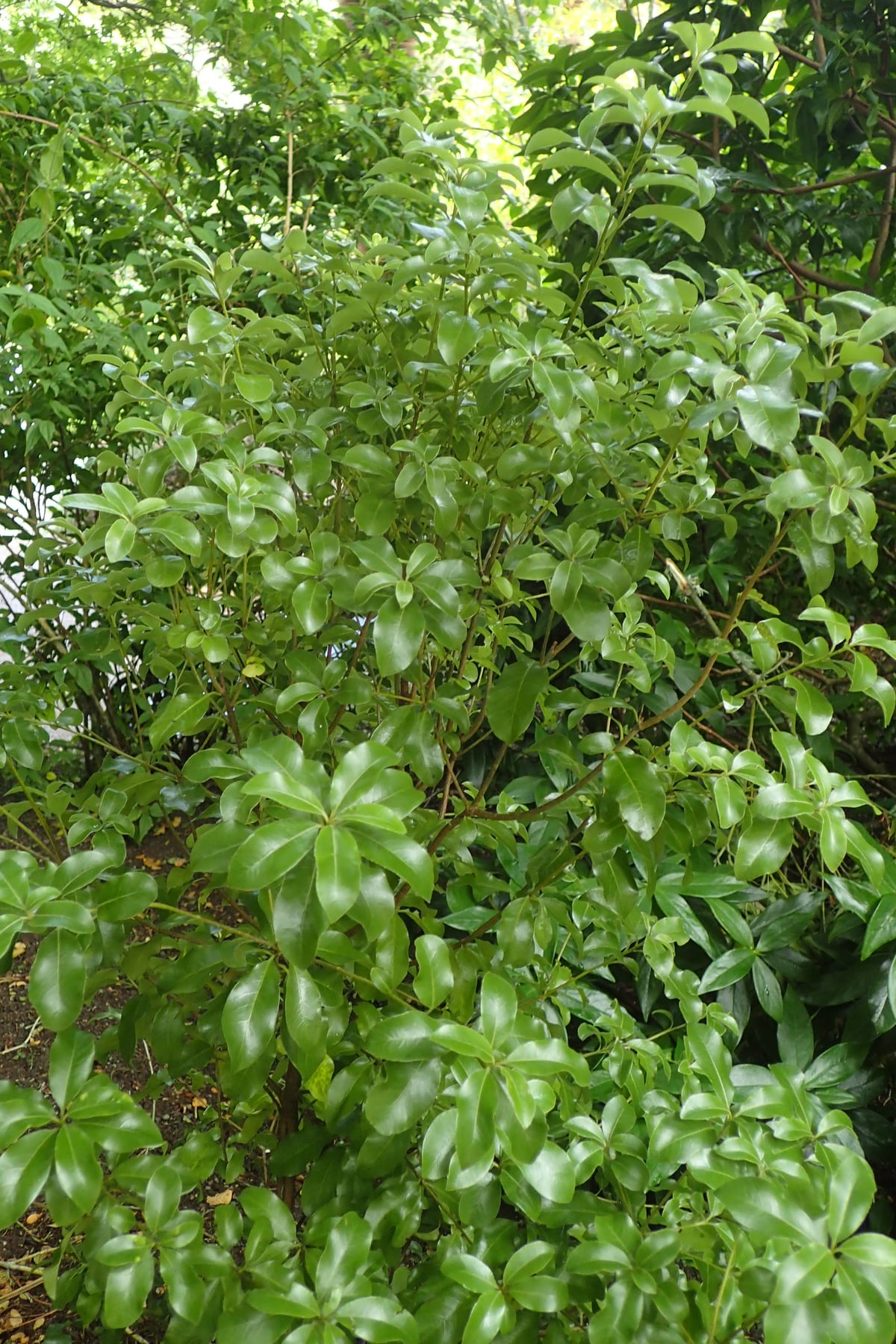
Kohuhu
Pittosporum tenuifolium
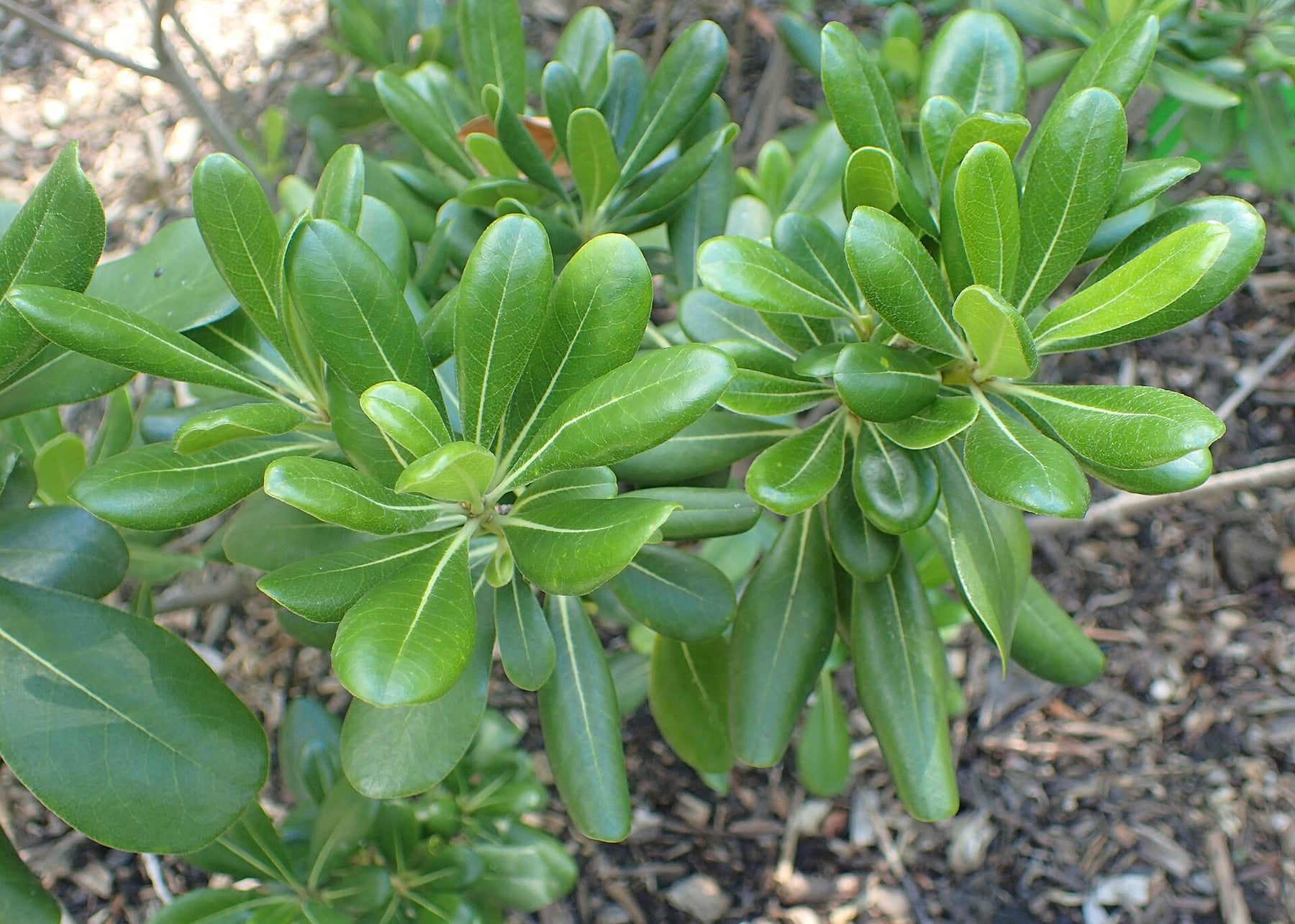
Japanese mock orange
Pittosporum tobira
Japanese mock orange has broader, thicker, glossy leaves grouped in rosettes at the ends of the twigs, with very fragrant white flowers (orange blossom scent), whereas kohuhu has smaller, thinner leaves with wavy margins, borne on blackish twigs.
🌿 Other Pittosporaceae to discover
ℹ️ Educational profile — do not use it to judge whether a plant is edible or safe.
🌱 This database is constantly evolving — species and information are added and corrected regularly. Spotted a mistake? Report it below.
© Floraneo — profile content is protected; reproduction without permission is prohibited. Photos remain under their own licence (see the credit shown on each photo).