Kohuhu or Japanese mock orange: how to tell them apart?
Kohuhu and Japanese mock orange look alike and are often mixed up. Here is how to tell them apart, feature by feature, with their photos and the details to look for.
⚡ The quick answer
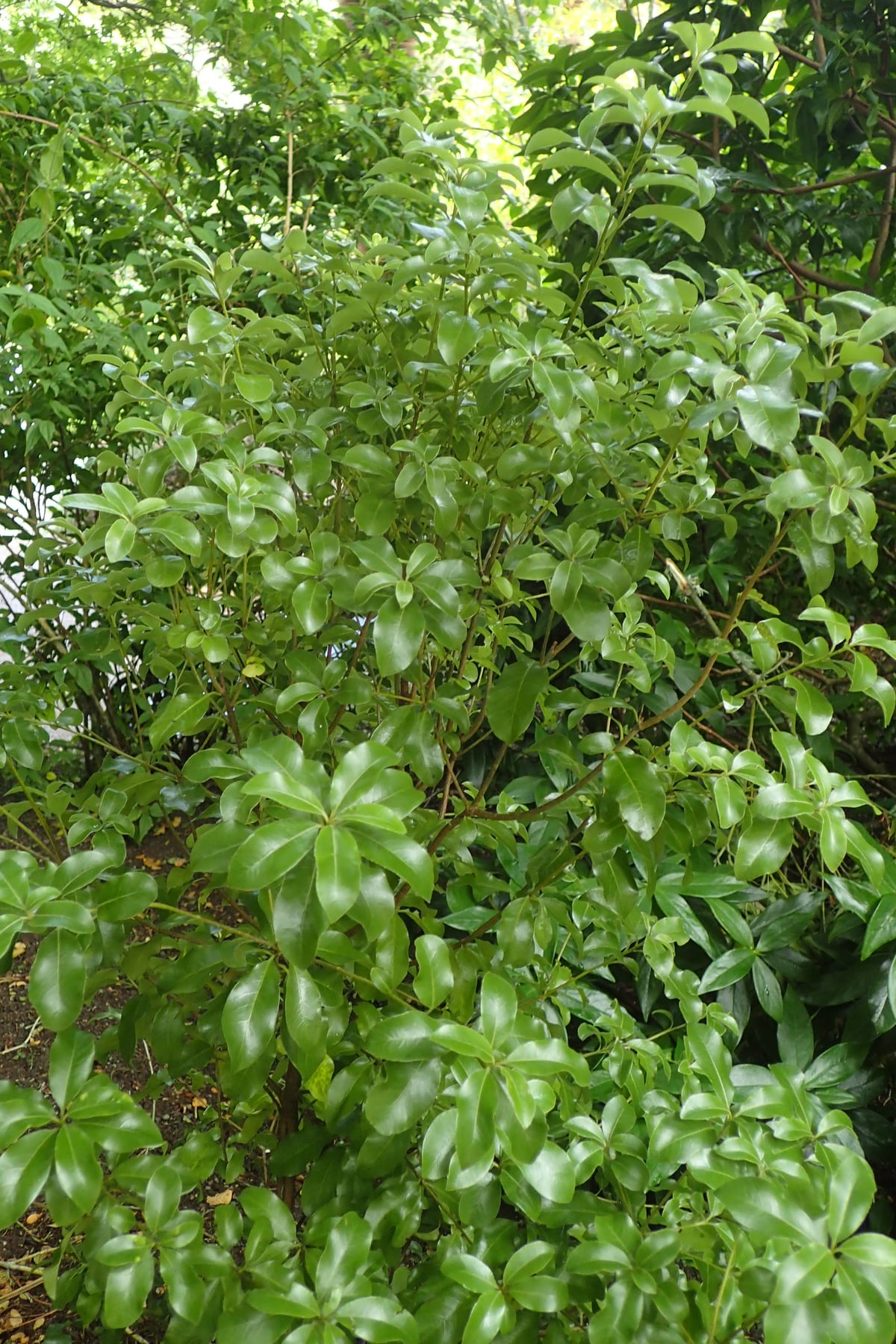
Kohuhu
Pittosporum tenuifolium
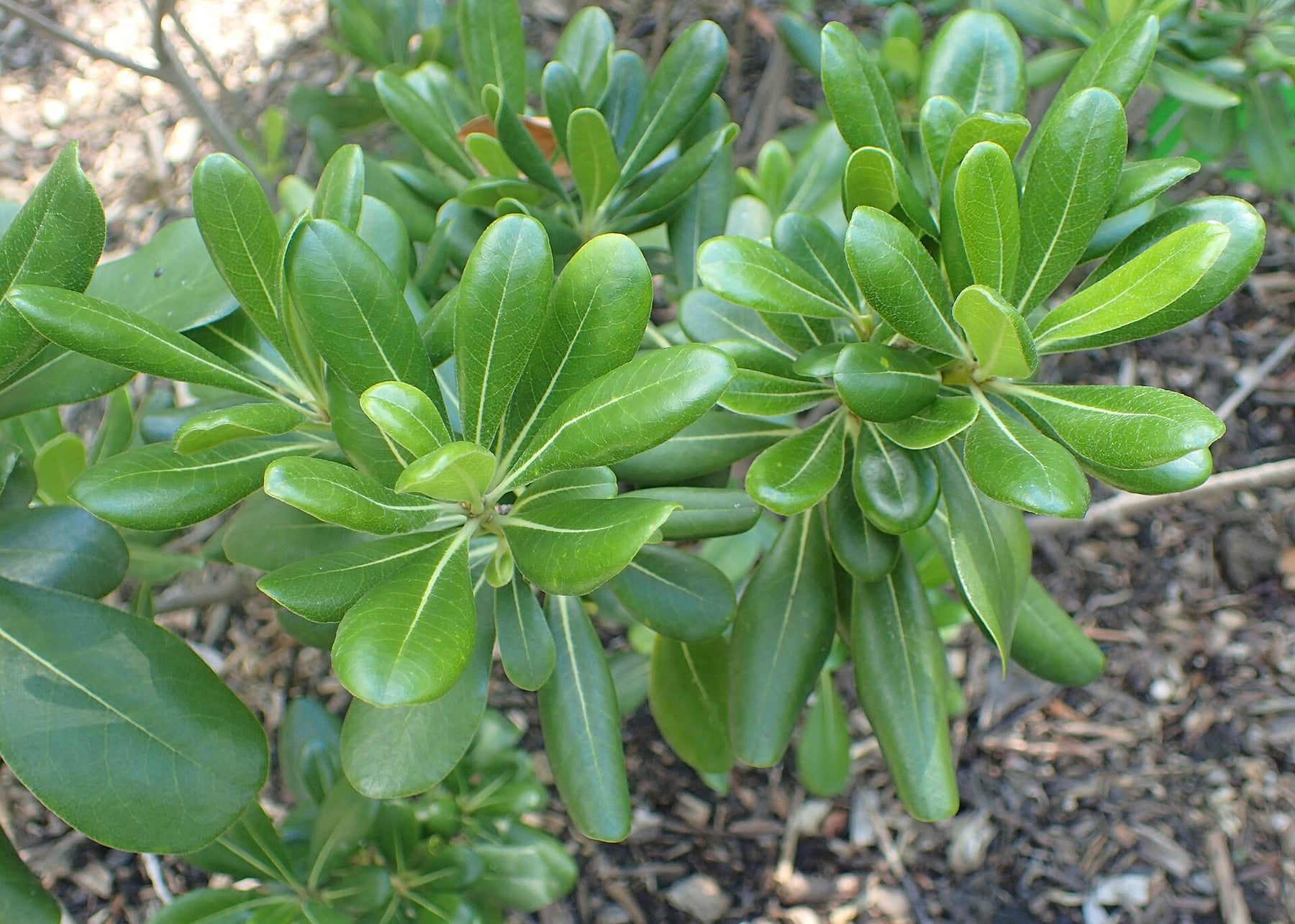
Japanese mock orange
Pittosporum tobira
Japanese mock orange has broader, thicker, glossy leaves grouped in rosettes at the ends of the twigs, with very fragrant white flowers (orange blossom scent), whereas kohuhu has smaller, thinner leaves with wavy margins, borne on blackish twigs.
🍃 Leaves
Evergreen, wavy at the margins, light green to grey-green, sometimes variegated or purplish depending on the cultivar
Evergreen, leathery, oval, glossy green, grouped in a rosette at the ends of the twigs
🌸 Flowers
Small, dark purple to brownish-black, inconspicuous but very fragrant in the evening
Small star-shaped creamy white flowers, orange blossom scent
🍎 Fruits
Small brown capsules containing resinous seeds
Small brown capsules opening to reveal sticky orange seeds
🪵 Bark
Characteristic blackish twigs, contrasting with the pale foliage
Grey-green twigs, compact rounded habit
📏 Size
3 to 5 m tall (often clipped lower as a hedge)
2 to 4 m tall
🗺️ Habitat
Windbreak hedges in mild oceanic climates, borders; sensitive to severe, prolonged frosts
Hedges, seaside, containers, gardens, any free-draining soil
⚠️ Toxicity
Leaves and fruits contain saponins that may cause digestive irritation if ingested, particularly in domestic animals.
Leaves and fruits contain saponins that may cause digestive irritation if ingested, particularly in domestic animals.
🔎 And from the Japanese mock orange side
Kohuhu has smaller, thinner leaves with wavy margins, borne on dark, almost black stems, whereas Japanese mock orange has broader, thicker leaves grouped in rosettes, with very fragrant flowers recalling orange blossom.
🌿 Go further
Want to practise spotting these details on real photos? Floraneo offers profiles and quizzes for dozens of look-alike species.
ℹ️ Educational profile — do not use it to judge whether a plant is edible or safe.