Leaf
Forest & Kim Starr · CC BY 3.0
Kiwifruit
Actinidia deliciosa (A.Chev.) C.F.Liang & A.R.Ferguson
Also known as: Kiwi, Chinese gooseberry
Family: Actinidiaceae
Climber that can reach 8 to 10 m on a support
Grown on trellises or pergolas, mild and humid climate
Flowering: May – June
Full sun
Fairly hardy, to about -15°C, sensitive to late frosts on young shoots
❓ How do you recognise this plant?
Like sea buckthorn, kiwi is dioecious: you absolutely need a male AND a female plant growing close together to get fruit — a single plant is never enough. The ordinary kiwi fruit has brown, fuzzy skin and a large fruit; the hardy kiwi has skin as smooth as a grape, a much smaller fruit, and is eaten whole without peeling.
🍃 Leaves
Large, heart-shaped, downy, deciduous
🌸 Flowers
Creamy white; dioecious plant (separate male and female plants)
🍎 Fruits
Oval berry with brown fuzzy skin, tangy green flesh dotted with small black seeds
🪵 Bark
Vigorous climber, brown stem slightly downy when young
🗺️ Distribution
Native to China; cultivated in France, notably in the south-west
🐝 Value for pollinators
Nectar-rich flowers; needs a male and a female plant nearby to fruit
✂️ Horticultural uses
Fruiting climber grown on trellises, planted as a male/female pair to produce fruit
⚠️ Possible toxicity
Fruit edible; no known toxicity to humans
⚠️ Look-alike species
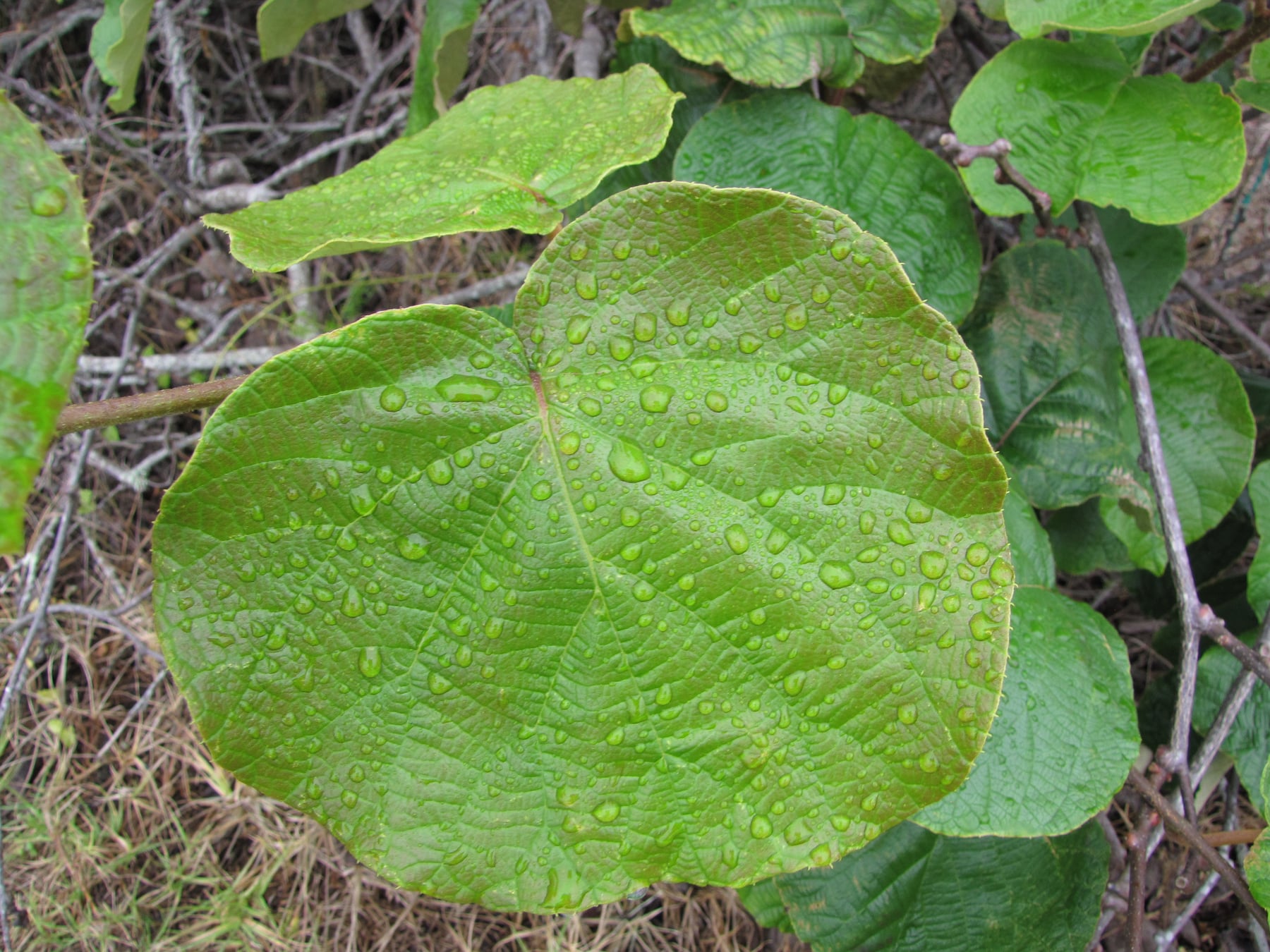
Kiwifruit
Actinidia deliciosa
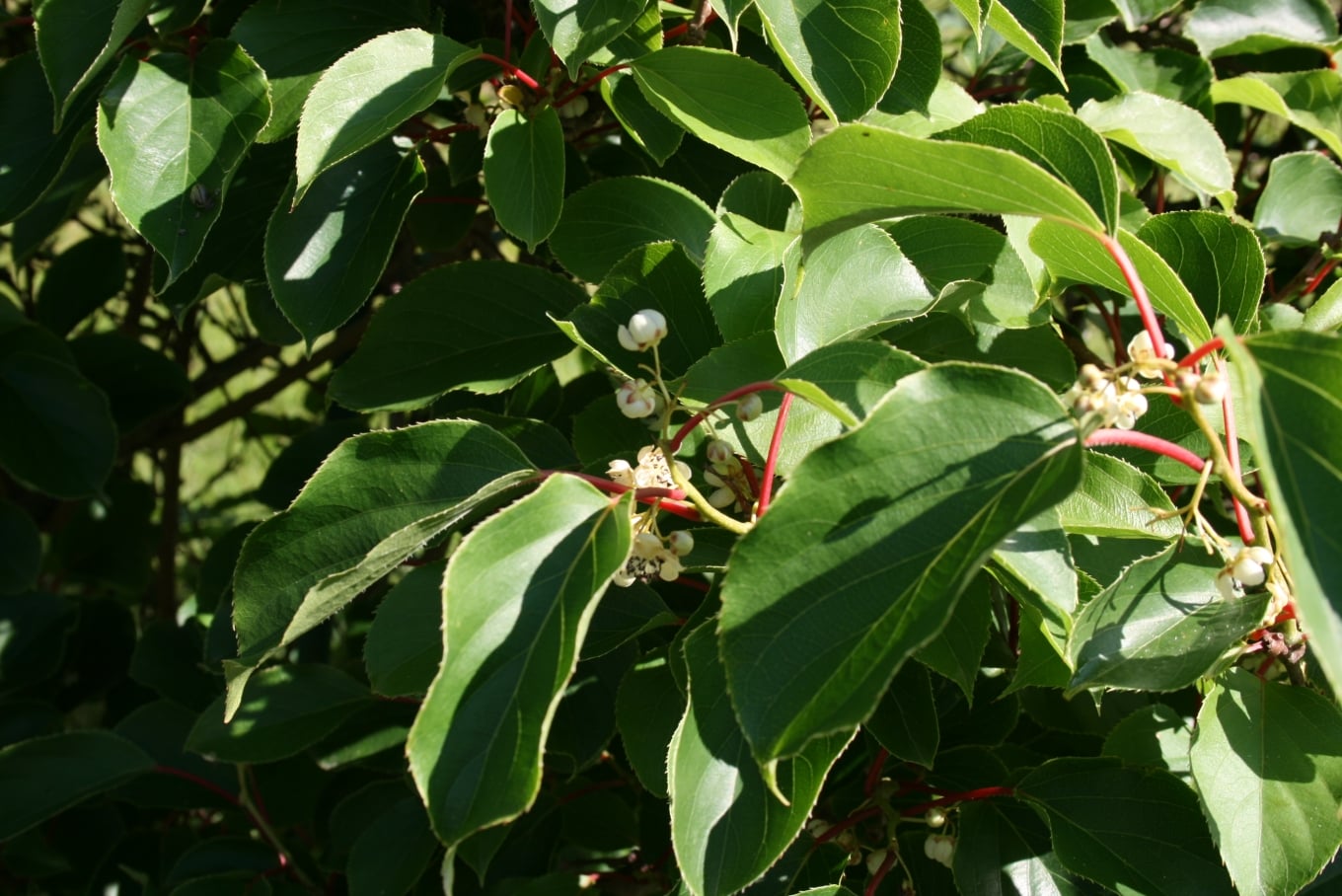
Hardy kiwi
Actinidia arguta
The ordinary kiwi fruit has brown, fuzzy skin and a large fruit; the hardy kiwi has skin as smooth as a grape, a much smaller fruit, and is eaten whole without peeling.
🌿 Other Actinidiaceae to discover
ℹ️ Educational profile — do not use it to judge whether a plant is edible or safe.
🌱 This database is constantly evolving — species and information are added and corrected regularly. Spotted a mistake? Report it below.
© Floraneo — profile content is protected; reproduction without permission is prohibited. Photos remain under their own licence (see the credit shown on each photo).