Leaf
Sten Porse · CC BY-SA 3.0
Hardy kiwi
Actinidia arguta (Siebold & Zucc.) Planch. ex Miq.
Also known as: Kiwi berry, Baby kiwi
Family: Actinidiaceae
Climber 5 to 9 m
Planted on pergolas or trellises, moist, free-draining soils
Flowering: May – June
Full sun
Part shade
Very hardy, to about -25°C, hardier than the common kiwi
❓ How do you recognise this plant?
The hardy kiwi is eaten whole like a grape, without peeling — its smooth, hairless skin sets it apart from the ordinary kiwi fruit, a close relative, but smaller and much sweeter. The ordinary kiwi fruit has brown, fuzzy skin and a large fruit; the hardy kiwi has skin as smooth as a grape, a much smaller fruit, and is eaten whole without peeling.
🍃 Leaves
Deciduous, broad, ovate, glossy, borne on a vigorous climber
🌸 Flowers
Creamy white, fragrant, plant most often dioecious (separate male and female plants)
🍎 Fruits
Small smooth berry the size of a grape, with edible smooth skin, sweet green flesh identical to kiwi fruit
🪵 Bark
Twining climber with reddish-brown bark
🗺️ Distribution
Native to East Asia; cultivated in France, notably in the south-west
🐝 Value for pollinators
Nectar-rich flowering, needs a male plant nearby to pollinate the female flowers
✂️ Horticultural uses
Vigorous fruiting climber grown on pergolas, fruit eaten whole without peeling, unlike the ordinary kiwi fruit
⚠️ Possible toxicity
Fruit edible whole, skin included; no known toxicity
⚠️ Look-alike species
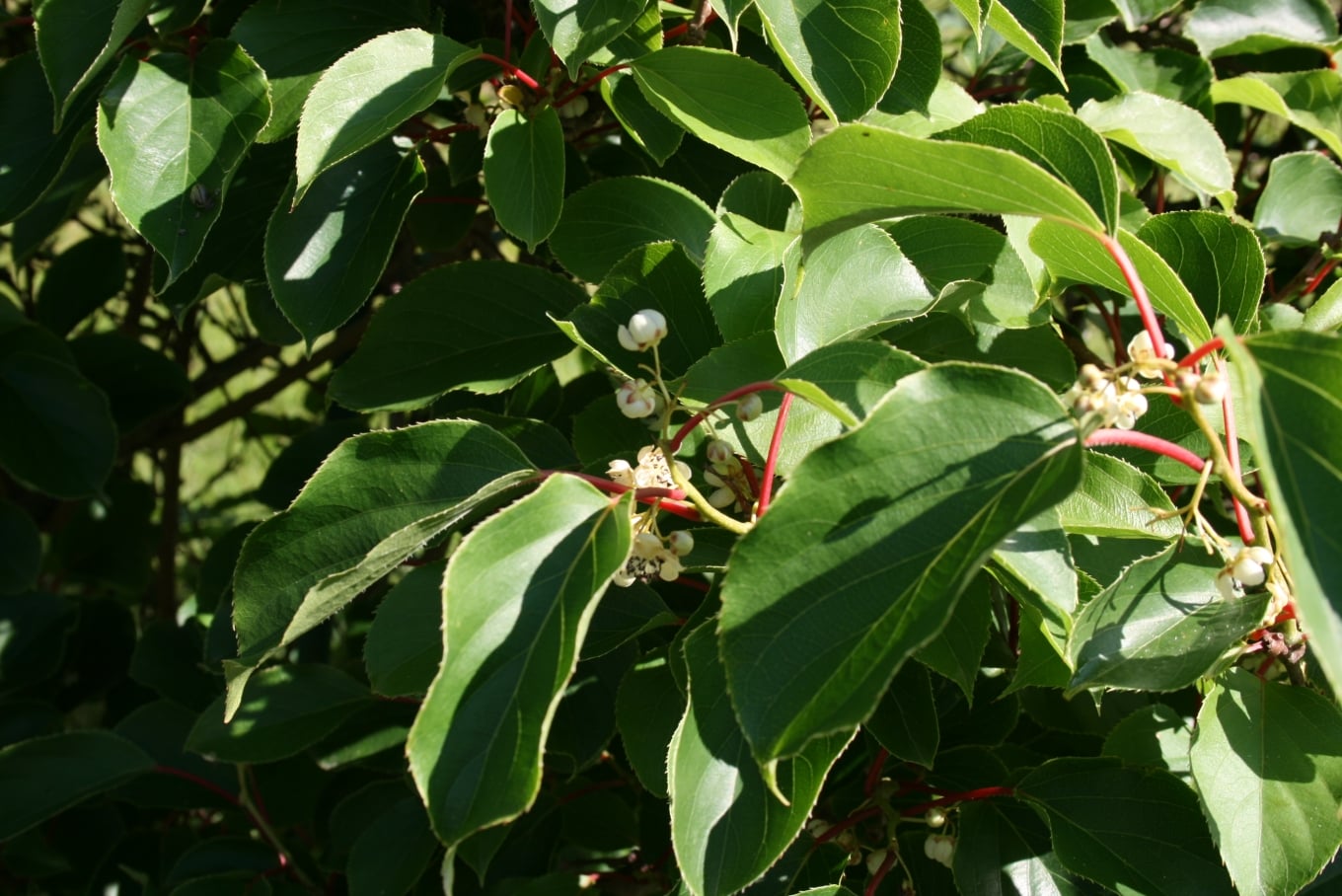
Hardy kiwi
Actinidia arguta
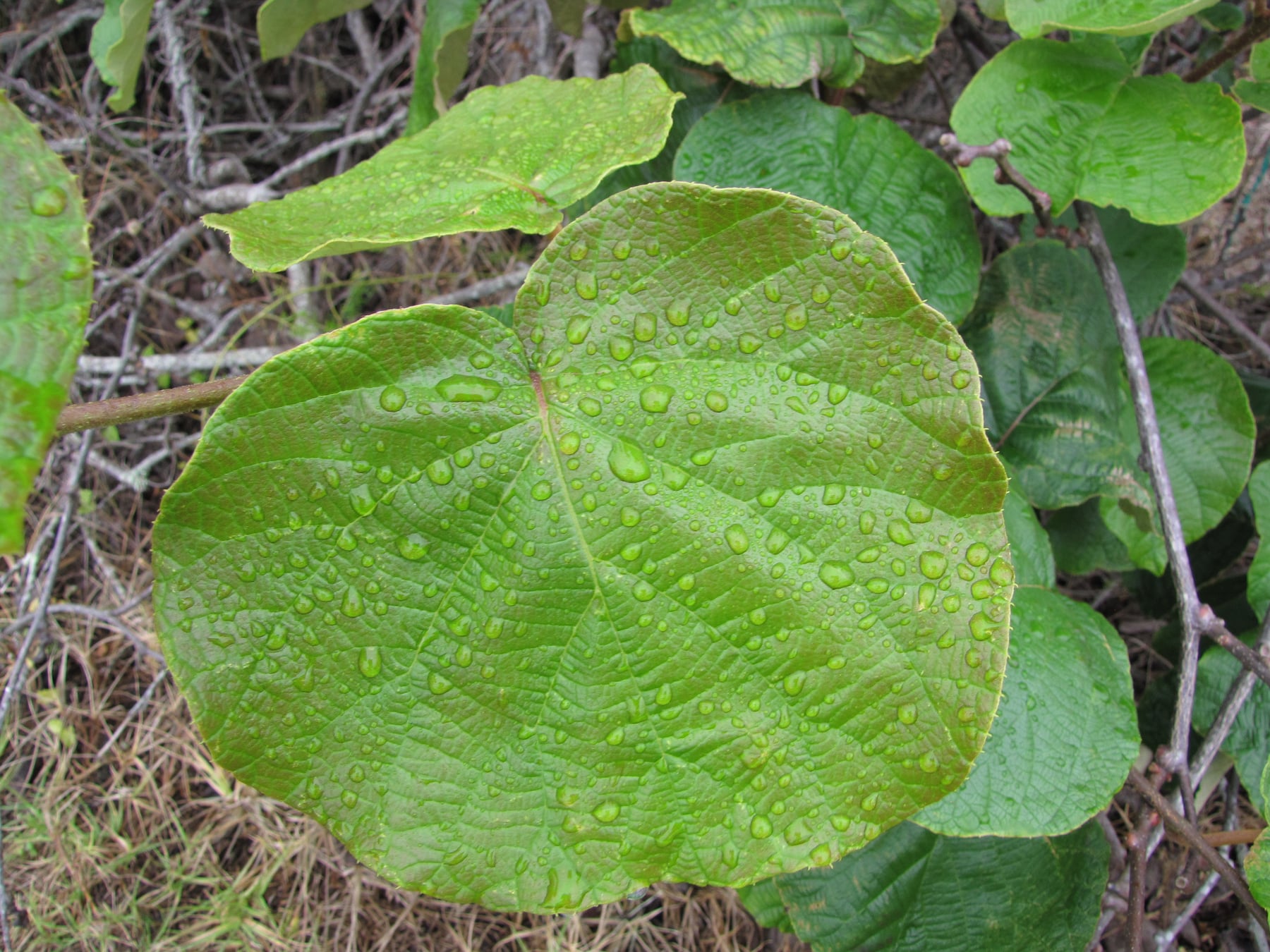
Kiwifruit
Actinidia deliciosa
The ordinary kiwi fruit has brown, fuzzy skin and a large fruit; the hardy kiwi has skin as smooth as a grape, a much smaller fruit, and is eaten whole without peeling.
🌿 Other Actinidiaceae to discover
ℹ️ Educational profile — do not use it to judge whether a plant is edible or safe.
🌱 This database is constantly evolving — species and information are added and corrected regularly. Spotted a mistake? Report it below.
© Floraneo — profile content is protected; reproduction without permission is prohibited. Photos remain under their own licence (see the credit shown on each photo).