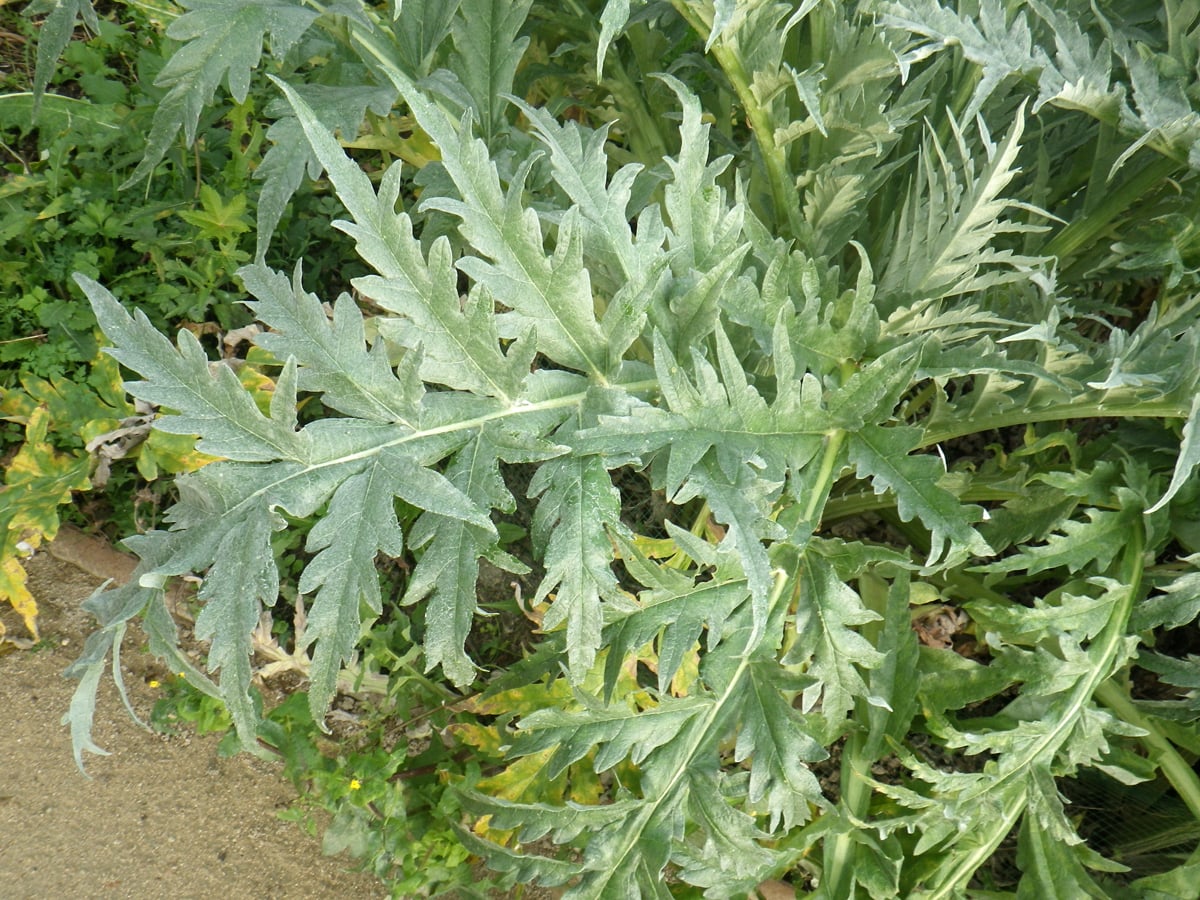
Leaf
Syrio, Wikimedia · CC BY-SA 4.0
Jerusalem artichoke
Helianthus tuberosus L.
Also known as: Sunchoke, Earth apple
Family: Asteraceae
1.50 to 3 m tall
Grown in the vegetable garden, also naturalised along watercourses
Flowering: September – October
Full sun
Very hardy, the tuber withstands frost in the ground
❓ How do you recognise this plant?
Despite its name, the Jerusalem artichoke has no connection with the artichoke — it is a sunflower grown for its underground tuber, rich in inulin rather than starch.
🍃 Leaves
Large, ovate, rough, opposite at the base then alternate
🌸 Flowers
Bright yellow, in flower heads resembling small sunflowers
🍎 Fruits
Achene, rarely formed in the French climate
🪵 Bark
Sturdy, hairy, upright stem; knobbly tubers underground (the part eaten)
🗺️ Distribution
Native to North America; widely grown and naturalised throughout France
🐝 Value for pollinators
Late flowering at the end of summer, very useful to bees and butterflies before winter
✂️ Horticultural uses
Hardy perennial root vegetable for the vegetable garden, also planted as a screen for its tall stature
⚠️ Possible toxicity
Tuber edible; may cause flatulence due to inulin, a complex sugar that is not digested directly
🌿 Other Asteraceae to discover


ℹ️ Educational profile — do not use it to judge whether a plant is edible or safe.
🌱 This database is constantly evolving — species and information are added and corrected regularly. Spotted a mistake? Report it below.
© Floraneo — profile content is protected; reproduction without permission is prohibited. Photos remain under their own licence (see the credit shown on each photo).