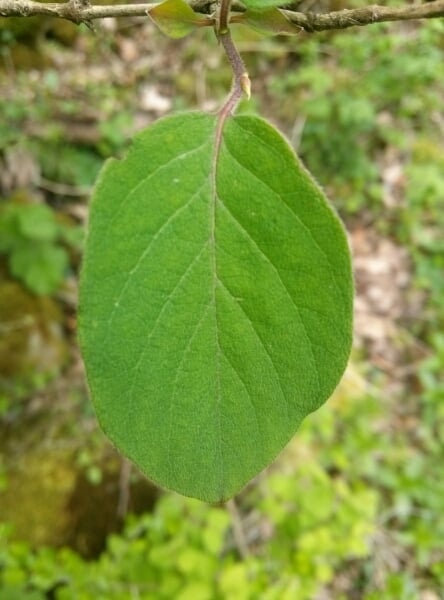
Leaf
Krzysztof Ziarnek, Kenraiz, Wikimedia · CC BY-SA 4.0
Himalayan honeysuckle
Leycesteria formosa Wall.
Also known as: Pheasant berry, Flowering nutmeg
Family: Caprifoliaceae
1.5 to 2.5 m tall
Beds and open woodland, moist soil, often naturalised along woodland edges in mild regions
Flowering: June – September
Full sun
Part shade
Shade
Hardy to about -15°C
❓ How do you recognise this plant?
Its sweet berries have a flavour close to caramel and are so popular with pheasants that they earned it the French common name 'arbre aux faisans' ('pheasant tree').
🍃 Leaves
Deciduous, opposite, ovate-lanceolate, bright green, on hollow bamboo-green stems
🌸 Flowers
White to pale purple, in drooping spikes surrounded by large dark purple bracts
🍎 Fruits
Sweet purple-black berries, much sought after by birds, notably pheasants
🪵 Bark
Green, hollow, ribbed stems, reminiscent of bamboo
🗺️ Distribution
Native to the Himalayas; introduced to Europe in the 19th century, sometimes self-seeding in regions with a mild climate
🐝 Value for pollinators
Nectar-rich flowers visited by bees and bumblebees all summer
✂️ Horticultural uses
Planted for its unusual pendent clusters and to attract wildlife, especially birds fond of its berries
🌿 Other Caprifoliaceae to discover


ℹ️ Educational profile — do not use it to judge whether a plant is edible or safe.
🌱 This database is constantly evolving — species and information are added and corrected regularly. Spotted a mistake? Report it below.
© Floraneo — profile content is protected; reproduction without permission is prohibited. Photos remain under their own licence (see the credit shown on each photo).