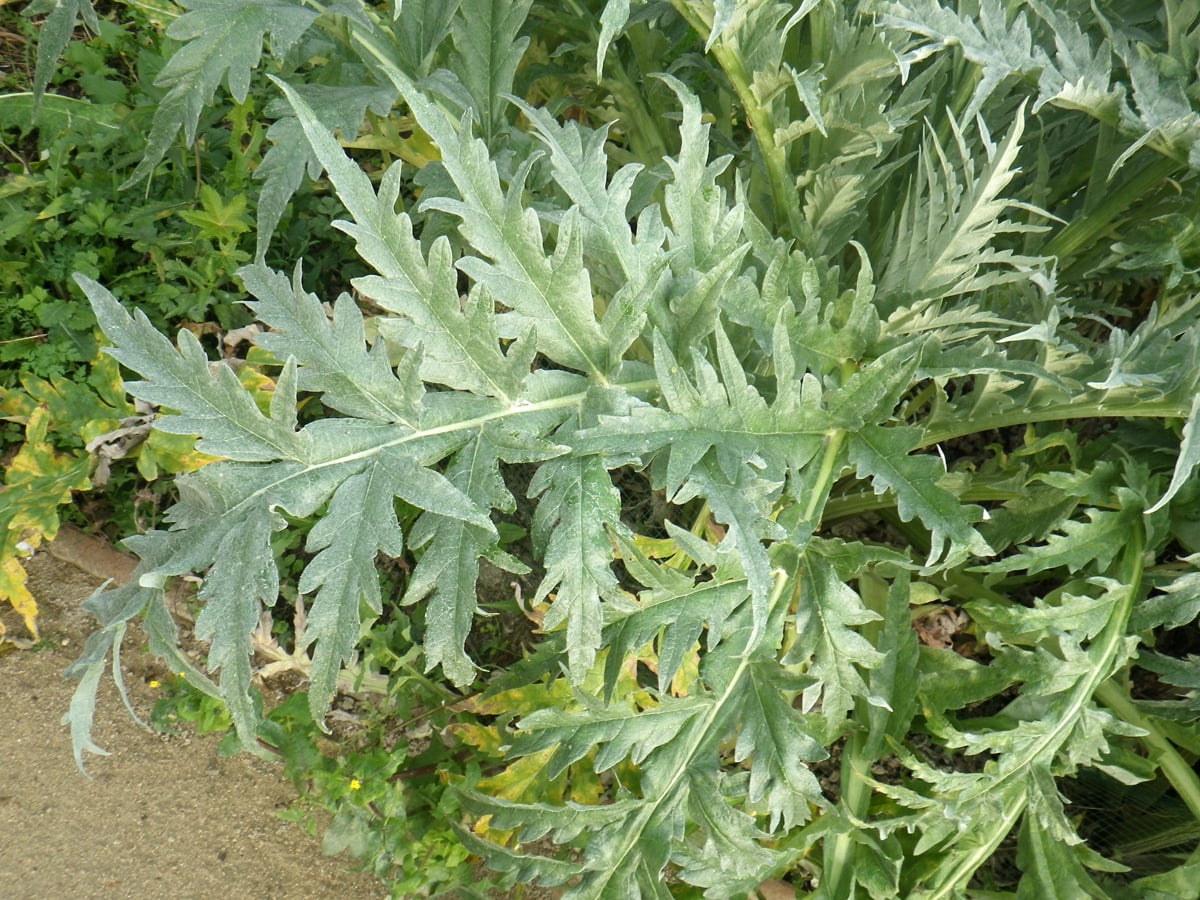
Leaf
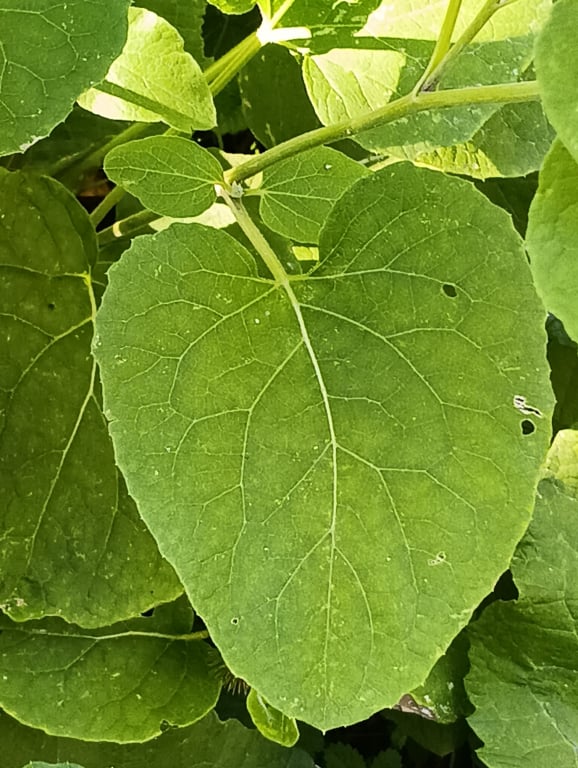
Patrick Ressayre, Tela Botanica · CC BY-SA 2.0
- 1 to 2.5 m tall, in the second year
- Waste ground, rubble, paths, woodland edges and banks on nitrogen-rich soils
- Full sun, Part shade
- Very hardy, to -30°C
In flower from July to September
3 months❓ How do you recognise this plant?
The hooked flower heads of burdock inspired the Swiss engineer Georges de Mestral, who invented Velcro in the 1940s after examining the burrs stuck to his trousers and to his dog's coat.
🍃 Leaves
Very large (up to 50 cm), heart-shaped at the base, dark green above and white and cottony beneath, with a solid, not hollow, leaf stalk; in a rosette in the first year, alternate on the stem in the second
🌸 Flowers
Globose flower heads 3 to 4 cm, purple-pink, surrounded by bracts ending in a small hook
🍎 Fruits
Brown achenes topped by a short pappus, remaining enclosed in the clinging flower heads (the "burrs" on clothing)
🌿 Stem and habit
Robust, ridged, reddish, much-branched stem
Distribution, pollinators, uses
🗺️ Distribution
Temperate Europe and Asia; introduced throughout the world
🐝 Value for pollinators
Much visited by bumblebees and butterflies; its seeds feed goldfinches
✂️ Horticultural uses
Wild plant of waste ground; its root, gobo, is a vegetable grown in Japan; formerly used in herbal medicine
⚠️ Possible toxicity
Root eaten in Japan, but never to be picked without certain identification: poisonings have been reported with preparations contaminated by other toxic plants such as deadly nightshade
🌿 Other Asteraceae to discover
ℹ️ Educational profile — do not use it to judge whether a plant is edible or safe.
🌱 This database is constantly evolving — species and information are added and corrected regularly. Spotted a mistake? Report it below.
© Floraneo — profile content is protected; reproduction without permission is prohibited. Photos remain under their own licence (see the credit shown on each photo).