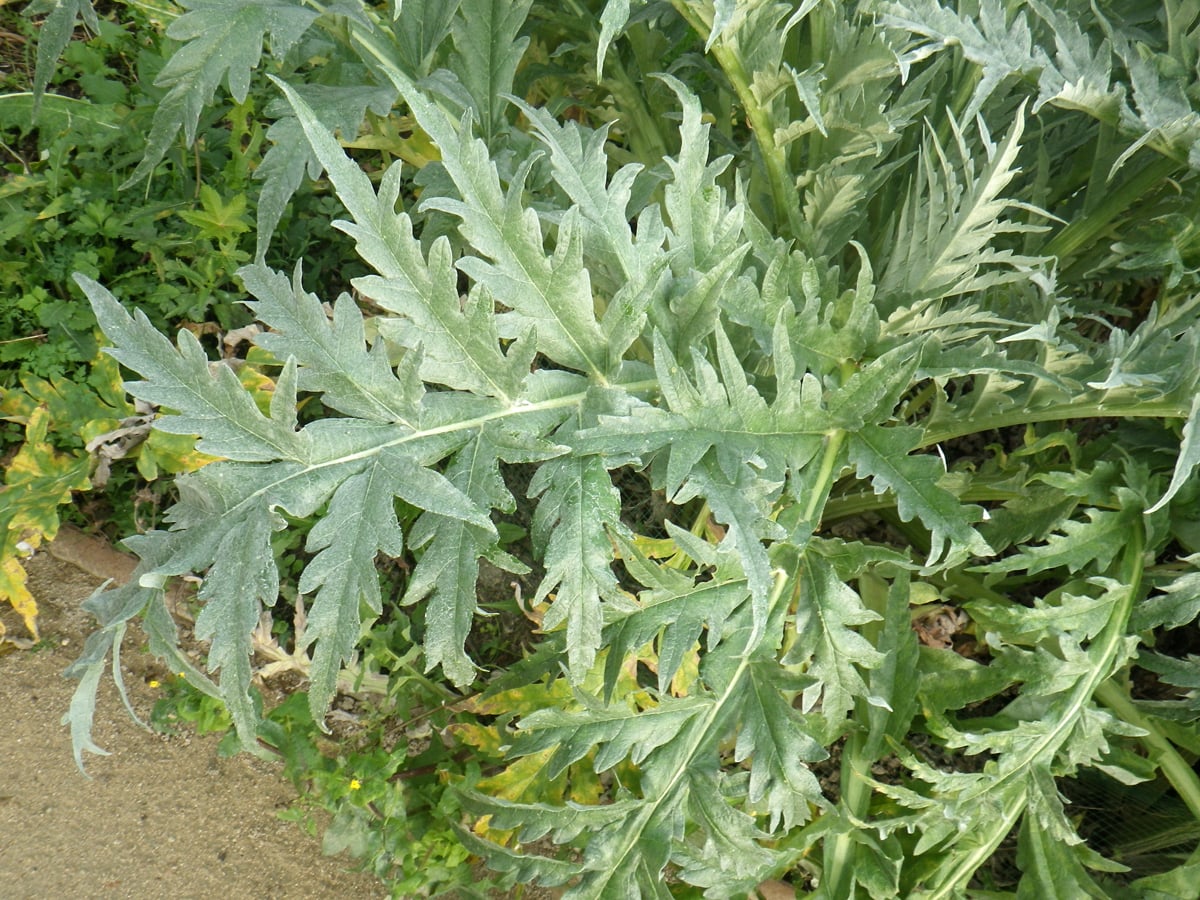
Leaf
Liliane Roubaudi, Tela Botanica · CC BY-SA 2.0
Globe thistle
Echinops ritro L.
Also known as: Small globe thistle, Southern globe thistle
Family: Asteraceae
60 cm to 1.20 m tall
Planted in sunny, dry borders, poor, well-drained soils
Flowering: July – September
Full sun
Hardy, to about -20°C, needs well-drained soil
❓ How do you recognise this plant?
The spherical flower head of the globe thistle is not a single flower but dozens of tiny metallic-blue tubular florets packed into a perfect ball — a floral architecture reminiscent of a sea urchin, hence its French name "oursin bleu" (blue sea urchin).
🍃 Leaves
Cut, spiny, grey-green above, white and felted beneath
🌸 Flowers
Spherical steel-blue to violet-blue inflorescences, made up of many small flowers; the balls often measure around 3 to 5 cm.
🍎 Fruits
Achene topped with a small pappus
🪵 Bark
Herbaceous perennial forming a clump, with upright flowering stems.
🗺️ Distribution
Native to south-eastern Europe and Asia Minor, present in some regions of France; widely grown in borders
🐝 Value for pollinators
Flower heads very rich in nectar, extremely attractive to bees and butterflies in summer
✂️ Horticultural uses
Dry-border perennial planted for its unusual metallic-blue balls, also excellent as a cut and dried flower
⚠️ Possible toxicity
No notable toxicity known
🌿 Other Asteraceae to discover


ℹ️ Educational profile — do not use it to judge whether a plant is edible or safe.
🌱 This database is constantly evolving — species and information are added and corrected regularly. Spotted a mistake? Report it below.
© Floraneo — profile content is protected; reproduction without permission is prohibited. Photos remain under their own licence (see the credit shown on each photo).