Leaf
Liliane Roubaudi, Tela Botanica · CC BY-SA 2.0
Cobweb houseleek
Sempervivum arachnoideum L.
Also known as: Spider-web houseleek
Family: Crassulaceae
5 to 10 cm as a rosette, flowering stem up to 15 cm
Rockeries, low walls, roofs, poor soils, even dry ones
Flowering: July – August
Full sun
Hardy to -30°C
❓ How do you recognise this plant?
Its rosettes are covered with a fine web of white filaments reminiscent of a cobweb, hence its name. Common houseleek has larger rosettes, without filaments, with leaves often tinged red at the tip, whereas cobweb houseleek is recognisable by the fine white filaments linking the tips of its leaves.
🍃 Leaves
Evergreen, fleshy, in rosettes linked by fine silky white threads
🌸 Flowers
Bright pink stars borne on a central stem
🍎 Fruits
Small dry follicles
🪵 Bark
Fleshy rosettes forming dense cushions
🗺️ Distribution
Mountains of Europe (Alps, Pyrenees); found at altitude on rocks and scree, grown in lowland rockeries.
🐝 Value for pollinators
Small pink summer flowers visited by wild bees and various insects.
✂️ Horticultural uses
Alpine rockeries, green roofs, pots; rosettes covered in white filaments are very decorative.
⚠️ Possible toxicity
No known toxicity.
⚠️ Look-alike species
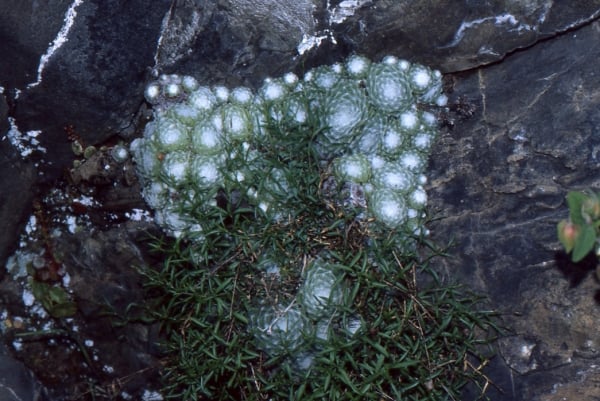
Cobweb houseleek
Sempervivum arachnoideum
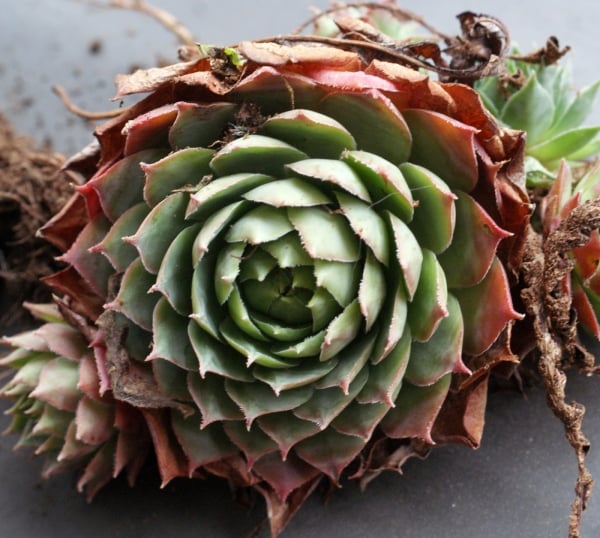
Common houseleek
Sempervivum tectorum
Common houseleek has larger rosettes, without filaments, with leaves often tinged red at the tip, whereas cobweb houseleek is recognisable by the fine white filaments linking the tips of its leaves.
🌿 Other Crassulaceae to discover
ℹ️ Educational profile — do not use it to judge whether a plant is edible or safe.
🌱 This database is constantly evolving — species and information are added and corrected regularly. Spotted a mistake? Report it below.
© Floraneo — profile content is protected; reproduction without permission is prohibited. Photos remain under their own licence (see the credit shown on each photo).