Common houseleek or Cobweb houseleek: how to tell them apart?
Common houseleek and Cobweb houseleek look alike and are often mixed up. Here is how to tell them apart, feature by feature, with their photos and the details to look for.
⚡ The quick answer
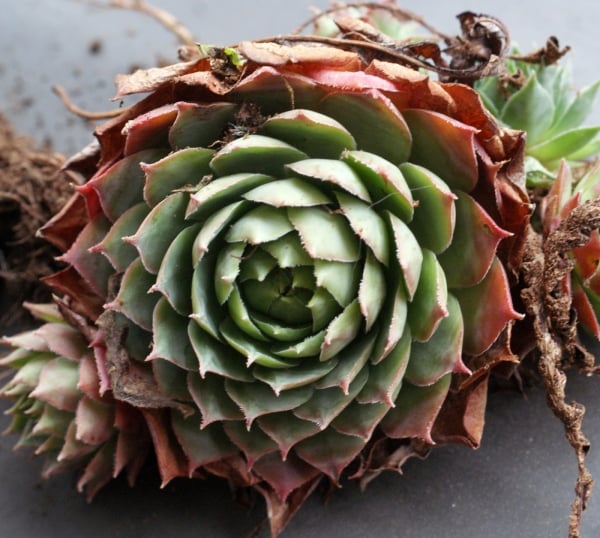
Common houseleek
Sempervivum tectorum
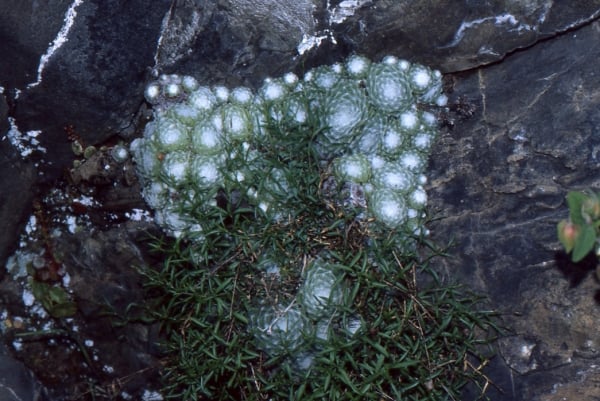
Cobweb houseleek
Sempervivum arachnoideum
Common houseleek has larger rosettes, without filaments, with leaves often tinged red at the tip, whereas cobweb houseleek is recognisable by the fine white filaments linking the tips of its leaves.
🍃 Leaves
Evergreen, fleshy, arranged in compact rosettes, green to purple
Evergreen, fleshy, in rosettes linked by fine silky white threads
🌸 Flowers
Pink-purple stars borne on a central stem, only once per rosette
Bright pink stars borne on a central stem
🍎 Fruits
Small dry follicles
Small dry follicles
🪵 Bark
Fleshy rosettes forming dense clumps
Fleshy rosettes forming dense cushions
📏 Size
10 to 15 cm as a rosette, flowering stem up to 50 cm
5 to 10 cm as a rosette, flowering stem up to 15 cm
🗺️ Habitat
Roofs, low walls, rockeries, poor soils, even dry ones
Rockeries, low walls, roofs, poor soils, even dry ones
⚠️ Toxicity
No known toxicity.
No known toxicity.
🔎 And from the Cobweb houseleek side
Common houseleek has larger rosettes, without filaments, with leaves often tinged red at the tip, whereas cobweb houseleek is recognisable by the fine white filaments linking the tips of its leaves.
🌿 Go further
Want to practise spotting these details on real photos? Floraneo offers profiles and quizzes for dozens of look-alike species.
ℹ️ Educational profile — do not use it to judge whether a plant is edible or safe.