Leaf
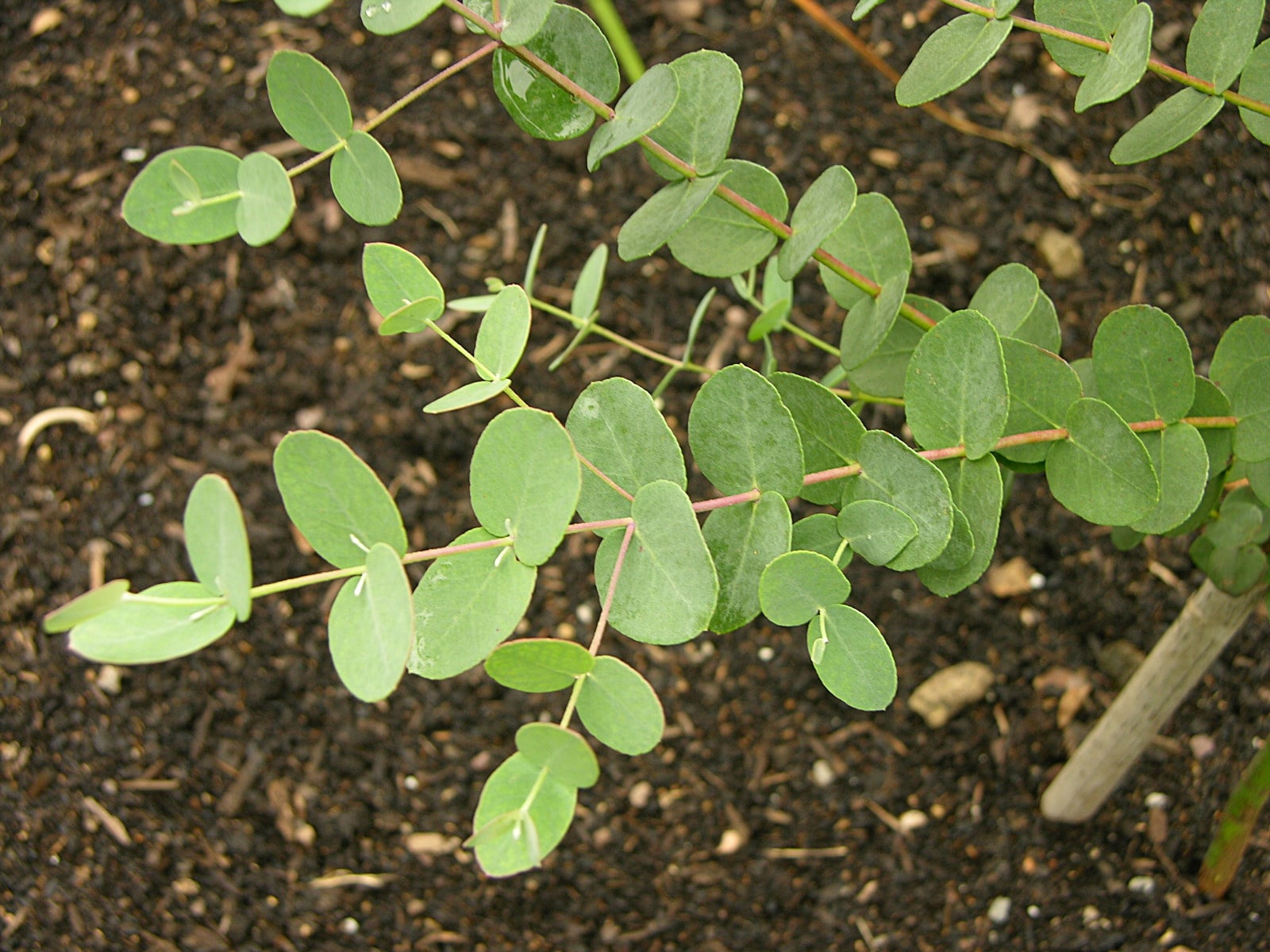
Derek Ramsey (Ram-Man) · CC BY-SA 2.5
- 10 to 20 m tall (often cut back to 3-5 m in gardens)
- Planted as a specimen in gardens and parks for its silvery evergreen foliage; native to Tasmania, widely introduced in France, notably in the south and west.
- Full sun
- Hardy to about -15°C (one of the hardiest eucalyptus species)
In flower from July to September
3 months❓ How do you recognise this plant?
Cider gum changes appearance as it ages: its rounded blue-silver juvenile leaves give way to elongated grey-green adult leaves, so many gardeners prune it hard every year to keep the decorative juvenile foliage indefinitely.
Learn to recognise it
Exotic trees with striking foliage. This plant is in the lesson “Exotic trees with striking foliage”, with 7 others.



A free account is enough for this lesson.
🍃 Leaves
Juvenile leaves rounded, opposite, sessile, blue-grey; adult leaves lanceolate, alternate, grey-green, aromatic when crushed
🌸 Flowers
Small white flowers with no visible petals and numerous stamens, gathered in small axillary clusters, not spectacular
🍎 Fruits
Woody cup-shaped capsules, clustered along the shoots
🪵 Bark
Peels off in plates, shifting from grey-green cream to red-brown, very decorative
Distribution, pollinators, uses
🗺️ Distribution
Native to Tasmania, widely grown in Europe, notably in southern and western France
🐝 Value for pollinators
Nectar-rich flowers appreciated by bees late in the season, when few other trees are in bloom
✂️ Horticultural uses
Planted as a specimen or as a fast-growing screening hedge, often cut back every year to keep the decorative juvenile foliage, which is also used in dried bouquets
⚠️ Possible toxicity
Foliage rich in essential oils (eucalyptol), toxic if ingested by dogs, cats and horses (salivation, vomiting, diarrhoea, weakness); no known risk to humans from mere skin contact.
🌿 Other Myrtaceae to discover


ℹ️ Educational profile — do not use it to judge whether a plant is edible or safe.
🌱 This database is constantly evolving — species and information are added and corrected regularly. Spotted a mistake? Report it below.
© Floraneo — profile content is protected; reproduction without permission is prohibited. Photos remain under their own licence (see the credit shown on each photo).