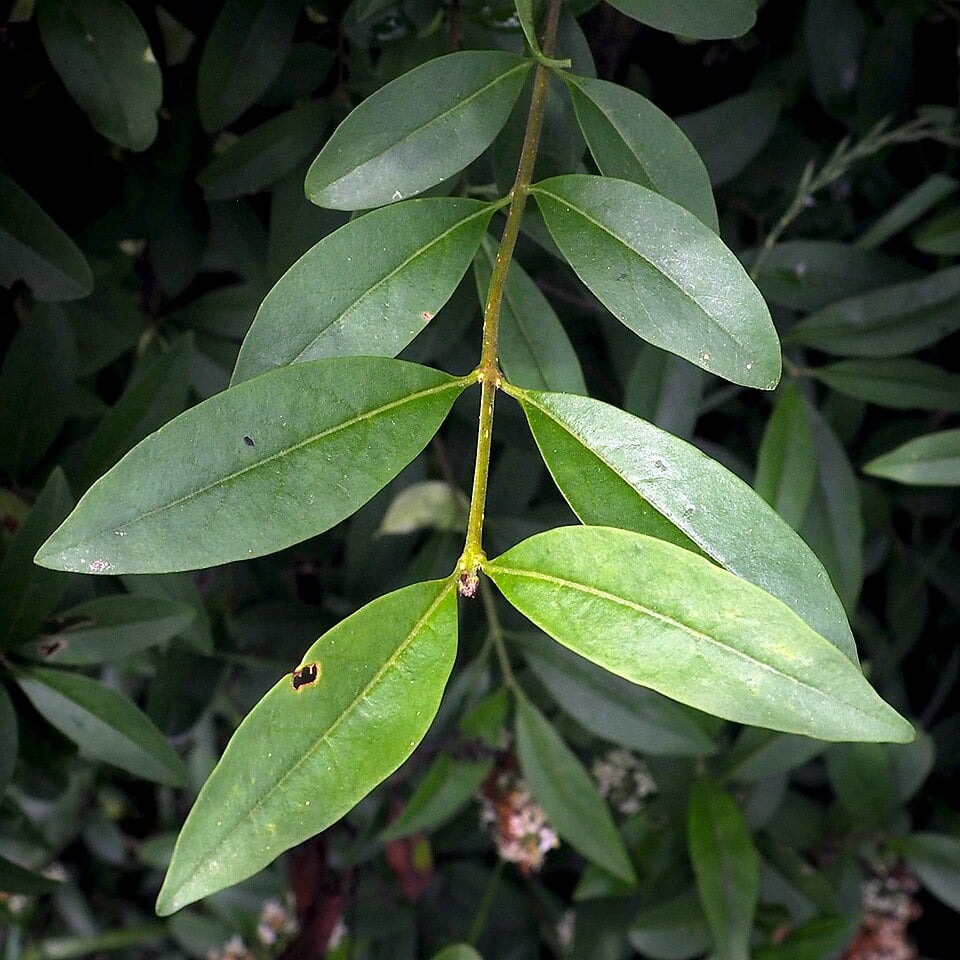
Leaf
Salicyna, Wikimedia · CC BY-SA 4.0
Butterfly bush
Buddleja davidii Franch.
Also known as: Buddleia, Summer lilac
Family: Scrophulariaceae
- 2 to 3 m tall
- Wasteland, banks, gardens, any soil even poor
- Full sun
- Hardy to -15°C
In flower from July to September
3 months❓ How do you recognise this plant?
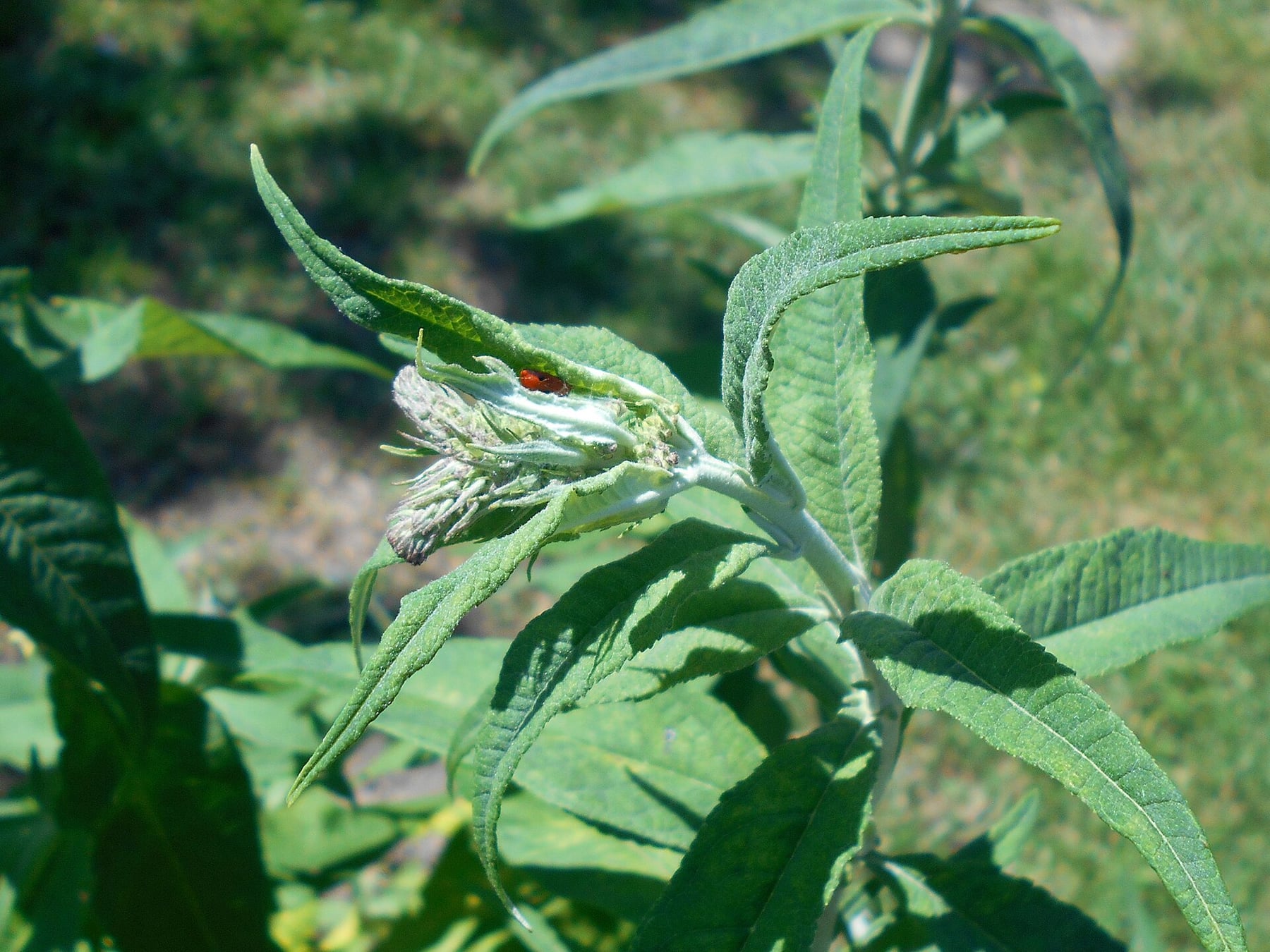
Its nectar-rich flowers attract butterflies and bumblebees in numbers, hence its nickname. As their names suggest, the difference shows on the stem: leaves opposite (two by two, facing each other) in the common butterfly bush, alternate (one by one, staggered) in the fountain butterfly bush.
Learn to recognise it
Hedge and border shrubs. This plant is in the lesson “Hedge and border shrubs”, with 12 others.
A free account is enough for this lesson.
🍃 Leaves
Long, lanceolate, greyish green above, white-felted beneath
🌸 Flowers
Long conical spikes of small mauve, pink or white flowers, rich in nectar
🍎 Fruits
Small dry capsules containing numerous winged seeds.
🪵 Bark
Brownish-grey stems that grow fast and become woody with age
Distribution, pollinators, uses
🗺️ Distribution
China; introduced and widely naturalised in France, notably on wasteland and along railway lines.
🐝 Value for pollinators
Flowers rich in nectar and much visited by many butterflies and other insects; the species can nevertheless become invasive locally, notably in urban areas or on wasteland.
✂️ Horticultural uses
Planted in borders or as a specimen for its spectacular summer flowering; regarded as invasive in some regions.
⚠️ Possible toxicity
No known toxicity.
🌱 Known cultivars
Black Knight
The most recognisable butterfly bush: long, very fragrant panicles of dark purple, almost black, that attract butterflies in great numbers; the reference among dark-flowered butterfly bushes since the 1960s.
Pink Delight
Very dense bright pink panicles on a shrub more compact than the species; winner of the RHS AGM, highly sought after by gardeners to attract butterflies without taking up too much space.
⚠️ Look-alike species
Butterfly bush
Buddleja davidii
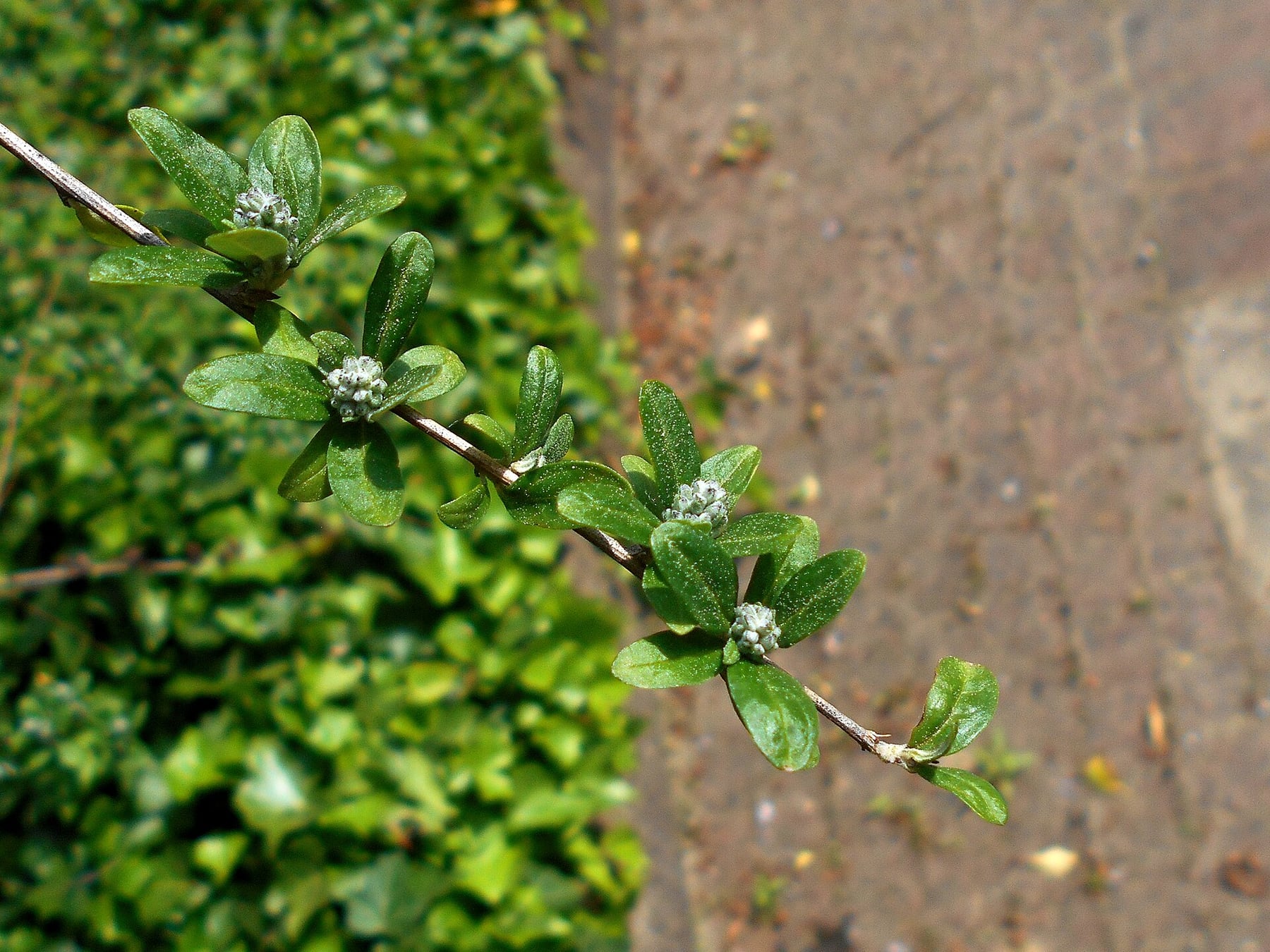
Fountain butterfly bush
Buddleja alternifolia
As their names suggest, the difference shows on the stem: leaves opposite (two by two, facing each other) in the common butterfly bush, alternate (one by one, staggered) in the fountain butterfly bush.
🌿 Other Scrophulariaceae to discover


ℹ️ Educational profile — do not use it to judge whether a plant is edible or safe.
🌱 This database is constantly evolving — species and information are added and corrected regularly. Spotted a mistake? Report it below.
© Floraneo — profile content is protected; reproduction without permission is prohibited. Photos remain under their own licence (see the credit shown on each photo).