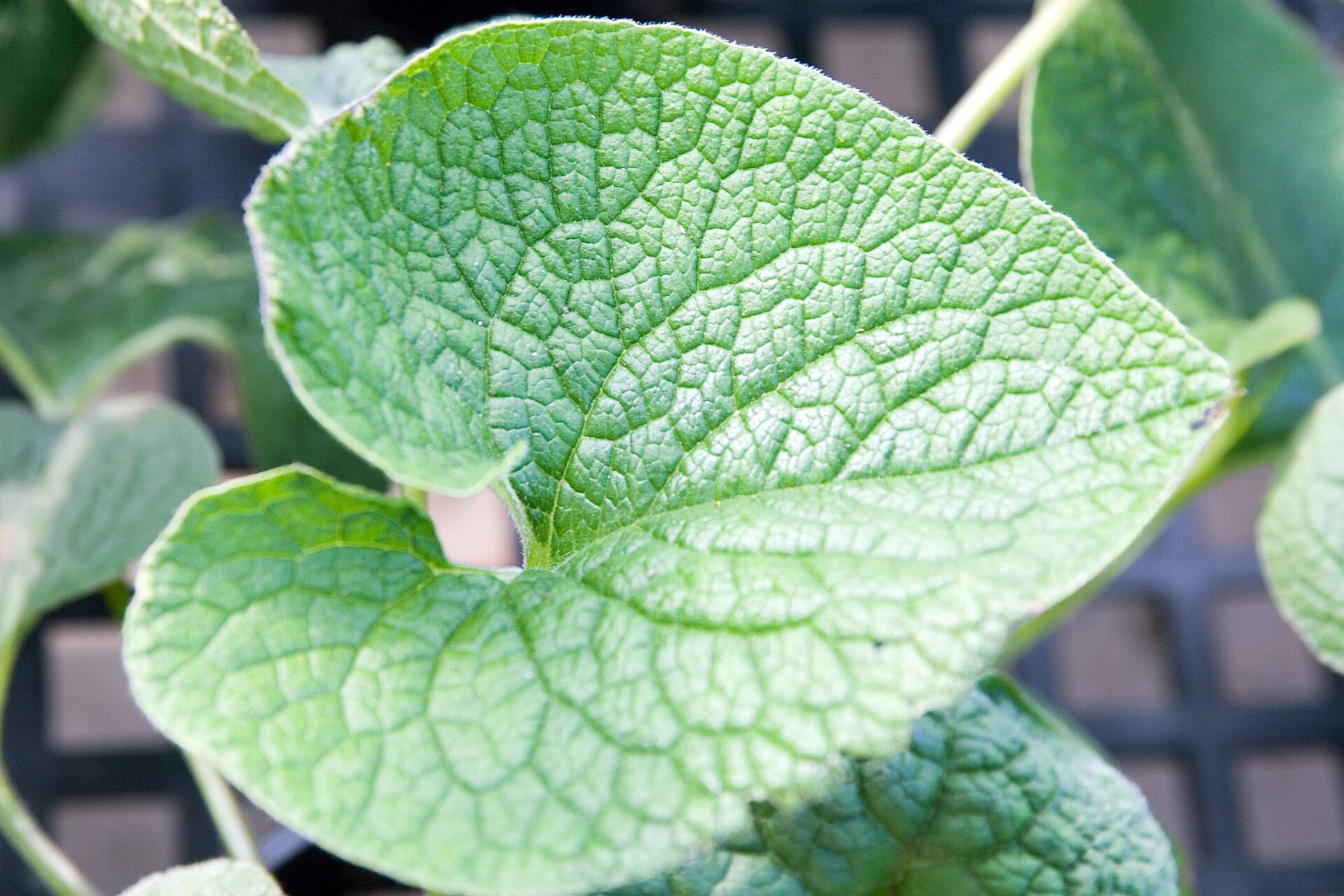
Leaf
Alain Bigou, Tela Botanica · CC BY-SA 2.0
- 30 to 70 cm tall
- Vegetable gardens, wasteland, paths and rubble, often self-seeding; ordinary soils, full sun
- Full sun, Part shade
- Annual plant, frost-sensitive but self-seeds
In flower from June to September
4 months❓ How do you recognise this plant?
Its blue star-shaped flowers, with their black cone, produce nectar continuously: it is one of the best vegetable-garden plants for attracting bees and bumblebees. Borage is an annual with blue star-shaped flowers, with pointed petals and a cone of black anthers, nodding on a hollow stem bristling with stiff hairs; alkanet is a perennial with blue-violet funnel-shaped flowers, held upright in clusters, with narrower, less hairy leaves.
🍃 Leaves
Alternate, ovate to lanceolate (the basal ones up to 20 cm), rough, bristling with stiff white hairs, greyish green, smelling of cucumber when crushed
🌸 Flowers
Bright blue stars with five pointed petals and a central cone of black anthers, nodding in loose cymes; they sometimes turn from pink to blue with age
🍎 Fruits
Four small brown, wrinkled nutlets, remaining in the persistent calyx
🌿 Stem and habit
Hollow, branched stem covered in stiff hairs
Distribution, pollinators, uses
🗺️ Distribution
Mediterranean basin; naturalised across much of Europe
🐝 Value for pollinators
Very rich in nectar, one of the best nectar plants of the vegetable garden, constantly visited by bees and bumblebees
✂️ Horticultural uses
Companion plant in the vegetable garden that attracts pollinators, green manure, wild-garden plant; flowers used for decoration
⚠️ Possible toxicity
Contains pyrrolizidine alkaloids, potentially toxic to the liver at high doses; do not eat in large quantities or over a long period, and seek medical advice for seed oil
⚠️ Look-alike species

Borage
Borago officinalis

Common bugloss
Anchusa officinalis
Borage is an annual with blue star-shaped flowers, with pointed petals and a cone of black anthers, nodding on a hollow stem bristling with stiff hairs; alkanet is a perennial with blue-violet funnel-shaped flowers, held upright in clusters, with narrower, less hairy leaves.
🌿 Other Boraginaceae to discover


ℹ️ Educational profile — do not use it to judge whether a plant is edible or safe.
🌱 This database is constantly evolving — species and information are added and corrected regularly. Spotted a mistake? Report it below.
© Floraneo — profile content is protected; reproduction without permission is prohibited. Photos remain under their own licence (see the credit shown on each photo).