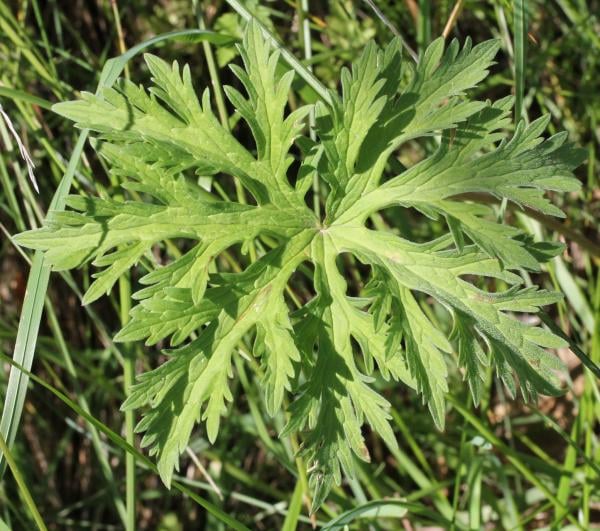
Leaf
Paul Fabre, Tela Botanica · CC BY-SA 2.0
Bloody cranesbill
Geranium sanguineum L.
Family: Geraniaceae
20 to 40 cm tall
Banks, rock gardens, edgings, free-draining soils
Flowering: May – August
Full sun
Part shade
Hardy to -25°C
❓ How do you recognise this plant?
Its finely cut foliage turns a superb bright red in autumn. Herb Robert is smaller, with an often reddish stem, three-lobed leaves and an unpleasant smell when crushed, whereas bloody cranesbill has large, solitary bright pink flowers and leaves deeply cut into fine strips.
🍃 Leaves
Deeply cut into fine strips, bright green, turning red in autumn
🌸 Flowers
Large flowers with 5 bright magenta-pink petals
🍎 Fruits
Small fruits shaped like an elongated beak
🪵 Bark
Low, dense, spreading clump
🗺️ Distribution
Europe, western Asia; found on dry banks, chalk grassland and rock gardens in France.
🐝 Value for pollinators
Bright pink nectar-bearing flowers visited by bees and bumblebees in summer.
✂️ Horticultural uses
Rock gardens, edgings, dry borders; foliage taking on fine red tints in autumn.
⚠️ Possible toxicity
No known toxicity.
⚠️ Look-alike species
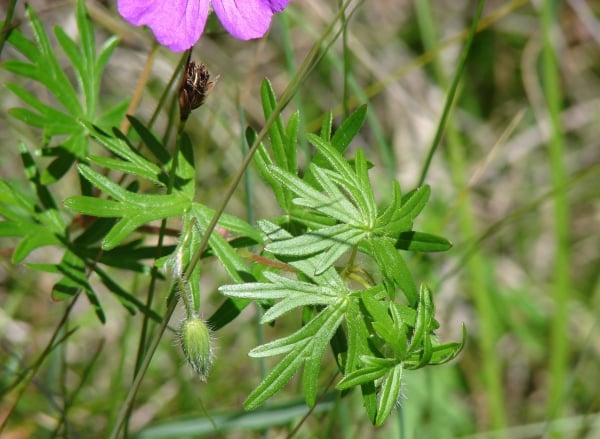
Bloody cranesbill
Geranium sanguineum
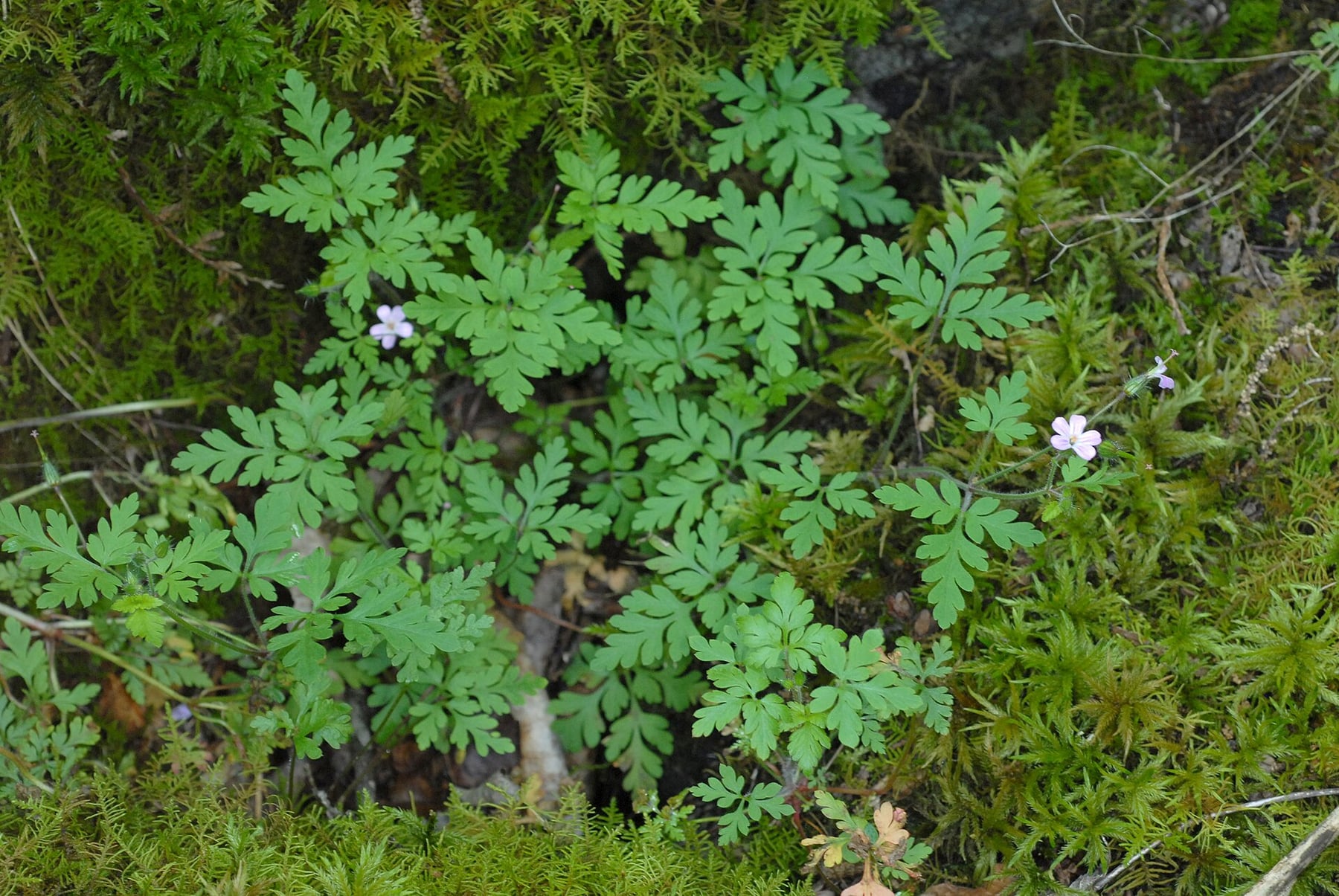
Herb Robert
Geranium robertianum
Herb Robert is smaller, with an often reddish stem, three-lobed leaves and an unpleasant smell when crushed, whereas bloody cranesbill has large, solitary bright pink flowers and leaves deeply cut into fine strips.
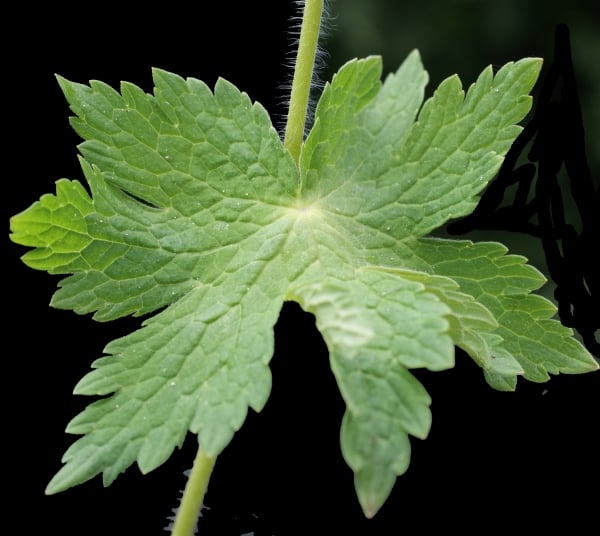
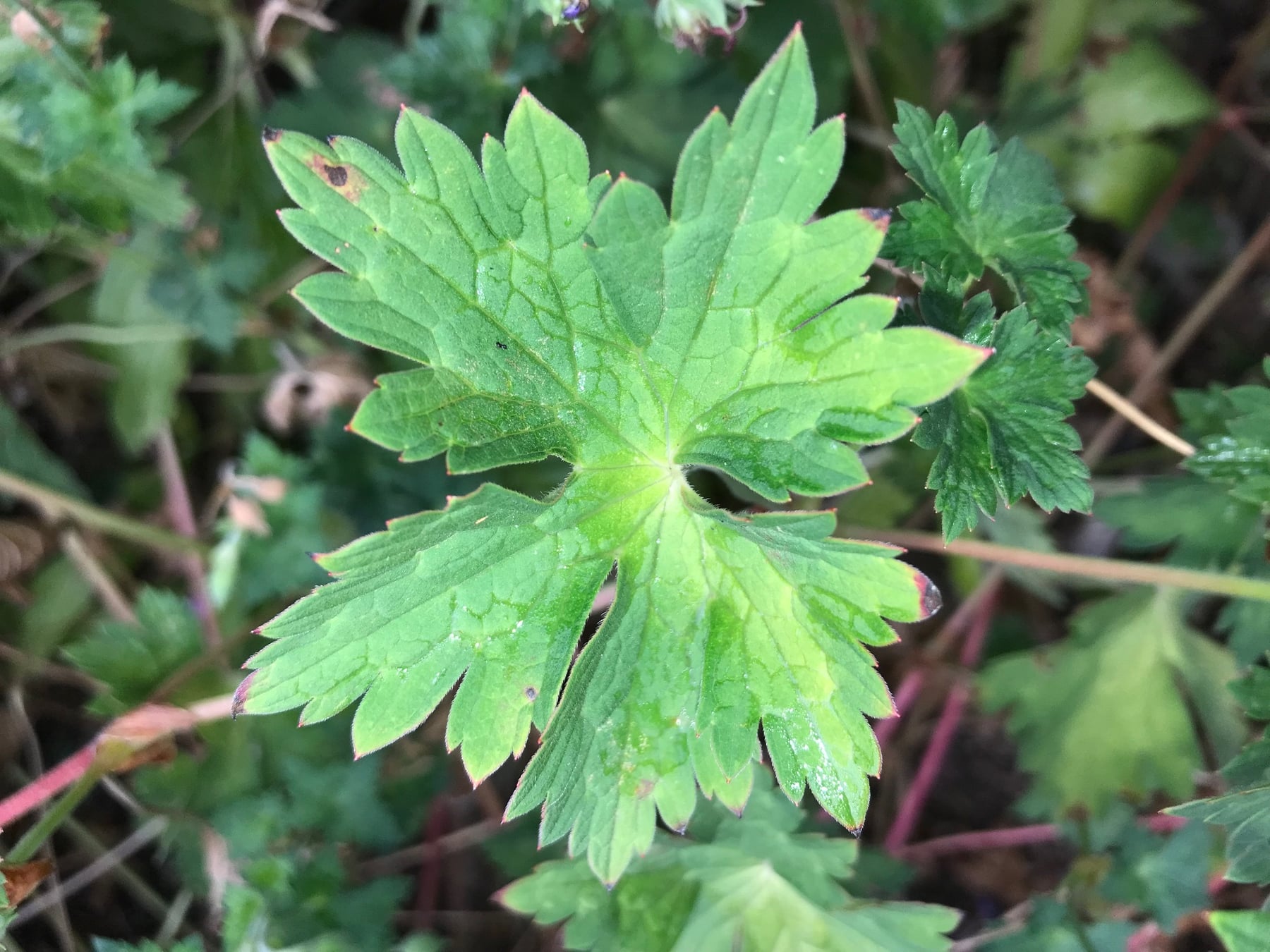
🌿 Other Geraniaceae to discover
ℹ️ Educational profile — do not use it to judge whether a plant is edible or safe.
🌱 This database is constantly evolving — species and information are added and corrected regularly. Spotted a mistake? Report it below.
© Floraneo — profile content is protected; reproduction without permission is prohibited. Photos remain under their own licence (see the credit shown on each photo).