Sweet chestnut or Horse chestnut: how to tell them apart?
Sweet chestnut and Horse chestnut look alike and are often mixed up. Here is how to tell them apart, feature by feature, with their photos and the details to look for.
⚡ The quick answer
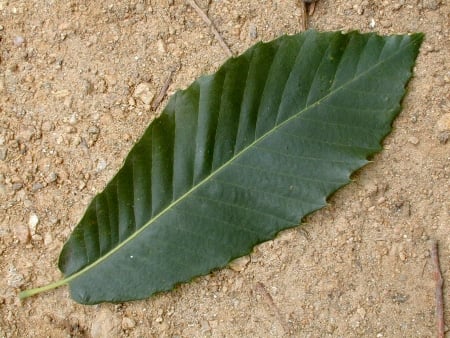
Sweet chestnut
Castanea sativa
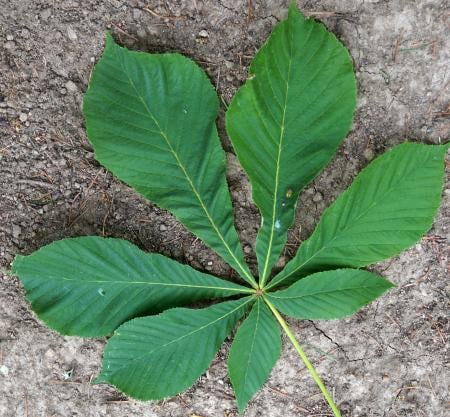
Horse chestnut
Aesculus hippocastanum
Sweet chestnut: burr very densely covered with long, fine spines and several fruits per burr. Horse chestnut: capsule with more widely spaced, shorter spines, generally a single large conker per capsule. The two fruits must not be confused.
🍃 Leaves
Long, saw-toothed, with prominent parallel veins
Palmately compound, 5 to 7 large leaflets in a fan
🌸 Flowers
Long upright or spreading male catkins, yellowish to cream, very conspicuous in early summer; inconspicuous female flowers at their base.
Large upright white panicles marked with pink or yellow
🍎 Fruits
Glossy brown chestnuts, several per spiny burr
Large green capsule covered in spikes, containing the conker
🪵 Bark
Grey, fissured in long, often spiralling ridges
Grey-brown, peeling in irregular plates
📏 Size
20 to 30 m tall
20 to 30 m tall
🗺️ Habitat
Forests on acid soil, often in the Cévennes and Corsica
Widely planted in towns, parks and avenues
⚠️ Toxicity
No known toxicity; spiny burrs can injure on contact
Seeds (conkers) toxic if eaten raw (saponins), causing digestive upset; not edible, unlike sweet chestnuts
🔎 And from the Horse chestnut side
A very common confusion, because both fruits are often just called "chestnuts". The sweet chestnut (edible) is enclosed in a husk bristling with long, fine spines and several fruits are grouped per husk; the horse chestnut conker (toxic, not to be eaten) has a husk with short, widely spaced spines and contains only a single large shiny fruit.
🌿 Go further
Want to practise spotting these details on real photos? Floraneo offers profiles and quizzes for dozens of look-alike species.
ℹ️ Educational profile — do not use it to judge whether a plant is edible or safe.