Russian olive or Ebbinge's silverberry: how to tell them apart?
Russian olive and Ebbinge's silverberry look alike and are often mixed up. Here is how to tell them apart, feature by feature, with their photos and the details to look for.
⚡ The quick answer
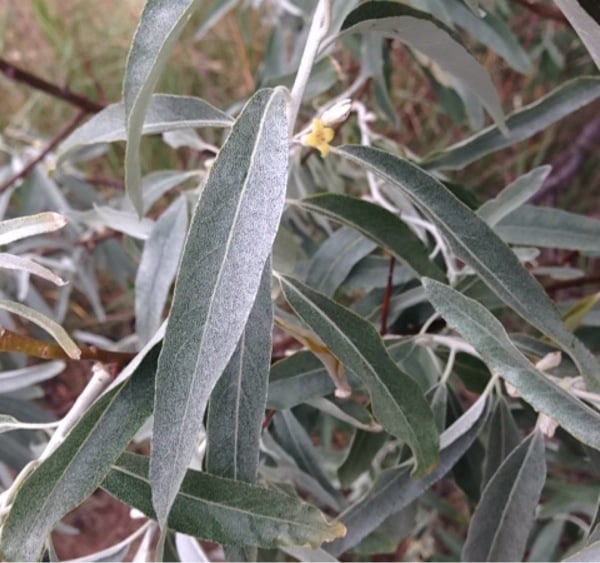
Russian olive
Elaeagnus angustifolia
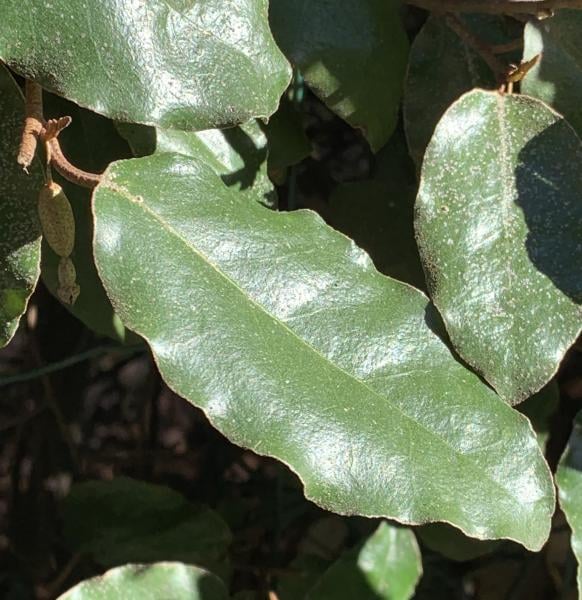
Ebbinge's silverberry
Elaeagnus x ebbingei
Two silvery-leaved Elaeagnus, often used for hedging. Russian olive loses its leaves in winter and has narrower, greyer foliage; Ebbinge's silverberry stays evergreen all year.
🍃 Leaves
Deciduous, narrow, lanceolate, silvery grey above and below
Evergreen, leathery, dark green and shiny above, silvery to brownish beneath, covered in small scales.
🌸 Flowers
Tiny pale yellow bells, very fragrant, hidden beneath the foliage
Small, creamy white, bell-shaped, very inconspicuous but extremely fragrant
🍎 Fruits
Oval drupes, yellowish to yellow-orange when ripe, about 1 to 2 cm, with mealy or dry flesh depending on ripeness.
Small oval fruits, red-brown when ripe, generally about 1 to 2 cm, sometimes produced abundantly depending on conditions.
🪵 Bark
Fissured brown-grey bark, twigs sometimes spiny
Greyish-brown, shoots sometimes slightly spiny
📏 Size
3 to 6 m tall
3 to 4 m tall
🗺️ Habitat
Windbreak hedges, gardens, poor dry soils
Planted in evergreen hedges, ordinary soils, even poor ones
⚠️ Toxicity
The ripe fruits are eaten in some regions. As this is a wild plant, do not eat it without certain identification.
Fruit edible; no known toxicity
🔎 And from the Ebbinge's silverberry side
Two Elaeagnus with silvery foliage, often used as hedging. The Russian olive loses its leaves in winter and has narrower, grey foliage; Ebbinge's silverberry stays evergreen all year round.
🌿 Go further
Want to practise spotting these details on real photos? Floraneo offers profiles and quizzes for dozens of look-alike species.
ℹ️ Educational profile — do not use it to judge whether a plant is edible or safe.