Leek or Perennial leek: how to tell them apart?
Leek and Perennial leek look alike and are often mixed up. Here is how to tell them apart, feature by feature, with their photos and the details to look for.
⚡ The quick answer
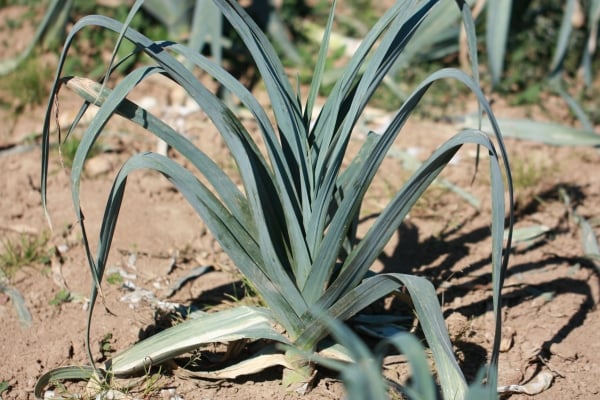
Leek
Allium porrum
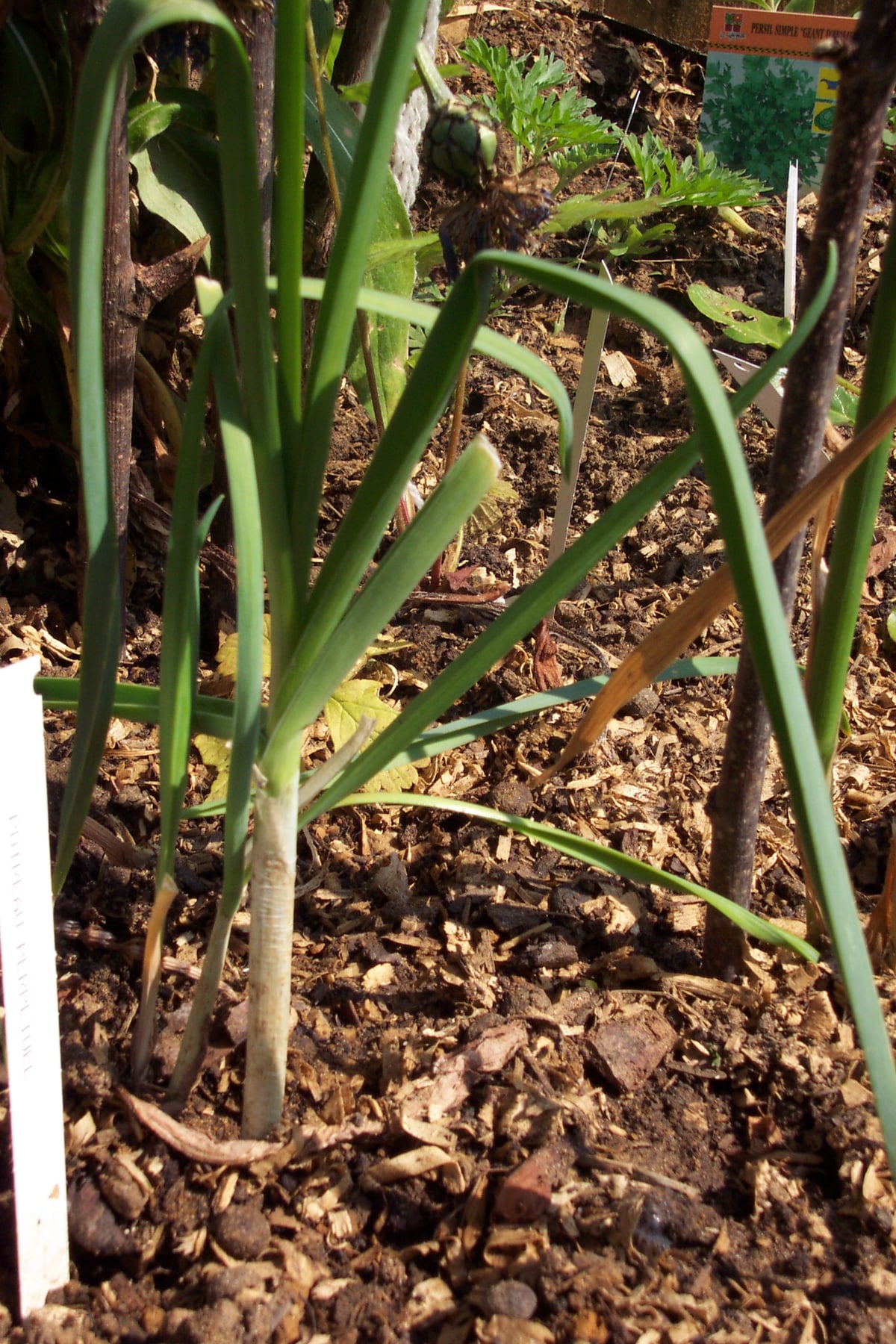
Perennial leek
Allium ampeloprasum
Wild leek, the wild perennial ancestor of the cultivated leek, looks almost identical: the same flat, sheathing leaves forming a false stem. But it grows in a compact clump of several tightly packed plants that come back every year without resowing, whereas the cultivated leek has to be resown each season.
🍃 Leaves
Long, flat, sheathing, blue-green, forming a white false stem at the base
Broad, sheathing, flat, blue-green, appearing from late summer and growing all winter until June, very close to those of the cultivated leek.
🌸 Flowers
Small, white to pinkish, grouped in a dense spherical umbel
Large, dense, spherical umbel of lilac-pink flowers, borne on a sturdy flowering stem; flowering fairly rare, the plant multiplying mainly by its bulbils.
🍎 Fruits
Small capsule containing black angular seeds
Small capsule, formed only after successful flowering, fairly rare.
🪵 Bark
Cylindrical false stem formed by the sheathing leaf bases, white at the base
Compact clump of several main bulbs surrounded by numerous bulbils; thick stem formed by the sheathing leaf bases, which can exceed 1 cm in diameter.
📏 Size
40 to 60 cm tall
50 cm to 1 m tall, sometimes more in flower
🗺️ Habitat
Grown in vegetable gardens, moist, rich soils
Hedges, banks, dry and uncultivated places, waste ground; also grown in the vegetable garden as a perennial vegetable
⚠️ Toxicity
No known toxicity to humans in normal culinary use; like other alliums (garlic, onion), potentially toxic to dogs and cats if ingested in large quantity (risk of haemolytic anaemia).
No known toxicity to humans — bulb and young shoots edible, with a stronger garlic flavour than the cultivated leek; like other alliums, potentially irritating to dogs and cats in large quantity.
🔎 And from the Perennial leek side
Wild leek looks almost identical to the cultivated leek, of which it is the wild ancestor: the same flat, sheathing leaves forming a false stem. But it grows in a compact clump of several tightly packed plants that come back every year without resowing, whereas the cultivated leek, sown each season, forms a single, much more regular plant.
🌿 Go further
Want to practise spotting these details on real photos? Floraneo offers profiles and quizzes for dozens of look-alike species.
ℹ️ Educational profile — do not use it to judge whether a plant is edible or safe.