Large-leaved lime or Small-leaved lime: how to tell them apart?
Large-leaved lime and Small-leaved lime look alike and are often mixed up. Here is how to tell them apart, feature by feature, with their photos and the details to look for.
⚡ The quick answer
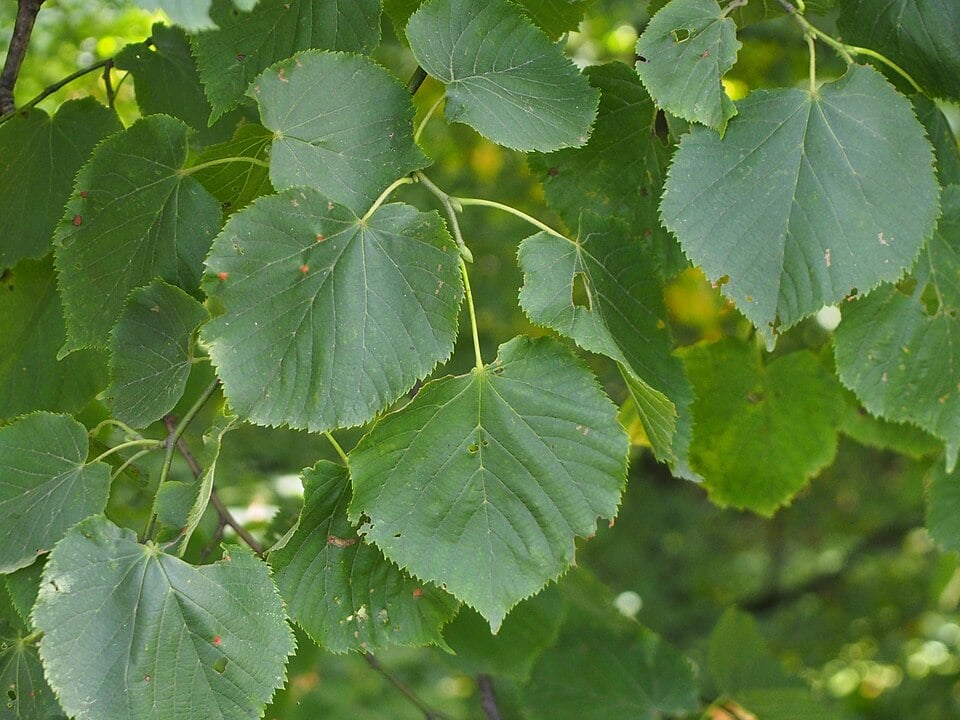
Large-leaved lime
Tilia platyphyllos
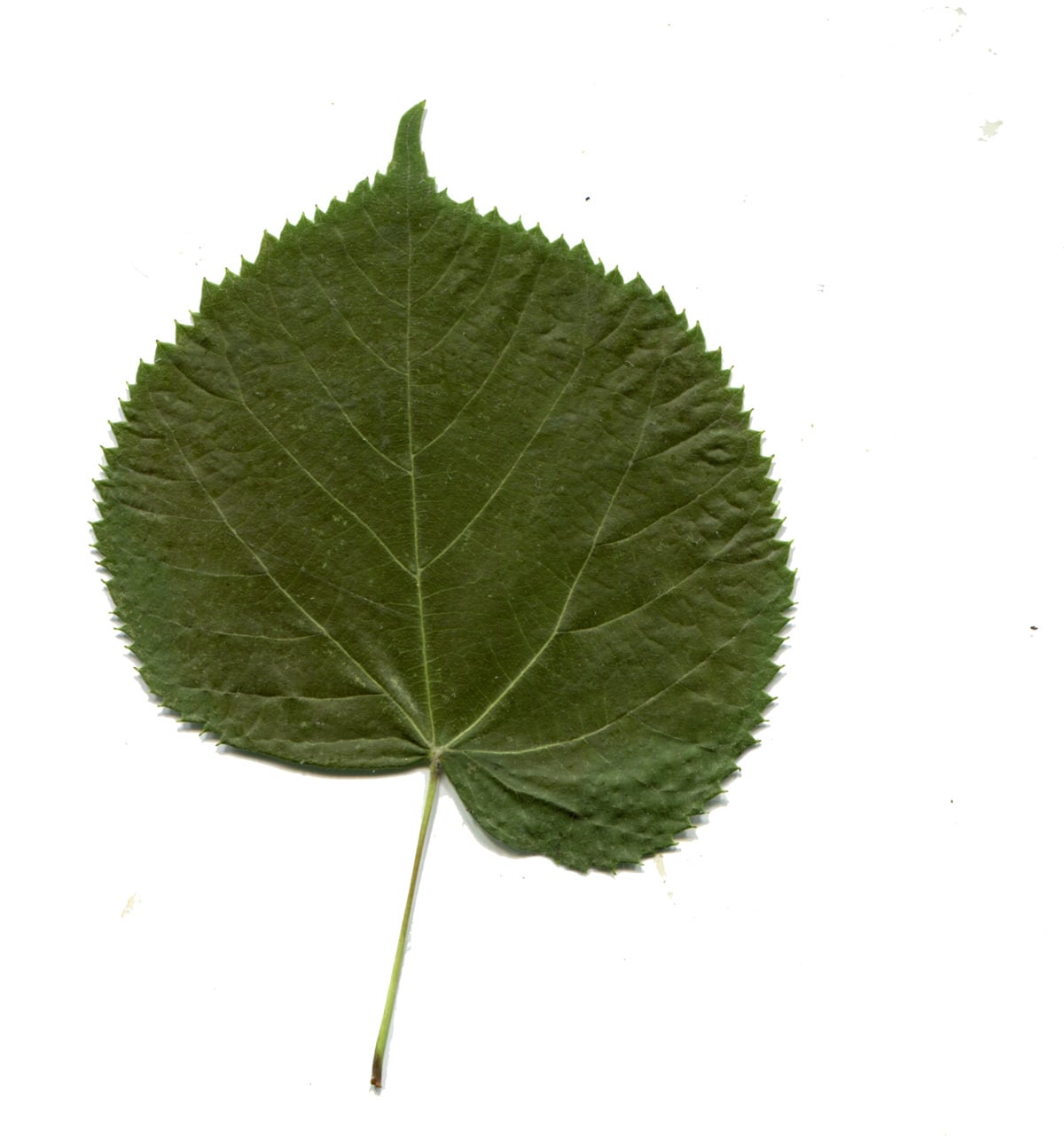
Small-leaved lime
Tilia cordata
Small-leaved lime has smaller leaves and a smooth, thin-walled, brittle fruit, whereas large-leaved lime has larger leaves and a ribbed, hard fruit.
🍃 Leaves
Broad, cordate at the base, toothed, dark green above, slightly downy beneath
Heart-shaped, asymmetrical at the base, tufts of rusty hairs at the veins
🌸 Flowers
Pale yellow, very fragrant, grouped in drooping cymes borne on an elongated bract
Small, pale yellow, very fragrant, borne on an elongated bract
🍎 Fruits
Small globular, ribbed, downy achene, unwinged unlike small-leaved lime
Small globular nutlets borne on the bract
🪵 Bark
Grey, smooth on young trees, becoming fissured into scales with age
Grey, finely fissured lengthways
📏 Size
20 to 30 m tall
20 to 30 m tall
🗺️ Habitat
Cool forests, often on calcareous soils; widely planted in towns and as avenue trees
Cool forests, often planted as avenue trees
⚠️ Toxicity
No known toxicity; flowers traditionally used as an infusion
No known toxicity
🔎 And from the Small-leaved lime side
Small-leaved lime has smaller leaves and a smooth, thin-walled, brittle fruit, whereas large-leaved lime has larger leaves and a ribbed, hard fruit.
🌿 Go further
Want to practise spotting these details on real photos? Floraneo offers profiles and quizzes for dozens of look-alike species.
ℹ️ Educational profile — do not use it to judge whether a plant is edible or safe.