Japanese spindle or Spindle: how to tell them apart?
Japanese spindle and Spindle look alike and are often mixed up. Here is how to tell them apart, feature by feature, with their photos and the details to look for.
⚡ The quick answer
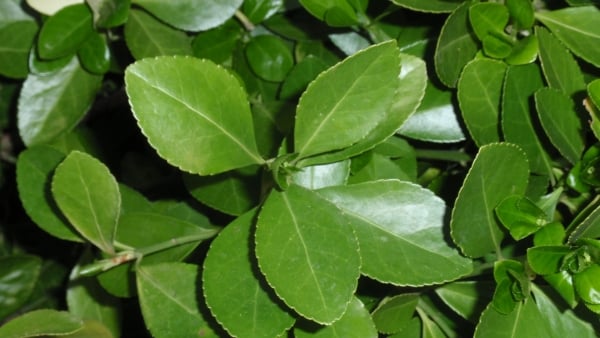
Japanese spindle
Euonymus japonicus
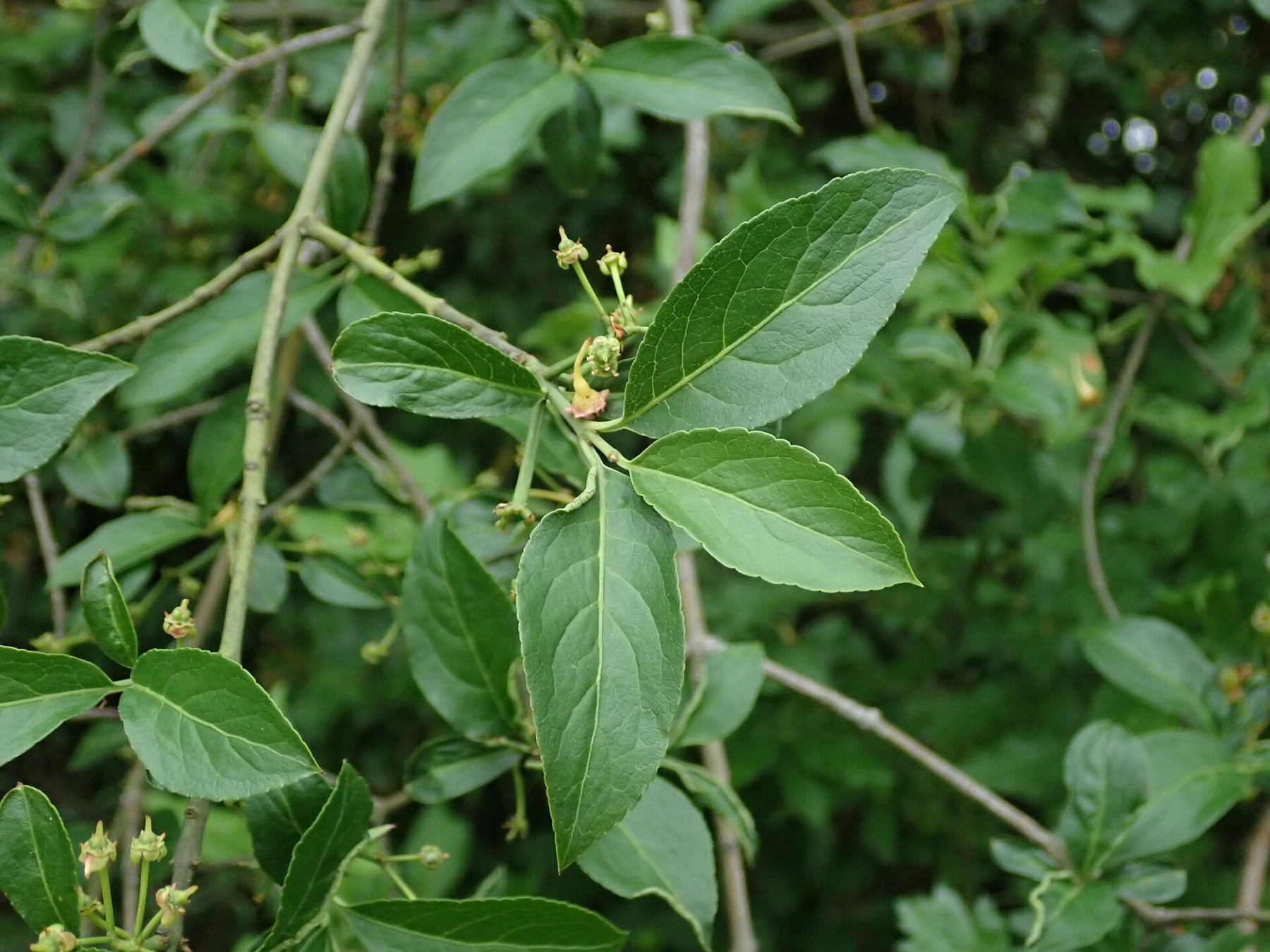
Spindle
Euonymus europaeus
The spindle is a deciduous shrub with very conspicuous pink fruits with orange seeds in autumn, whereas the Japanese spindle is evergreen, often variegated, grown in clipped hedges, with inconspicuous fruiting.
🍃 Leaves
Evergreen, leathery, ovate, glossy green (sometimes variegated depending on the variety)
Opposite, ovate, finely toothed, turning vivid red in autumn
🌸 Flowers
Tiny greenish flowers, barely visible
Small, greenish, barely visible
🍎 Fruits
Small pink capsules opening to reveal orange seeds
Pink 4-lobed capsules opening to reveal bright orange seeds
🪵 Bark
Green stems turning grey-brown, much branched
Grey, angular green stems
📏 Size
1 to 3 m tall
2 to 4 m tall
🗺️ Habitat
Evergreen hedges, containers, seaside, all soils
Hedges, woodland edges, chalky soils
⚠️ Toxicity
Fruits and seeds toxic if eaten (digestive and cardiac problems at high doses), as in other spindles.
Whole plant toxic, in particular the fruits (pink capsules with orange seeds), causing severe digestive upset if eaten.
🔎 And from the Spindle side
The spindle is a deciduous shrub with very conspicuous pink fruits with orange seeds in autumn, whereas the Japanese spindle is evergreen, often variegated, grown in clipped hedges, with inconspicuous fruiting.
🌿 Go further
Want to practise spotting these details on real photos? Floraneo offers profiles and quizzes for dozens of look-alike species.
ℹ️ Educational profile — do not use it to judge whether a plant is edible or safe.