Field eryngo or Sea holly: how to tell them apart?
Field eryngo and Sea holly look alike and are often mixed up. Here is how to tell them apart, feature by feature, with their photos and the details to look for.
⚡ The quick answer
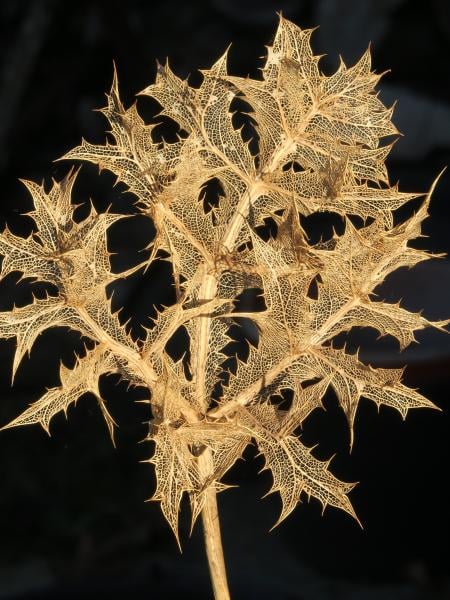
Field eryngo
Eryngium campestre
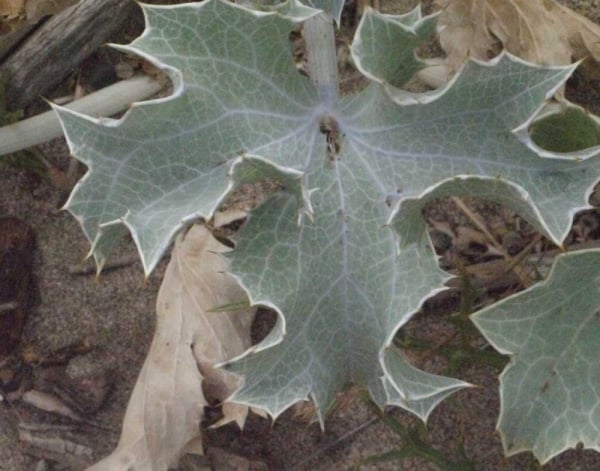
Sea holly
Eryngium maritimum
Sea holly has thick, fleshy, blue-grey foliage, adapted to coastal dunes, whereas field eryngo has finer, green, rigid leaves, typical of dry inland wasteland.
🍃 Leaves
Rigid, deeply cut, spiny, silvery grey-green
Thick, spiny, metallic blue-grey
🌸 Flowers
Small blue-grey umbels surrounded by prickly bracts
Small blue-grey umbels surrounded by prickly bluish bracts
🍎 Fruits
Small scaly achenes
Small scaly achenes
🪵 Bark
Rigid clump, spiny branched stems
Rigid blue-grey clump, very deep taproot
📏 Size
20 to 60 cm tall
20 to 50 cm tall
🗺️ Habitat
Dry meadows, banks, gardens, poor free-draining soils
Coastal dunes, dry seaside gardens, sandy soils
⚠️ Toxicity
No known toxicity; spiny foliage that can injure when touched.
No known toxicity; spiny foliage that can injure when touched.
🔎 And from the Sea holly side
Sea holly has thick, fleshy, blue-grey foliage, adapted to coastal dunes, whereas field eryngo has finer, green, rigid leaves, typical of dry inland wasteland.
🌿 Go further
Want to practise spotting these details on real photos? Floraneo offers profiles and quizzes for dozens of look-alike species.
ℹ️ Educational profile — do not use it to judge whether a plant is edible or safe.