Courgette or Giant pumpkin: how to tell them apart?
Courgette and Giant pumpkin look alike and are often mixed up. Here is how to tell them apart, feature by feature, with their photos and the details to look for.
⚡ The quick answer
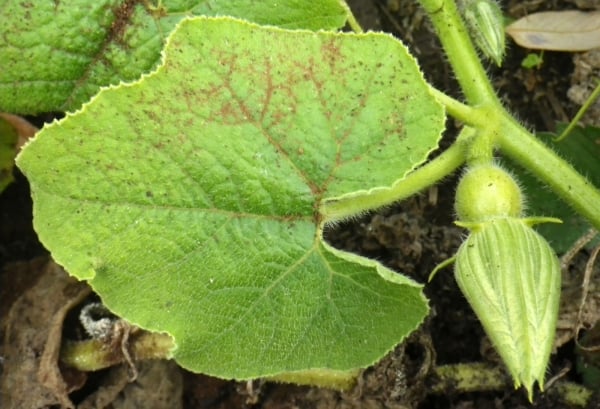
Courgette
Cucurbita pepo
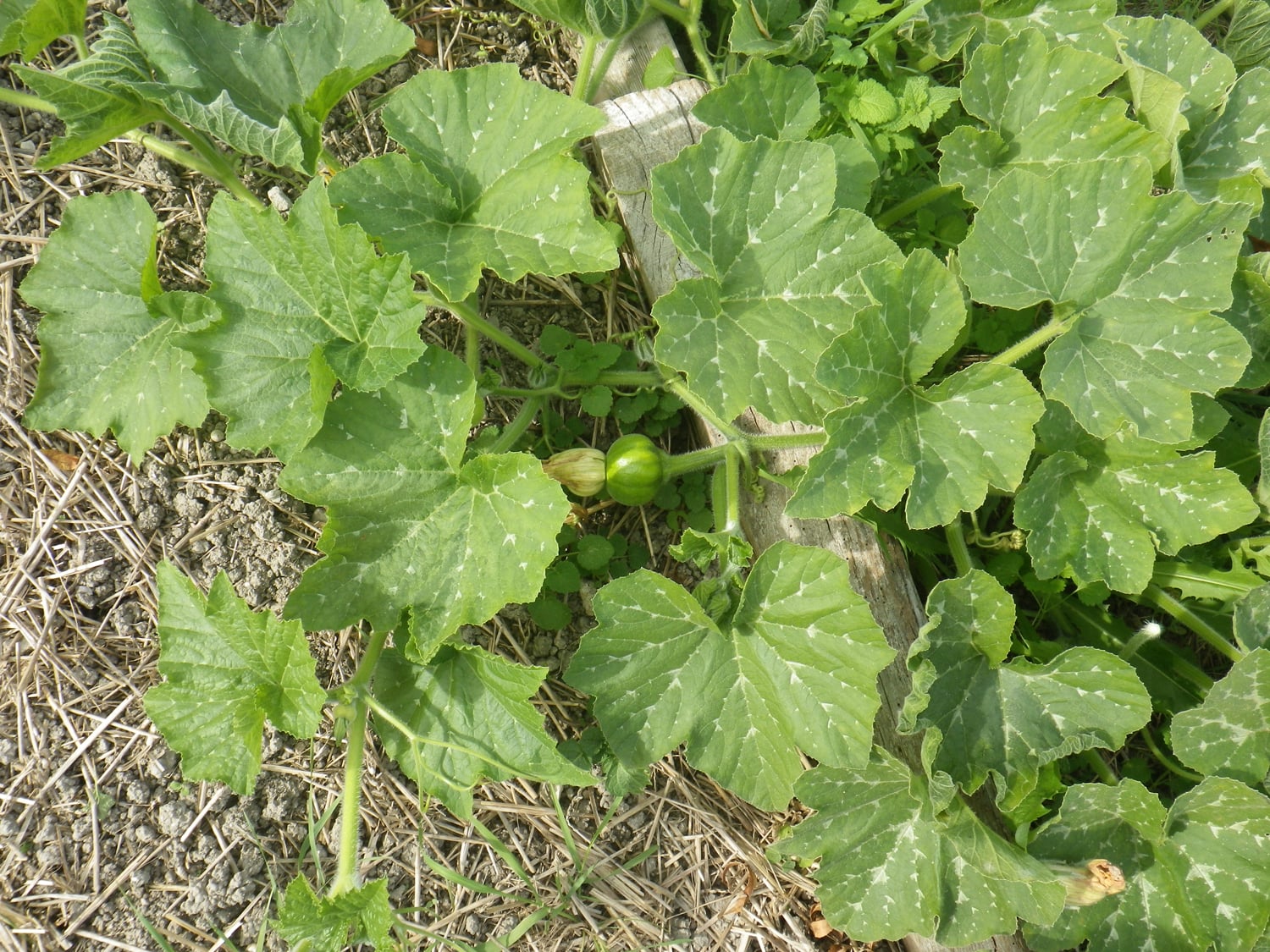
Giant pumpkin
Cucurbita maxima
The courgette has an angular stem and is harvested young; the giant pumpkin has a soft, cylindrical stem and is harvested fully ripe, often much larger.
🍃 Leaves
Large, palmate, rough, often mottled with white
Very large, rounded, soft, unlobed or only slightly lobed, covered in soft hairs
🌸 Flowers
Large trumpet-shaped yellow-orange flowers; monoecious plant (separate male and female flowers)
Large, yellow-orange, trumpet-shaped; monoecious plant (separate male and female flowers)
🍎 Fruits
Elongated or round fruit, green, yellow or striped depending on variety, harvested immature
Very large round, flattened fruit, smooth skin, dense, sweet orange flesh
🪵 Bark
Thick stem, upright or trailing depending on variety, slightly prickly to the touch
Trailing stem, cylindrical and soft (unlike the courgette, whose stem is angular)
📏 Size
Bushy habit or trailing stems several metres long
Trailing stems several metres long
🗺️ Habitat
Grown in vegetable gardens, rich, well-drained soils
Grown in open fields, rich, free-draining soils
⚠️ Toxicity
Fruit edible; some courgettes grown from poorly selected seed or under stress can accumulate very bitter, toxic cucurbitacins — never eat if the taste is bitter
Fruit edible; no known toxicity
🔎 And from the Giant pumpkin side
The courgette has an angular stem and is harvested young; the pumpkin has a soft, cylindrical stem and is harvested fully ripe, often much larger.
🌿 Go further
Want to practise spotting these details on real photos? Floraneo offers profiles and quizzes for dozens of look-alike species.
ℹ️ Educational profile — do not use it to judge whether a plant is edible or safe.