True service tree or Rowan: how to tell them apart?
True service tree and Rowan look alike and are often mixed up. Here is how to tell them apart, feature by feature, with their photos and the details to look for.
⚡ The quick answer
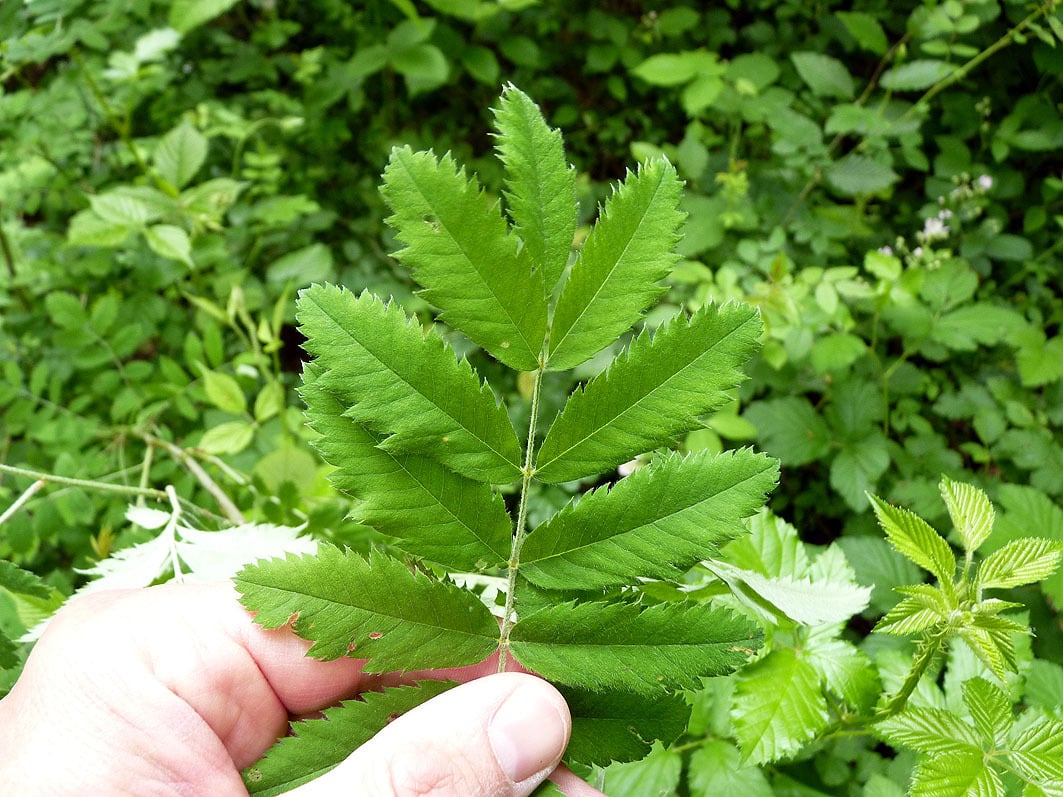
True service tree
Sorbus domestica
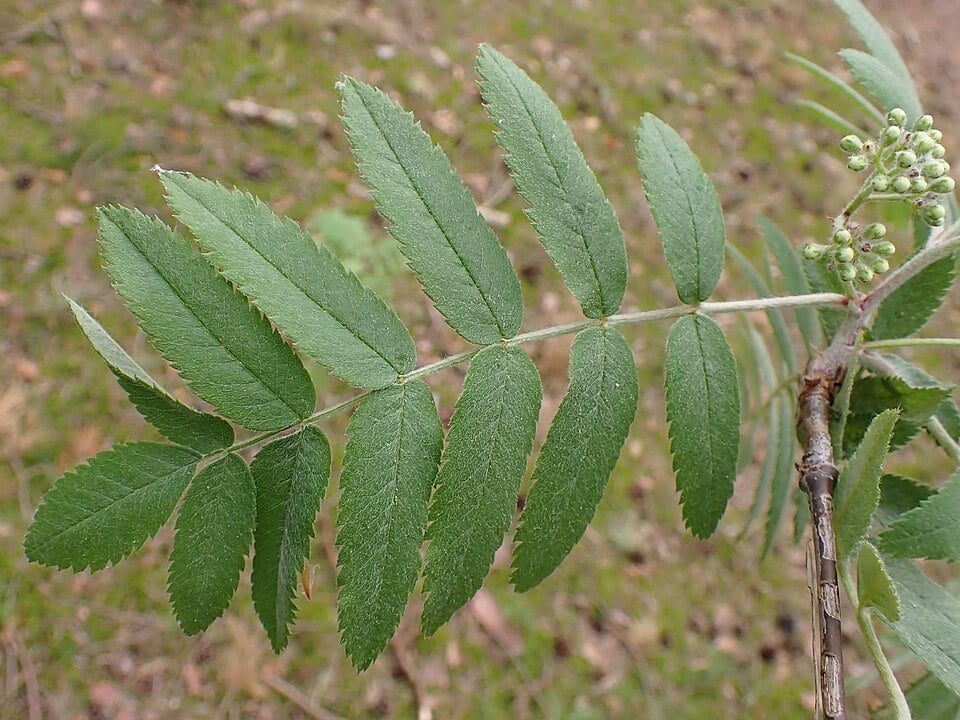
Rowan
Sorbus aucuparia
True service tree bears fruits that are often pear-shaped to brownish, but their shape varies. Rowan bears smaller, round, red to orange fruits in clusters.
🍃 Leaves
Compound, 11 to 21 toothed leaflets, like the rowan
Compound, 9 to 15 narrow, toothed leaflets, like an ash leaf
🌸 Flowers
White corymbs
White corymbs with a strong smell
🍎 Fruits
Pear-shaped or sometimes almost rounded fruits, greenish then brownish when ripe, becoming edible after bletting.
Small bright red berries in dense clusters, much liked by birds
🪵 Bark
Brown-grey, flaking in small square plates like an old pear tree
Grey, smooth, with small lenticels
📏 Size
10 to 15 m tall, sometimes up to 20 m
8 to 15 m tall
🗺️ Habitat
Warm slopes, woodland edges, old orchards
Open forests, mountains, often planted in towns
⚠️ Toxicity
No known toxicity; fruits (sorbs) edible once bletted
Fruits slightly toxic raw (parasorbic acid), harmless cooked or made into jelly
🔎 And from the Rowan side
The rowan has small round berries, never pear-shaped, whereas the true service tree has small brown pear-shaped fruits, edible when bletted.
🌿 Go further
Want to practise spotting these details on real photos? Floraneo offers profiles and quizzes for dozens of look-alike species.
ℹ️ Educational profile — do not use it to judge whether a plant is edible or safe.