Cherry laurel or Bay laurel: how to tell them apart?
Cherry laurel and Bay laurel look alike and are often mixed up. Here is how to tell them apart, feature by feature, with their photos and the details to look for.
⚡ The quick answer
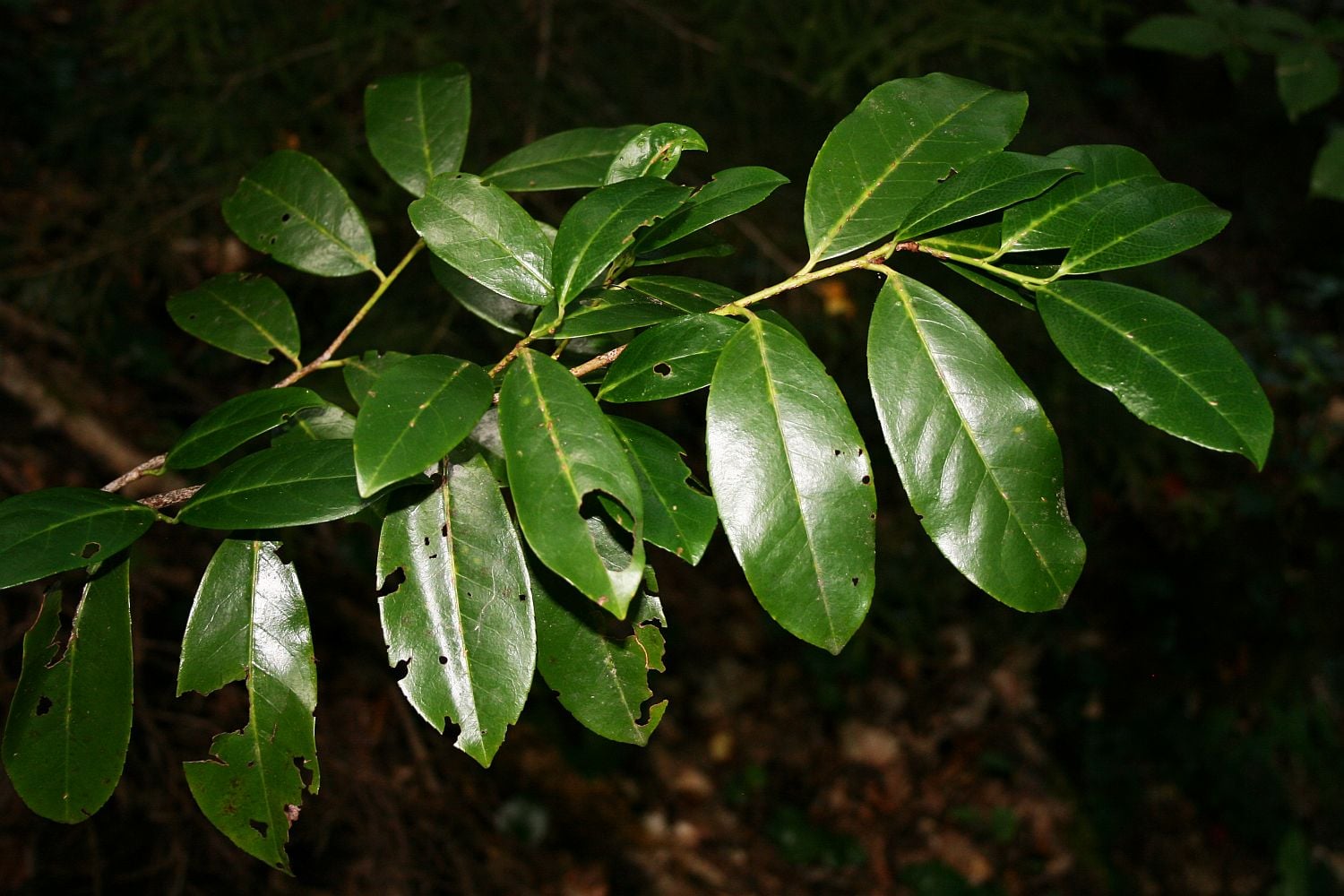
Cherry laurel
Prunus laurocerasus
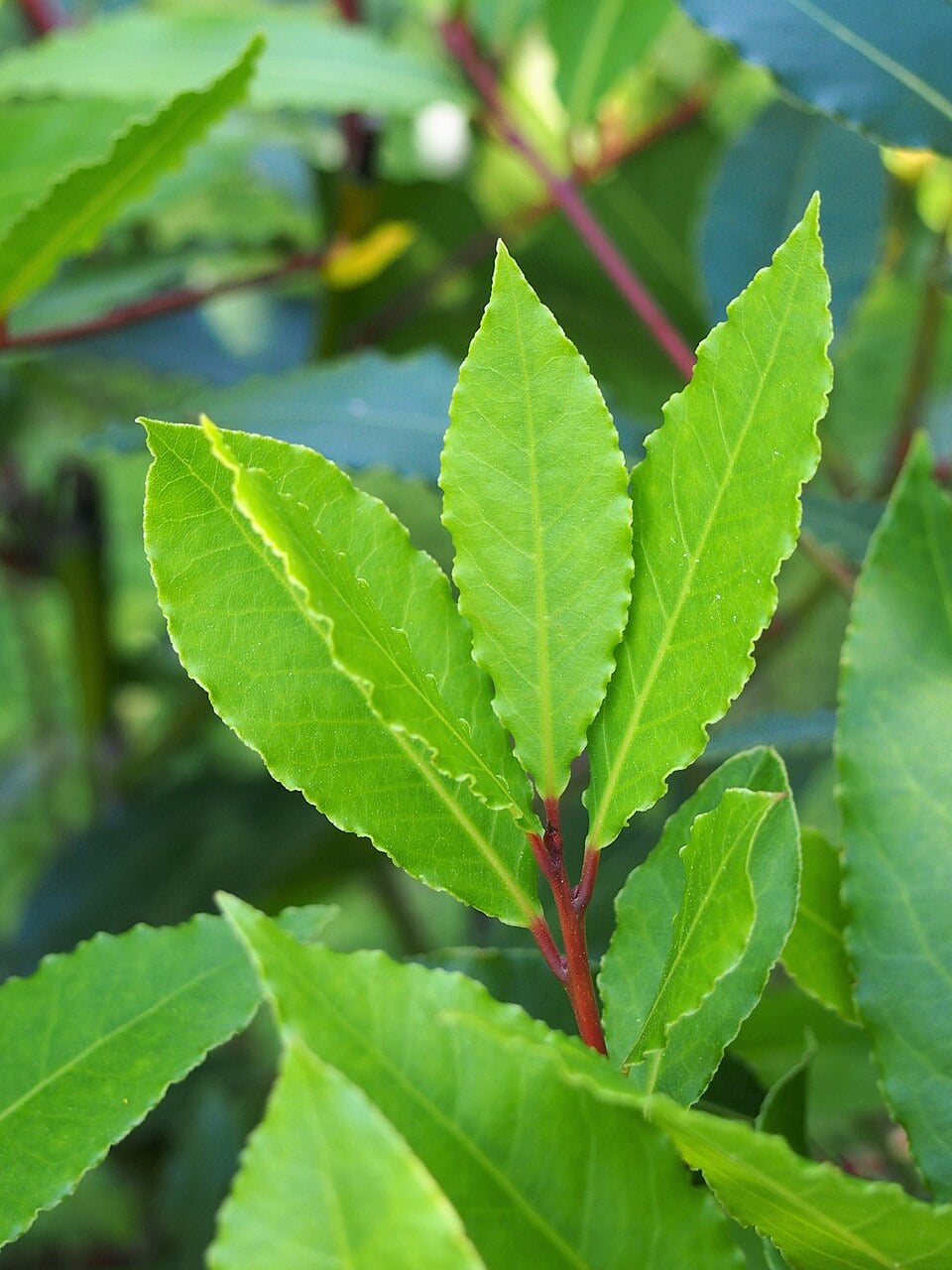
Bay laurel
Laurus nobilis
Bay laurel has aromatic leaves used in cooking, without a bitter-almond smell, whereas cherry laurel leaves give off this characteristic (and toxic) smell when crushed — they are not related plants despite sharing a common name.
🍃 Leaves
Evergreen, broad, ovate, leathery, very glossy dark green
Evergreen, leathery, lanceolate, glossy dark green, aromatic
🌸 Flowers
Small upright spikes of fragrant white flowers
Small pale yellow flowers in small umbels in the leaf axils
🍎 Fruits
Small black drupes in clusters, toxic
Small oval black drupes
🪵 Bark
Smooth grey-brown twigs
Smooth grey bark, trunk often multiple
📏 Size
2 to 5 m tall, often clipped lower as a hedge
2 to 6 m tall, sometimes as a small tree
🗺️ Habitat
Evergreen hedges, gardens, all soils even limestone
Gardens, hedges, tubs, ordinary free-draining soils
⚠️ Toxicity
All parts, especially the leaves and stones, very toxic (hydrogen cyanide); serious risk if ingested.
No known toxicity for the leaves used in cooking.
🔎 And from the Bay laurel side
Bay laurel has aromatic leaves used in cooking, without a bitter-almond smell, whereas cherry laurel leaves give off this characteristic (and toxic) smell when crushed — they are not related plants despite sharing a common name.
🌿 Go further
Want to practise spotting these details on real photos? Floraneo offers profiles and quizzes for dozens of look-alike species.
ℹ️ Educational profile — do not use it to judge whether a plant is edible or safe.